Farewell Ricky, it’s been a privilege

The old saying goes, “all good things have to come to an end.” Ricky Ponting was good, very good, in fact he was a great.

For Ponting the end is nigh. When he walks out at the WACA on Friday morning, it will be his 168th and final Test, a career that has seen him claim 108 Test victories, with 48 of those as captain.

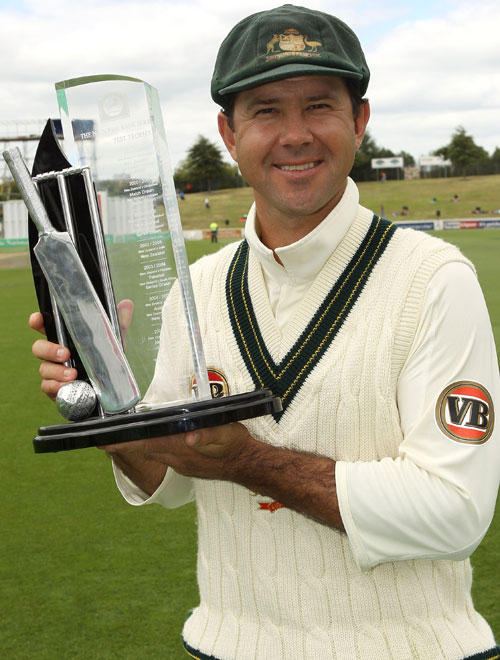
Ponting with one of many trophies he won during an illustrious career.

You can’t help but hope for a fairytale ending for Ponting. How about a hundred in his final match at a ground where it all began for him in 1995 and a victory over South Africa that would lift his side back to number one in the ICC Test Rankings – it would be a fitting end to a glorious career.

After announcing his retirement, Ponting said that he wanted to win his final match more than any other game he has ever played. The drive and determination is still there, but unfortunately for Punter, age has finally caught up with him.

It seemed the Australian selectors were willing to grant Ponting his one last wish and final frontier – an Ashes series on English soil, but in sport things don’t always pan out the way you want them to.

Recently reading a Sidharth Monga article on espncricinfo.com, I picked up on this wonderful quote on Sachin Tendulkar’s ongoing struggles:

“People are struggling to come to terms with his mortality. They want him to retire because they want to live with happier memories. That’s selfish.”

It made me realise that I had thought this about Ponting. As a big fan of his, I wanted him to go on and reclaim the Ashes in England, but I didn’t want him to continue to struggle and look a part of his former self. That Jacques Kallis ball that dismissed him in Adelaide wasn’t what I wanted to remember him by, but instead the slight of him bringing up another Test century with a crisp drive through the covers.

We all have to realise that our favourite players can’t go on to play at their best forever, there has to be a time when we have to respect the timing of a players retirement, after all only the player himself knows, when to make that difficult call.

For all of this I think Ponting picked the right time to hang up his bat and depart from the game. He has been in inconsistent form over the past 18 months, but if it wasn’t for his mental input on the side and his determination to work hard, then Michael Clarke’s men wouldn’t be vying for the Test mace right now.
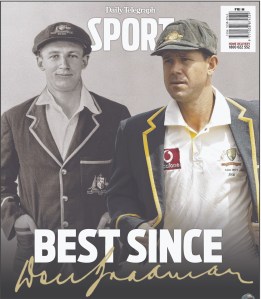
The best since Bradman?

Although Clarke has led the side through their rebuilding process, he has still relied heavily on the likes of Ponting and Mike Hussey as his go to men. There is no way Australia could have let Ponting and Hussey depart from the side after the retirements of key players such as Shane Warne, Adam Gilchrist, Glenn McGrath, Matthew Hayden, Justin Langer and to a lesser extent Brett Lee and Simon Katich – all in the past six years.

Ponting is a once in a generation player, only Greg Chappell can rival him as Australia’s best batsman since Sir Donald Bradman, players like this don’t come around very often. For over a decade Ponting was the best batsman in the world’s best team.

His stats are overshadowed by no Australian bar Bradman. His 13,366 runs are more than any of his compatriots ever managed as are his 41 Test hundreds and his final Test appearance at Perth will equal Steve Waugh’s haul of 168.

In ODI cricket his three World Cup victories – with two as captain stand out, as does his 30 ODI centuries.

So after 17 years of service to the Baggy Green, it’s time to say farewell Punter, I hope you do a Steve Waugh and bow out the way we all want you to with your side back on top of the world, but if not we will remember the stroke play, dedication and passion that you brought to Cricket Australia during its most successful period.
Captaincy inspires Pup’s love for big runs

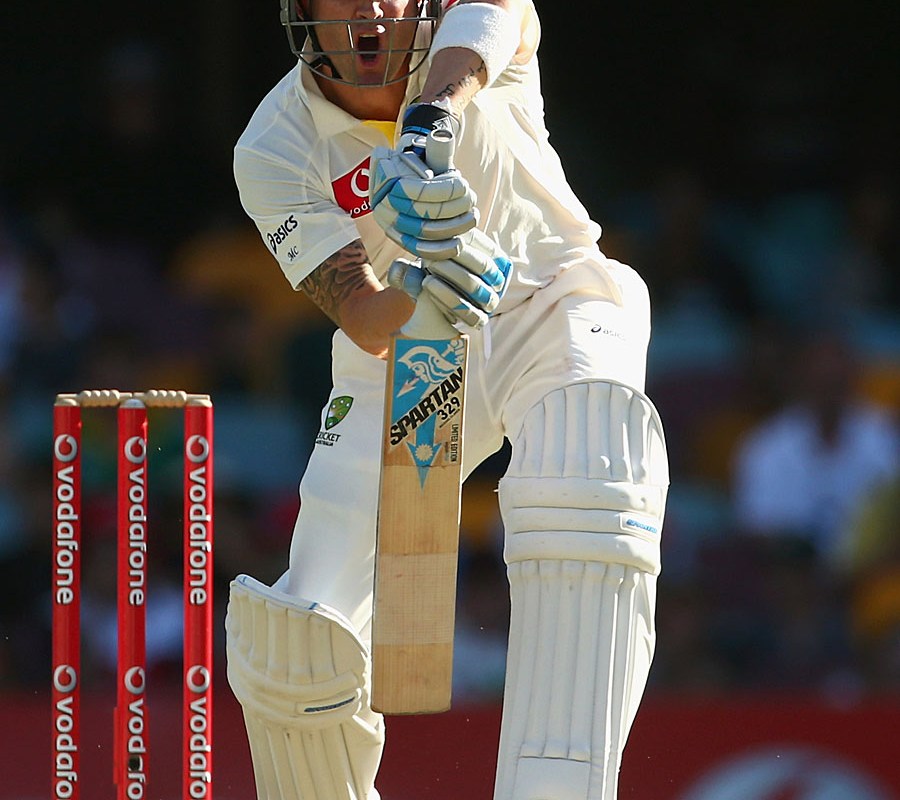
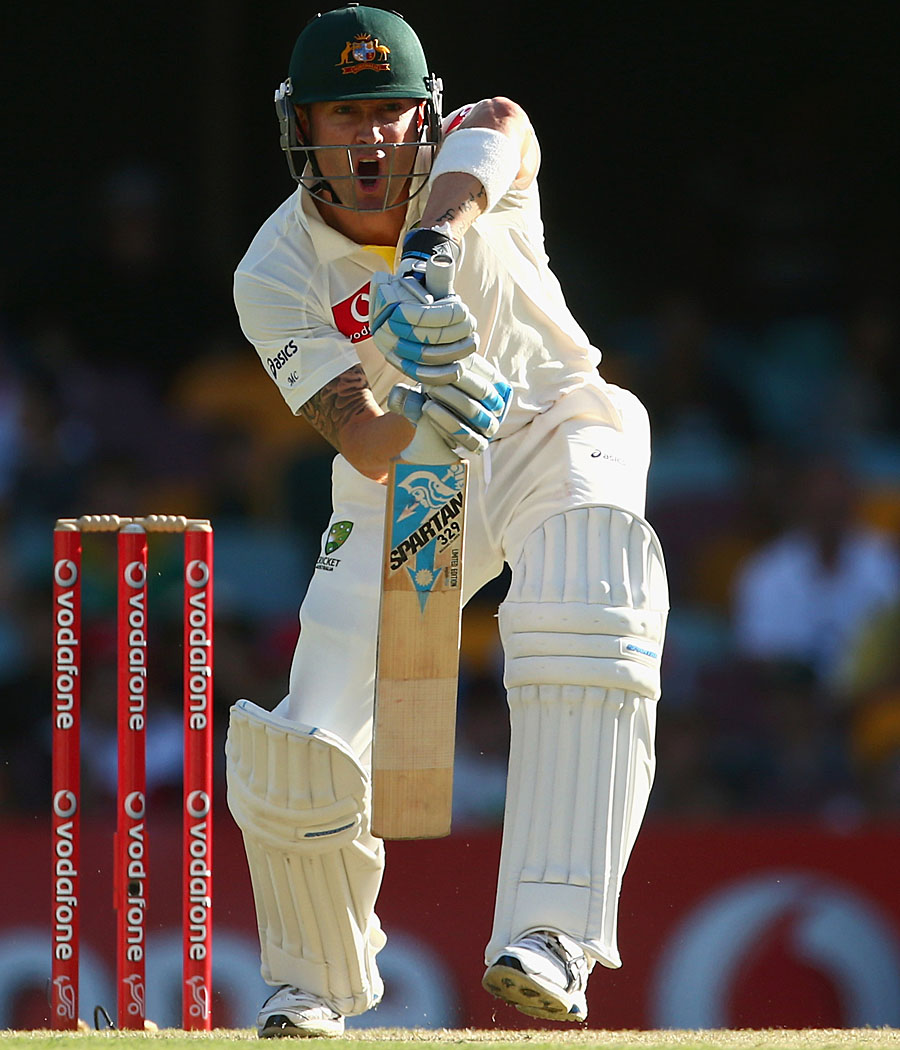
Michael Clarke’s unbeaten 259 in the first Vodafone Test against South Africa again proved his ongoing worth as both Australia’s captain and premier batsman.

Since taking over the Test captaincy from Ricky Ponting nineteen months and fifteen Tests ago, Clarke has scored 1618 runs at 64.72. So far in 2012 he has scored 1041 runs in seven Tests, at a remarkable average of 115.66.

The responsibility of captaincy has certainly brought out the best in Clarke. In 2012 nobody has scored more Test runs than Pup. Along with his 259 against the Proteas and his scores of 329no and 210 against India earlier in the year, he becomes only the third player behind Ponting and Don Bradman to score three scores of over 200 in a calendar year.

In fifteen Tests as captain Clarke has scored 1618 runs at 64.72.

His conversion rate of fifties into hundreds is also an impressive one, of his 42 Test scores of over 50, 20 have been turned into hundreds.

It’s also no coincidence that four of Clarke’s seven Test scores of over 150 have come since he took over the captaincy. He now understands the needs of the team more. With Australia’s current weak middle order, it’s up to Clarke to make the most of his starts and go on to score the big runs.

While Clarke’s batting stats speak for themselves, it’s his positive captaincy that is finally winning around his critics and haters.

Since he took over the job they call the second most important in Australian society (the first being the Australian prime minister) he has led his side to nine wins, four draws and just two defeats. This was meant to be a side in transition; under Clarke they haven’t lost a series.

His captaincy has been as refreshing as it has been successful. He’s a gambler, where as Ponting was a percentage captain, Pup makes his decisions on instinct, unsurprisingly there are hints of Shane Warne in his captaincy, together they share the ability to read the game and give their side the best possible chance of victory.

The 31-year-old has always shown a willingness to learn more about the game, be it from his mentor Ponting or his great friend Warne. As a batsman, a tactician and occasionally a bowler, he is always looking to keep the game moving, always looking for opportunities for runs or wickets and always pushing his team towards greater success.

Things haven’t always been easy for Clarke despite his dream entry to Test cricket in 2004. A debut innings of 151 in India was followed by 141 in his fifth match against New Zealand. The blonde bombshell from New South Wales had arrived into one of the best sides in the history of the game and things couldn’t have begun any better for him.

Things quickly changed for Clarke though, as he was dropped from the side just a year after his debut. Although he would later return after missing only seven Tests, his place in the side was not longer guaranteed.

Clarke worked hard on his game and was soon a regular in the side again making the number five spot his own, but for a time he wasn’t always the most popular player amongst both players and fans alike.

Clarke’s mental strength has become a key part of his captaincy

It was easy to look at Clarke and see the tattoos and the metro sexual image and choose not to see the dedication he brought to him game. There was a time when he was viewed even by some of his teammates as a bit of a glory boy. Richly talented and with an impeccable pedigree, this kid was along for the ride – the only 20-something in a team of hardnosed 30-somethings who ruled the world.

At times the Australian media portrayed the views of many in the public, one journalist once wrote: “His problem is a little more delicate. Michael Clarke is a tosser. Or, to give him an out cause, he appears to be a tosser.”

Over the years he has not only found it hard to earn the respect of the Australian public, but of his teammates too. In 2009 after a Test victory in Sydney, Simon Katich grabbed the then vice-captain Clarke by the throat after an argument over when the team song would be sung, Clarke had requested to leave early to attend a meal with his then fiancée Lara Bingle.

Despite all of this no one can ever question Clarke’s mental strength. In early 2008 he spent two months away from the game, firstly attending to his ailing father and then helping Bingle deal with the death of her own father, upon his return to the side he scored a fluent 110 against the West Indies in Antigua. Two years later he again showed his ability to deal with personal issues in the middle when he scored a first innings 168 in New Zealand, just a week after his well publicised split-up with Bingle.

That mental strength has since served Clarke well, the consistency of his batting has improved so much so that he is now ranked amongst the best batsmen in the world, his captaincy is fresh and exciting and his popularity is finally on the rise, the once unloved pup is now Australia’s top dog.