How deep are Australia’s fast bowling stocks?

The retirement of Mitchell Johnson and foot injury sustained to Mitchell Starc has again led to the question, how deep is Australia’s fast bowling depth?

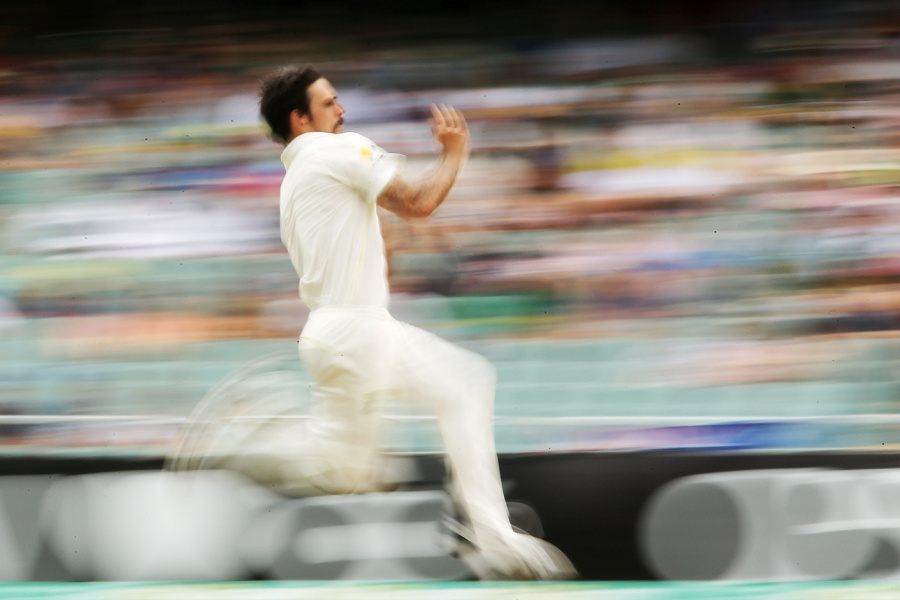
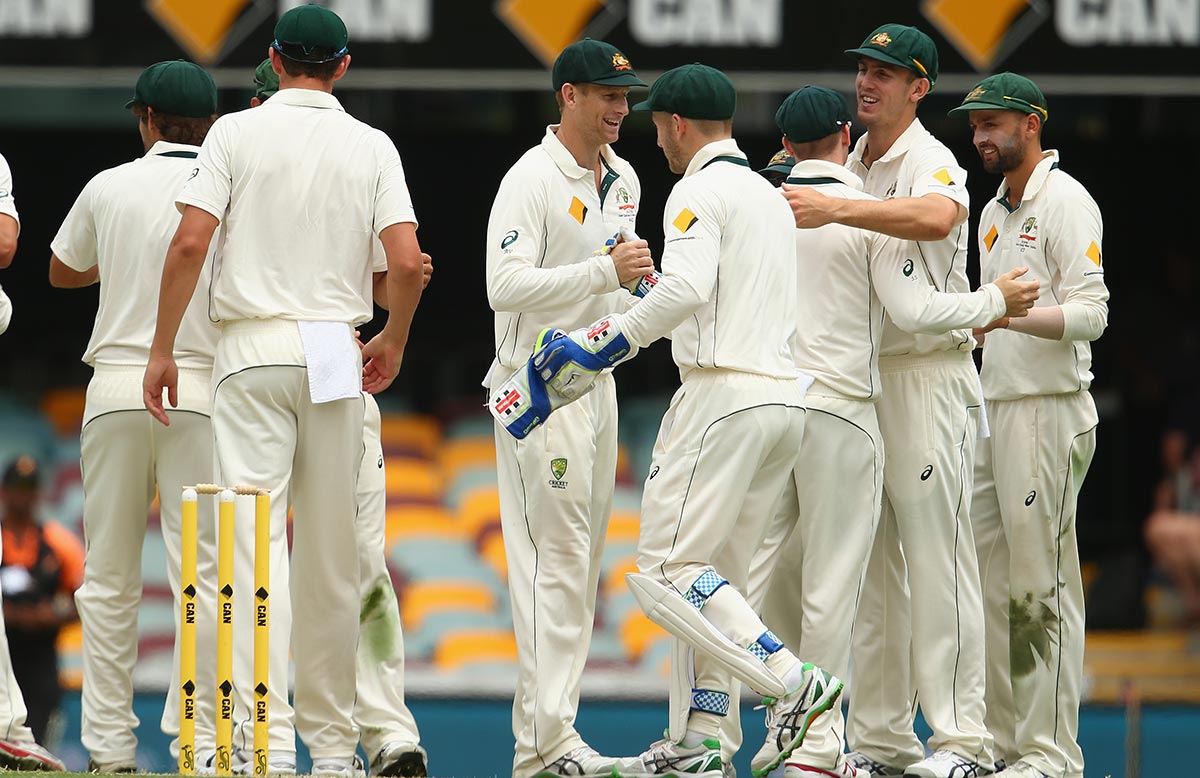
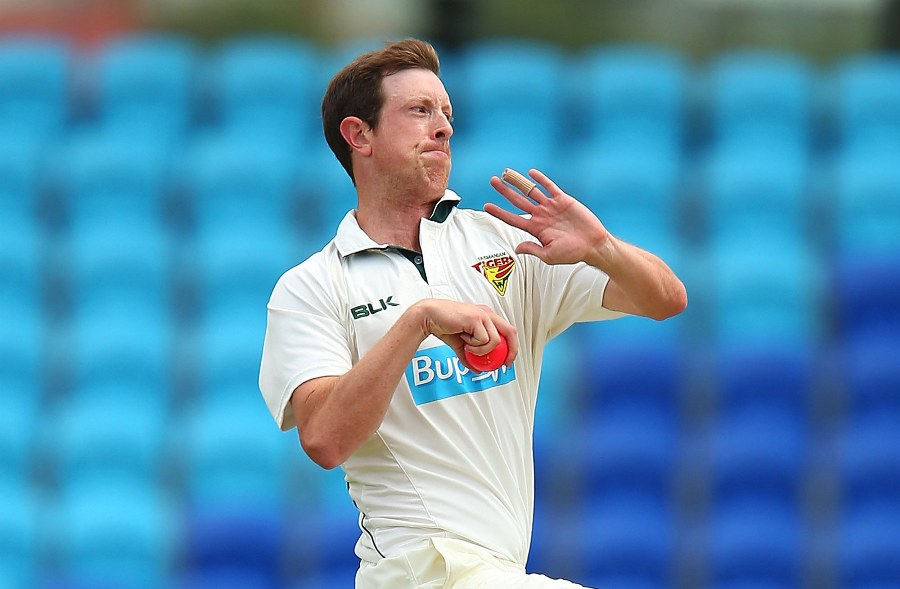
Fast bowling cartel - Cricket Australia
Photo Credit: Cricket Australia/Getty Images.

We keep getting told how much fast bowling depth there is in Australia. We’re told that they could field as many as twenty different seamers and still remain competitive in international cricket – but are the fast bowling stocks quite as strong as they once were?

This year’s retirements to former spearhead’s Ryan Harris and Mitchell Johnson has taken away not just experience (100 Tests) and quality (426 wickets), but it’s also significantly weakened the depth in fast bowling across the country. Throw in the metatarsal injury sustained by Mitchell Starc during the recent Test against New Zealand, along with a host of injuries currently facing other potential candidates, and it begins to become a cause for concern.

The injury picked up by Starc during the first innings in Adelaide is as much, if not more, frustrating for the selectors than the timing of Johnson’s retirement following the previous Test in Perth. Starc had this summer, started to become the Test bowler his rich promise has previously suggested he was capable of becoming. In outbowling fellow left-armer Johnson during his, at times, rapid spells at the Gabba and the WACA, he had taken over as the bowling attack’s spearhead and was bowling better than ever before injury prematurely ended his home summer with 13 wickets at 23.23.

Starc, 25, is now targeting the tour of New Zealand in February as a realistic return date. The prolonged rest should, at least, allow him to freshen up after a tough year battling a recurring ankle problem.

All the signs currently point towards James Pattinson replacing Starc for next week’s first Test against the West Indies in Hobart. But, while, on the surface the bowling depth looks exciting and plentiful, scratch a little deeper and the cracks begin to appear.

Quite literally, you could find cracks or fractures or strains, as it appears more young Australian quick bowlers are currently gracing the treatment table instead of the firing on the field.

Producing the fast bowlers has been the easy part for Australia, keeping them injury-free hasn’t. In the past few years most of their young quicks have become even more susceptible to injury than an Arsenal footballer.

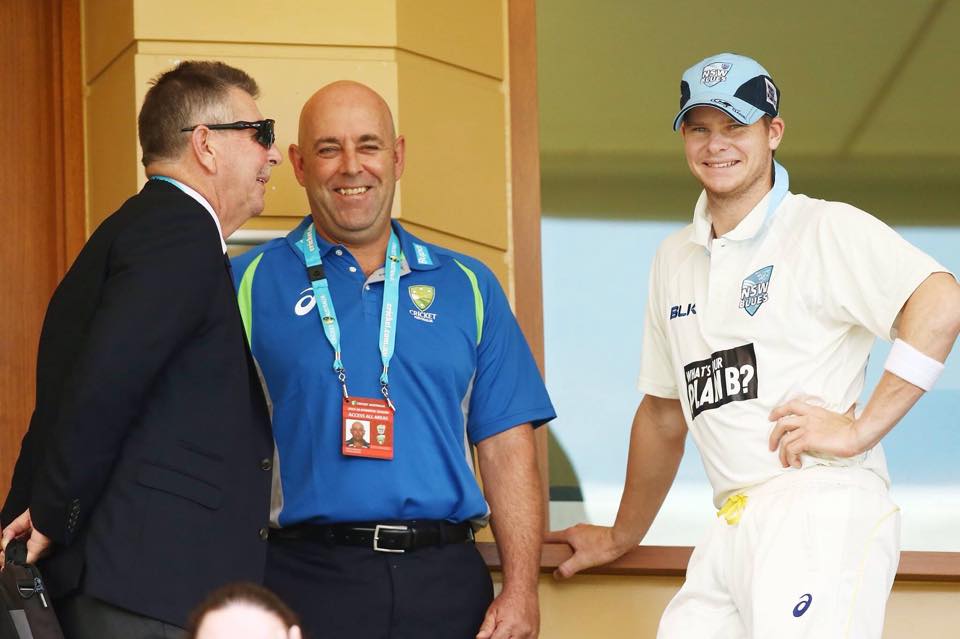
With the squad for next week’s first Test due to be announced on Tuesday morning, it will be interesting to see who stands where in the fast-bowling cartel. Certainly plenty of mulling over awaits Rod Marsh and his fellow selectors Darren Lehmann, Mark Waugh and Trevor Hohns.

If there’s one thing that we already know it’s that Josh Hazlewood and Peter Siddle will be taking up two, of the expected three, fast bowling berths set to be available alongside Nathan Lyon and allrounder Mitchell Marsh.

Hazlewood, 24, produced the goods when it mattered most for Australia at the Adelaide Oval. His innings (6-70) and match (9-136) figures were both career best’s, but it was the way in which he took over as the leader of the attack in the absence of Johnson and Starc that really highlighted his value to the current setup. However, on the downside, his workload (He bowled 119 overs during the series) is already being questioned just three Tests into the summer, this follows on from a hectic year since he debuted against India last December.

Unable to get into the Australian side just a few months ago (not forgetting the Victoria side during the Matador Cup), Siddle, 31, is fast becoming a valuable commodity among the bowling stocks. His ability to retain pressure is a quality not withstanding many of his counterparts and Hazlewood could do well to buy his mate a beer after he contributed heavily in earning the New South Welshman many of his nine wickets.

Despite complaining of a slightly sore back during the match, in which he claimed his 200th Test victim, Siddle should be deemed fit enough to face the Hobart Test. But alongside the aforementioned duo and a fit again Starc, how far does the bowling depth stretch in Australia? Here’s a look at the likely next in line.


James Pattinson (Age 25) Tests: 13 (51 wickets at 27.07)

His Test record is solid, his injury record less so. Since playing his last Test match in South Africa back in March 2014, a host of injuries have limited him to just four first-class matches for Victoria.

Among those setbacks were two serious back injuries sustained within the space of 10 months following the 2013 Ashes in England. Deterred by back complains and determined to correct his action, from front to side-on, he in turn injured his hamstring.

But injuries are nothing new for Pattinson. In November 2012, a year after making his Test debut, he suffered a rib injury so severe that, for a while, he was unable to breathe properly.

Despite all of this, he has fought his way back this summer, with the new action in tow. He has Impressed enough in both the Matador Cup and Sheffield Shield, to receive another opportunity in the wake of Johnson’s retirement.


Nathan Coulter-Nile (28)

Coulter-Nile could soon become just the second “double-barrelled” name to represent Australia in Test cricket since Chuck Fleetwood-Smith was handed Baggy Green number 153 in 1935.

Despite averaging a solid 28.97 with the ball across his 35 first-class fixtures, he’s only been used as a limited overs specialist for his country thus far, impressing in a smattering of ODI appearances. However, like most before him, he has suffered his fair share of injuries.

Plagued mainly by hamstring injures over the past couple of years, it’s in fact a shoulder injury which has kept him out of any Shield cricket so far this summer. He has also recently suffered the raff of the match referee – missing Western Australia’s latest fixture for his troubles – this indiscipline could cost him a place in the squad for Hobart next week.


Jackson Bird (28) Tests: 3 (13 wickets at 23.30)

Despite playing his last Test during the 2013 Ashes tour of England, Bird, unsurprisingly another man who has regularly struggled with injuries, could be set to benefit from the misfortune of others and gain a place in next week’s squad.

Rumours are suggesting that Bird’s previous Test experience and solid recent form could give him the nod ahead of Coulter-Nile as he seeks to revive his fledgling international career.

This summer tally of 18 wickets at 24.77, including a timely 5-69 against South Australia this week, his first five-wicket haul in 18 months, have certainly reminded the selectors of his worth as a third seamer. Recent English experience, where he took 19 wickets at 39.73 during an injury-marred spell for Hampshire this winter, could also count in his favour.

Jackson Bird Getty images
Jackson Bird in Sheffield Shield action for Tasmania. Photo Credit: ESPNcricinfo/Getty Images

Pat Cummins (22) Tests: 1 (7 wickets at 16.71)  

It’s easy to forget that Cummins is still only 22-years-old. Four years after taking 7-117 during a man-of-the-match winning debut in Johannesburg, he’s yet to play another Test.

That his crooked body has allowed him to play just eight first-class matches in his near five-year long career tells its own story. Currently back in rehabilitation with an early stage lumbar bone stress fracture sustained during a rare period on the park in England, he is expected to miss the entire summer.

But like Pattinson, who incidentally debuted a Test later, missing a home summer is nothing new for the youngster. He hasn’t played a Sheffield Shield match since suffering a stress fracture in the final back in March 2011.

Since then the injuries have stacked up. Soon after his Test debut, he suffered a stress fracture of the foot, before another back stress fracture put pay to his 2012 summer. After initially recovering from that injury, it again flared up during an A tour of South Africa in August 2013.

However, after contributing to the World Cup success in March, it seemed he had finally turned a corner, before the back finally gave in once more. He may well have to follow Pattinson’s suit and change his action before it all becomes too late.


James Faulkner (25) Tests: 1 (6 wickets at 16.33)

A limited-overs regular, Faulkner was called into the squad to tour Bangladesh after the injury to Cummins, but with that tour postponed he hasn’t yet had chance to add to his one Test appearance, earned more than two years ago. A none-too-serious toe injury, relating to a knee complaint, kept him out of Tasmania’s recent Shield fixture but a quick return is expected.

An allrounder in many senses, he has impressive first-class bowling (179 wickets at 23.97) and batting (2202 runs at 31.01) figures. Like Bird, he also gained valuable overseas experience with Lancashire over the winter.

Should Mitchell Marsh continue to blow hot and cold as the Test allrounder then expect him to challenge Moises Henriques for the a place in the side. Without Johnson and Starc, his left arm option could add variety to the current predominantly right-armed attack.


Jason Behrendorff (25)

Like Coulter-Nile, left-armer Behrendorff is another member of the strong current Western Australia fast-bowling cartel. But like his state teammate he has also struggled with injuries so far this summer, restricting his Shield appearances to just two.

A contributor across all formats, he currently averages 25.22 with the ball in first-class cricket, and has recently gained the backing of former Australian players Dirk Nannes and Michael Slater – who both believe he is a serious contender for one of the vacant Test berths.

After a strong start to last summer, his bowling was brought to an abrupt and premature end when he was diagnosed with a stress fracture in the right side of his lower back, whilst playing for the Perth Scorchers in the Big Bash in early February.

When back to full-fitness he will certainly remain on the periphery of national honours as shown by his selections for both the Prime Minister’s and Cricket Australia XI’s recently.

With Starc out injured, expect a limited over call up once India arrive in January – at the very least.

479847073RP004_Sheffield_Sh
Jason Behrendorff has erned high praise in recent months. Photo Credit: ESPNcricinfo/Getty Images.

Andrew Fekete (30)

The 30-year-old was called up from the relatively unknown for October’s subsequently postponed tour of Bangladesh, leading to many newspapers running the headline: “Who the Fek is he?”

Good question. His call up for that tour was on the back of a stellar Sheffield Shield season for Tasmania last summer – where he finished with 34 wickets at 24. He followed this up with an impressive showing during the A tour of India over the winter.

After the disappointment of not boarding a plane to Bangladesh, his form has tailed away dramatically. Despite a steady Matador Cup, his early season Shield form has underwhelmed massively. Dropped after two poor performances, he was lucky to earn a recallafter Faulkner went down injured last week. Unfortunatly he again underperformed, going at well over five-an-over during his 4-151 in South Australia’s massive 7-600d.

Although picked for the Bangladesh tour as a subcontinent specialist, he was never a realist contender for a Test berth in home conditions. With younger and quicker men seemingly ahead of him, it appears his dreams of a Baggy Green could well be fading into obscurity.

Also worthy of a mention: Gurinder Sandhu (New South Wales), Chadd Sayers (South Australia), Scott Boland (Victoria). 
Day/Night Test cricket – A step into the unknown

After three years of trails, tribulations, debates and suspicion, the inaugural Day/Night Test match is now just a matter of hours away from taking place at the Adelaide Oval.

In this piece I look at the five burning questions facing the match.

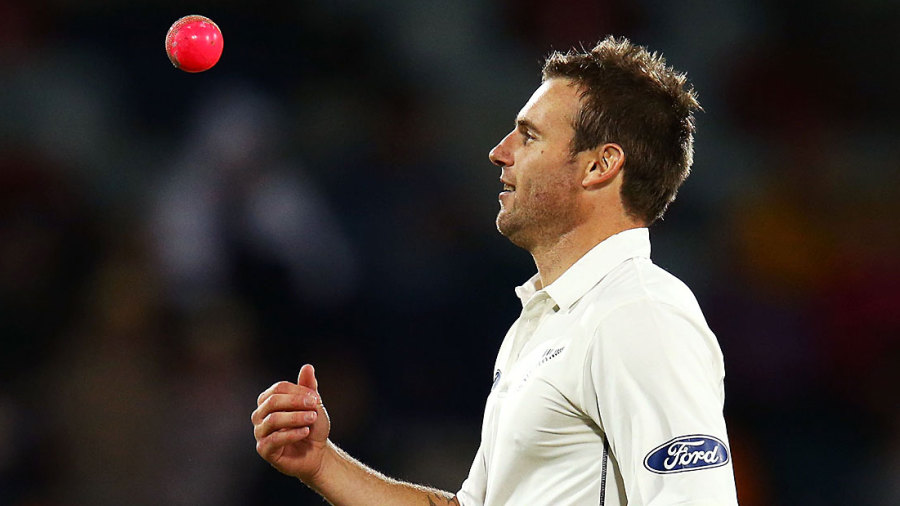
Bracewell - pink ball
Image Credit: Getty Images


Will the pink ball hold up for 80 overs?

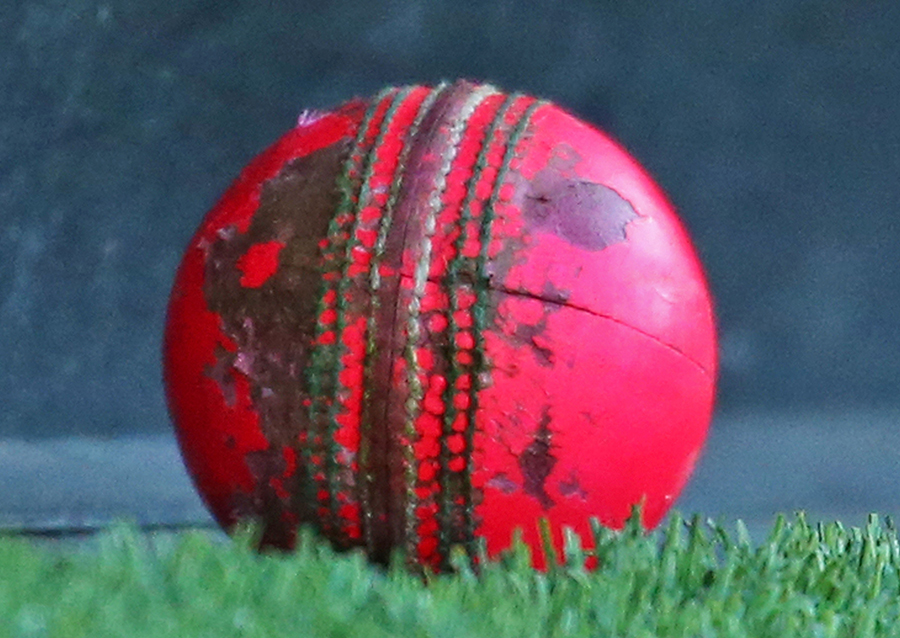
After a “Cricket Australia and Kookaburra nightmare” occurred during last month’s Prime Minister’s XI fixture at Canberra’s Manuka Oval, the longevity of the pink ball appeared a serious cause for concern.

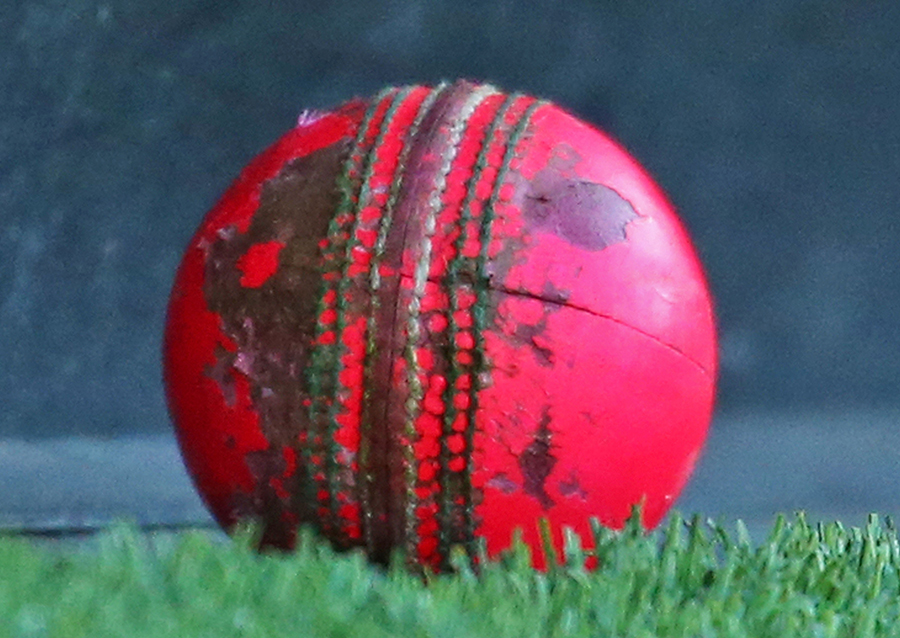
Many doubts were raised during that 50-over fixture, none more so than when the pink ball appeared to lose its lacquer and colour very quickly – turning it from pink to a greenish colour – long before the end of the allotted 50-overs.

Such deterioration was largely blamed on the abrasive Manuka Oval wicket and outfield, which took large pieces of lacquer off the ball when it was either bowled into the pitch or thrown into the wicketkeeper on the bounce. Measures to counter such issues have since been put into place.

To compensate for this Damian Hough, the Adelaide Oval’s chief curator, is working closely with the Cricket Australia hierarchy to maintain that the wicket for Friday’s fixture is set to include an extra couple of millimetres of grass than what would usually be prescribed for a Test match at the venue.

Hough’s will also be creating a smaller square than usual too – with just two wickets either side of the main strip. This, further coupled with a lush green outfield, should ensure that the ball keeps its shape and colour throughout the innings, albeit nullifying any possible reverse swing in the same instance.

This concept was trailed and found largely successful during the recent Adelaide Oval day/night Sheffield Shield fixture between South Australia and New South Wales, allying many of the fears first raised in Canberra a month ago.

Likewise, ball manufacturers Kookaburra have spent the best part of three years researching and developing the pink ball to ensure it resembles the similar mannerisms of its red counterpart.


Will the pink ball make for good cricket?

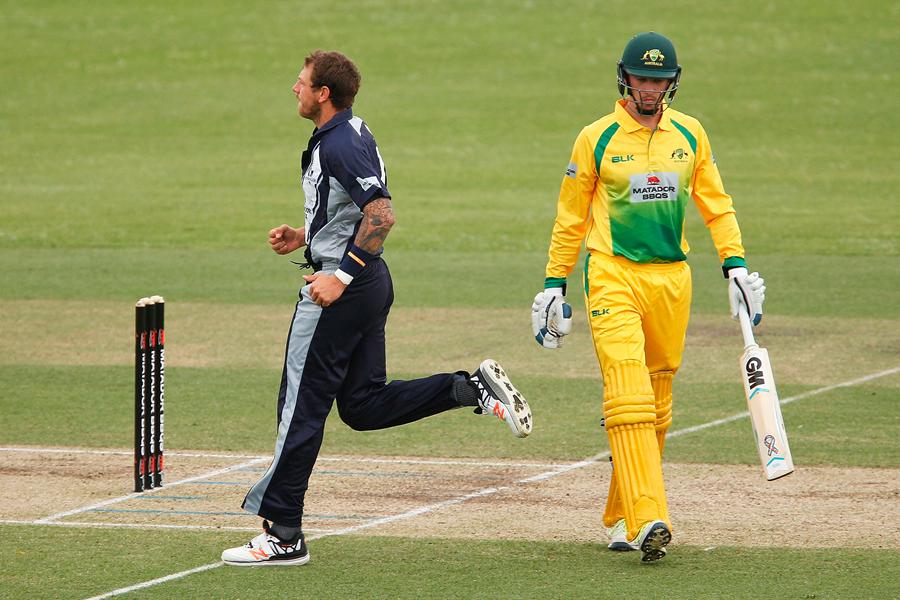
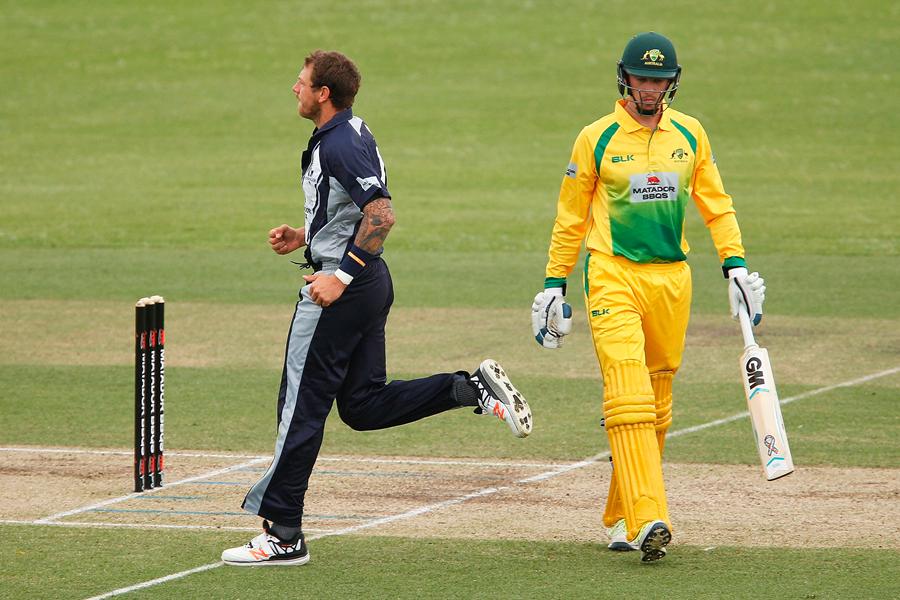
Victorian seamer John Hastings didn’t seem to think so after his side’s recent day/night Shield fixture with Queensland at the MCG.

The former Australian bowler dismissed the pink ball as being conclusive to a “boring brand of cricket”, with his main concerns being over the lack of hardness, movement or swing once the ball had reached the 15-over mark.

Hastings, no neophyte to the pink ball format, has suggested that changing the ball after 50-55 overs instead of the mandatory 80-over mark, which is currently in place in Test cricket, would allow captains to engage in more attacking field placings instead of asking their bowlers to bowl to straight fields.

With a lack of conventional swing available after the ball starts to soften during the 15-20 over mark, it’s difficult to imagine a way in which the quick bowlers will succeed during the afternoon session at least. With the lack of reverse-swing also a factor once the ball softens, it could lead to a period of attritional cricket – where both run scoring and wicket taking becomes predominantly difficult.

However, curator Hough has this week allied those fears by suggesting the added grass on the wicket will allow for an entertaining battle between bat and ball – something that can’t be said for the wickets on offer at the Gabba and the WACA in recent weeks.

Worn out pink ball
How will the Pink Ball hold up to the rigures of Test cricket? (Image Credit: Getty Images)


Do the twilight and evening periods give the bowlers an unfair advantage?

Like ODI cricket with the white ball, its pink equivalent has been known to swing more under the lights.

As well as swinging more once the daylight subsides and the floodlights take over – the pink ball, notably a discoloured pink ball, can also be difficult to pick up for both batsmen and fieldsmen once the sun begins to set.

This has raised debate over whether the ball will favour the quick bowlers much more in the second and third sessions, than it would do in the afternoon session. Early suggestions are that it almost certainly will – especially judging by the recent round of day/night Shield matches.

This issue was raised at the Adelaide Oval earlier this month. When Australian captain Steven Smith, at the time skippering NSW, made an interesting declaration on the first evening, he perhaps set a precedent for future captains in this new format.

Once Smith and David Warner were dismissed after a century-stand for the second wicket, it began a collapse as NSW lost eight wickets for 90 runs during the twilight and evening period. With just one wicket remaining Smith had seen enough and declared with the chance to have a bowl at South Australia, in the few remaining overs of the day, simply too good to refuse.

Mitchell Starc and Josh Hazelwood duly delivered for their captain, leaving the home side precariously placed overnight at 3-3.

Faced with a similar situation, expect other captains to follow suit in the search for late evening wickets. It could well give a whole new meaning to the term “nightwatchman”.


Will the pink ball favour spin too?

It was once perceived that the pink ball would hinder spin bowling during a Test match, but recent statistics have suggested to the contrary.

NSW left-arm spinner Steve O’Keefe has excelled during his three day/night Shield matches at the Adelaide Oval – so much so that he has been added to the squad for the inaugural Test.

In three matches at the venue O’Keefe has taken 18 wickets, including 5-89 and 6-70 in his first day/night fixture there two years ago. And although Australia are likely to favour Nathan Lyon and three seamers, his inclusion at least gives the selectors further options heading into the unknown on a wicket that Hough believes will take “some spin” due to its “coarse and thatchy grass covering”.

Another area which can benefit the spin bowlers is the green seam-stitching on the pink ball. On the surface it seems irrelevant what colour the stitching is, but the issue was this week raised by Smith who insisted that he had particular difficulty in picking up the green seam on the spinning ball whilst facing South Australian part-timer Travis Head during a recent Shield match.

Sheffield Shield - Redbacks v Blues: Day 1
The Adelaide Oval is set to host it’s fourth and most important Day/Night match. (Image Credit: Daniel Kalisz/Getty Images)


Will it attract more fans to the ground and on television?

The early indications are that ticket sales have been good and a crowd of around 40,000 is expected for the first couple of days. If as expected a crowd of around 40,000 does indeed turn up, then it would surpass the first day totals for the two most recent Ashes matches at the ground in both 2010 and 2013.

The match is not just attracting the locals either, around 60% of the non-member ticket sales have been to fans from interstate or overseas – leading to global interest and intrigue over the new concept.

Certainly the introduction of “After work” or “Twilight” tickets have added another dimension to the fan’s cricket experience in the local area. The tickets to be priced at $20 for adults and $10 for children – will allow access into the ground from 4pm onwards, meaning that fans can attend play for the final two sessions of the day at a discounted rate.

Such concepts are sure to engage the public interest with both workers and school children being offered the chance to still see their hero’s after a busy day elsewhere.

For television and more specifically Channel 9, the plan to host the match in Adelaide works perfectly as the network hope to capture primetime viewers in the highly populated Eastern states, similar to the way a Perth Test match would do so.

Pace, perseverance and pantomime villain: the tale of Mitchell Johnson

Steady decline and fading desire lead to 34-year-old’s retirement; he departs the game with 313 Test and 239 ODI wickets.

Mitchell Johnson retires 3

The end is upon us. Batsmen around the world can breath a sigh of relief. Mitchell Johnson has hung up his spikes for the 73rd and final time.

In the end his retirement had become public knowledge long before his announcement ahead of the final day’s play at the WACA. The whispers had grown louder; the desire had grown no longer and the career of a great enigma had reached its conclusion.

Ahead of this week’s WACA Test, Johnson had mooted the possibility that it could be his last. When he was blazed around the park by Kane Williamson and Ross Taylor on a scorching third day, he knew it was a wrap. First innings figures of 1-157 from 28 overs (the most expensive by an Australian bowler at the venue) certainly didn’t advocate for pretty viewing or a fairytale finish. However, as often symbolic with Johnson, his perseverance eventually came to the fore. In one final hurrah both Tom Latham and Martin Guptill were bumped out in emblematic fashion.

Once the doubts over retirement had set in during the six weeks preceding the failed Ashes retention, it appeared only a matter of time before the cricketing spark would fizzle away in favour of an easier life spent at home with both wife and daughter.

After deep discussions with wife Jessica and his mentor Dennis Lillee had taken place, it was decided that the opportunity to go past his idol Brett Lee’s haul of 310 Test wickets, would prove too enticing to walk directly away from.

Evidently, after passing Lee’s mark during his treacherous bowling display on Monday, the lack of desire to re-approach his bowling style – that has seen him only ever bowl fast and intimidating – came over in waves. He decided to pull the curtains on a career that had spanned 73 Tests and seen him take an impressive 313 Test wickets at 28.40.

Fittingly it would all end at the WACA. Over the years Perth and its famous old cricket ground have become a home from home for Johnson. His record there is outstanding too. After relocating to Western Australia from Queensland in 2007, his seven Tests at the venue have fetched him 45 wickets at just 22.77.

But the flatness of the wicket during this November match with New Zealand, along with the emergence of Mitchell Starc as the team’s new go-to-man, had both conspired to leave the Townsville-native somewhat underwhelmed.

It’s been difficult times for Johnson of late. His 1-157 at the WACA was the sixth time in the past cricketing year and the second time in just three innings that he had conceded more than 100 runs. In fact since his heroic efforts against both England and South Africa – now 20 months and 14 Tests ago – his average, strike rate and economy rate have all risen sharply in a sure sign his star was on the wane.

Sure, there have been glimpses of that magical time since, but only glimpses. During this year’s Ashes, the fourth afternoon at Lord’s springs to mind, as do the consecutive ripsnorters to fell Ben Stokes and Jonny Bairstow at Edgbaston. Likewise in more recent times the deliveries to dismiss Taylor, BJ Watling and James Neesham at the Gabba also stood out for their intimidating qualities.

This past year, though, has taken a huge emotional toll on Johnson. His aggression and general demeanour were both understandably down after the death of teammate Phillip Hughes last summer, while he also admitted to considering retirement after lifting the World Cup in early April.

Nevertheless he carried on alongside a corpse of aging teammates, with the shared burning desire to retain the Ashes on British soil – something which hadn’t been achieved by his fellow countrymen since 2001.

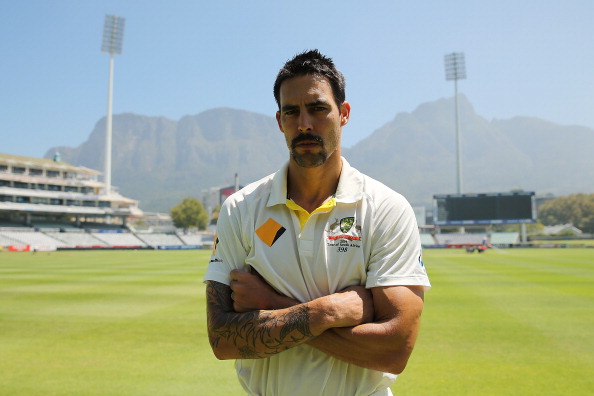
Mitchell Johnson Portrait Session
Mitchell Johnson poses during a portrait session at Newlands Stadium, South Africa (Photo Credit: Morne de Klerk/Getty Images)

But despite glimmers of light along the way, he never did quite conquer England or the English crowds. For a tearaway bowler – who relies on aggression, pace and bounce – the slow seaming conditions conjured up in the motherland were never truly to his taste.

In the eyes of the English supporters Johnson was most commonly renowned as the ultimate pantomime villain. At times the Barmy Army stood in awe, at others they derided, heckled, abused and mocked him until his confidence and bowling action were shot to the ground.

And when the action fell away, things rapidly spiralled out of control. If the chips were down, his natural slingy low-arm action would creep even further off and the radar would disappear completely. The once threat of wicket taking deliveries would simply turn into an incomprehensive haemorrhaging of runs.

His bowling against England certainly fluctuated from the sublime to the ridiculous. Regardless, his overall numbers certainly speak volumes among modern day Ashes contemporaries: In 19 Tests he captured 87 wickets at 25.21.

But those numbers only tell half of the story. For three out of the four Ashes campaigns he was bordering ordinary, for the other, he was quite simply breathtaking.

Johnson’s Ashes series

2009 in England. (5 Tests, 20 wickets at 32.55)

2010/11 in Australia. (4 Tests, 15 wickets at 36.93)

2013/14 in Australia. (5 Tests, 37 wickets at 13.97)

2015 in England. (5 Tests, 15 wickets at 34.93)

With Johnson, nostalgia will always harp back to the 5-0 whitewash series of 2013/14. The fear inside the eyes of the English can still clearly be pictured to this day. The left-armer simply couldn’t put a foot wrong. Bone-shattering accuracy was mixed with a fierce determination to right previous Ashes wrongs and of course pace, serious pace.

With a throwback-handlebar-moustache – drawing back to the good old days of Lillee and Merv Hughes, Johnson terrorised the England batsmen – neither top order nor tailender were spared his jaw dropping velocity.

Johnson, with some help from Brad Haddin along the way, fired Australia to their second Ashes whitewash in three home campaigns. He would later be awarded both the Allan Border Medal and the ICC International player of the year accolades for his achievements.

Showing this new found confidence was no fluke, he destroyed the South Africans in their own backyard just months later. Spread across the aforementioned eight Tests, he had hustled 59 wickets at an average of just 15.23 including five 5-wicket hauls.

This sudden resurgence was all the more remarkable given that he faced five months out enduring a lengthy rehabilitation following toe surgery in 2011. During which at times he even questioned whether he had the ability or desire to return to international cricket.

While he would never again scale such heights as he did in those few months against England and South Africa, Johnson had done enough to ensure he would go down in Australian fast-bowling folklore alongside the likes of Lillee and Jeff Thomson.

***

Although it’s been a tremendous journey, it certainly hasn’t been an easy one.  His perseverance shown during the times of adversity should serve as inspiration to any young fast bowler out there.

Growing up in the northeast Queensland coastal town of Townsville, for a while as a teenager, he had aspirations of becoming a professional tennis player. Bourne out of his admiration for American Pete Sampras, he would regularly put tennis ahead of cricket in the sporting ranks. Aged 14 he was offered a tennis scholarship in Brisbane, eventually turning it down to concentrate on becoming a scary fast bowler – Oh how many batsmen, the world over, would have wished he’d chosen the racket avenue?

At 17, he was spotted by Lillee at a fast bowling camp in Brisbane. The former Australian quick was so impressed that he immediately arranged for Johnson to spend time with Rod Marsh at the Australian cricket academy in Adelaide, from there he progressed to the U19’s before injury struck.

He went on to suffer four separate back stress fractures – symptomatic with fast bowlers in the modern era – either side of making his first-class debut for Queensland during the 2001/02 summer. Although Queensland knew they had a talent on their hands, he was still raw and very much injury plagued so it was no real surprise when he was released from his playing contract in 2004.

Never one to quit, Johnson persevered; driving a plumbing van whilst often playing as a specialist batsman in the Brisbane Grade scenes, all the while getting himself fit and firing before re-entering state cricket with Queensland.

The hard yakka and resilience paid off in late 2005 when he made his ODI debut against New Zealand at Christchurch. His first introduction to Test cricket was during the 5-0 Whitewash Ashes campaign of 2006/07. Although, intitally, he couldn’t force his way into the side ahead alumni’s such as Glenn McGrath, Stuart Clark and Lee, he did eventually made his debut against Sri Lanka at the Gabba in November 2007.

Aside from the devastating spells produced in 2013/14, he will also look back with fondness at other memorable bowling displays such as the 11-159 against South Africa at Perth in 2008 and the 8-137 against the same opponents in Johannesburg, just months later.

Johnson can certainly sit down with wife Jessica and daughter Rubika and be proud of his career. He’s been a mercurial force, an enigma, a thoroughbred, a champion, at times a lost soul, at others a throwback moustache-wielding destroyer.

And he leaves the game trailing only Shane Warne (708), McGrath (563) and Lillee (355) as the most prolific Test wicket-taker in the history of Australian cricket.

Farewell Mitch.


New Australia portray same old swagger

In what was being heralded as a new beginning for Australian cricket, the home side portrayed similar qualities of old to dominate the visiting New Zealanders during a 208-run victory at the Gabba.

Khawaja Cricket Australia-Getty Images
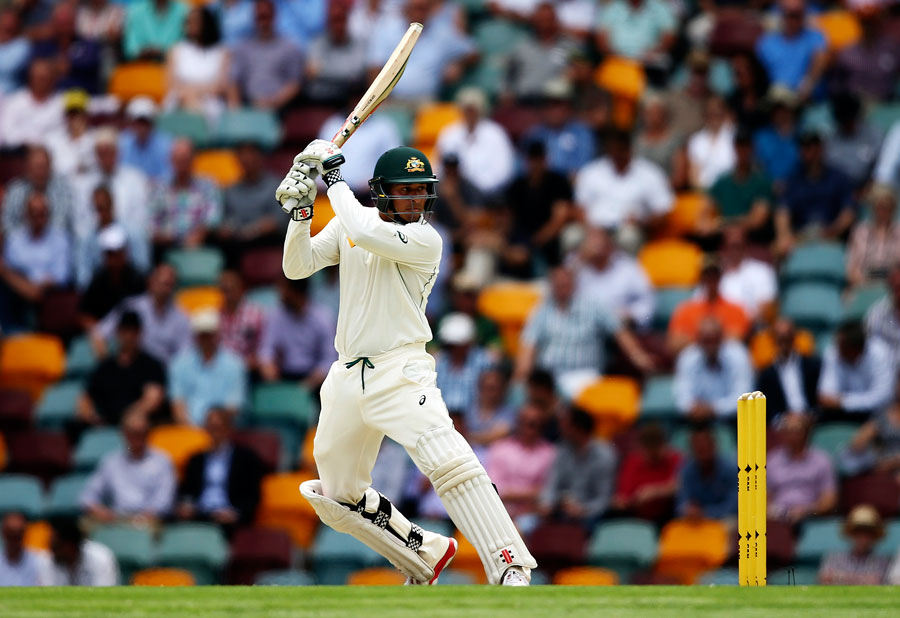
Usman Khawaja looks to have finally nailed down his spot at number three. Image Credit: CA/Getty Images.

What was all the fuss about Eh?

This was supposed to be a new summer, a new beginning, and a new era in Australian cricket. The five post-Ashes retirements wouldn’t be easily replaced overnight and the Blackcaps genuinely had their best chance to end a 30-year wait without a series win over their Tasman rivals. But in the end it was the “same old” for Australia as they clinically demoralised yet another visitor at the “Gabbatoir”.

Their record at the Gabba is unrivalled by any nation, at any venue. Not since the great West Indies side triumphed there by nine-wickets in 1988, have the home side been defeated in Brisbane. That was 27 years ago. The stats make for profound reading: 27 matches, 20 wins, seven draws and zero defeats.

This was a textbook Gabba performance from the Australians too – the batting in particular. Win the toss – check. Bat first – check. Solid opening foundation – check. Accelerate – check. Grind the opposition into the dirt – check. And then declare 550-600 runs to the good – check.

The bowling held up well too. If it weren’t for the exceptional Kane Williamson (140 & 59) then it could well have been far worse for the visitors. Especially in the first innings where he looked to be playing on a different wicket to his compatriots, regularly repelling the Australian quicks as often as the wickets tumbled around him.

So far ahead was Australia after three days that even the inclement Brisbane weather – which wiped out big chunks of the fourth day – couldn’t hold them back. In the end a 208-run victory, achieved around lunchtime on the fifth day, was a fair reflection of the gulf between the two sides in this Test match.

New Zealand captain Brendon McCullum will rue the failure to make inroads with the new ball on the opening morning as paramount to his side’s failings in the match. He certainly wasn’t helped with injuries to both spearhead Tim Southee and allrounder James Neesham along the way, while not many would have forecasted such inept bowling displays from both Trent Boult and Doug Bracewell.

But a large portion of credit must go to Joe Burns, David Warner and Usman Khawaja at the top of the Australian order. The first day’s play really set the tone for further dominance across the course of the remaining four. Never has Australia had a better first day’s batting at the Gabba than the 2-389 they racked up here.

Khawaja was without doubt the biggest positive to emerge from the Gabba success. The 28-year-old, beginning his third stint in the side after failed launches in both 2011 and 2013, began this summer very much at the crossroads of a career that has regularly promised much but seldom produced enough.

It’s a well known fact that Australia has gone almost five years without an established number three. Since Khawaja debuted in January 2011, thirteen players (excluding nightwatchman) have tried and subsequently failed to hold down the position. But while Steven Smith could have carried on in the role after batting there with reasonable success during the winter tours of the West Indies and England, promoting Khawaja, instead, was justified with verve against the Kiwi’s. The languid left-hander’s style and class made him perfectly suited to the number three berth; although his real test will come when he has to walk out at 1-0 and not the untroubled 1-161 and 1-237 he was duly provided with here.

The victory, in its entirety, has acted as a huge fillip for Rod Marsh and his selection panel. Marginal calls were made to bolt for Burns and Khawaja, as opener and number three, ahead of Western Australian pair Cameron Bancroft and Shaun Marsh. Hindsight is of course a wonderful thing, but these judgements are now looking particularly vindicated, as is the call to keep faith with Adam Voges at number five after much clamour was made to jettison him in favour of fellow veteran Michael Klinger.

As the aforementioned trio were “getting their feet under the Test cricket table,” over in Adelaide, Bancroft (111) and Marsh (92) were putting on 172 for Western Australia in the Sheffield Shield. South Australian captain Travis Head, profoundly built up by both Darren Lehmann and Ricky Ponting prior to the summer, won that match with his maiden first-class hundred and he too remains firmly on the periphery of national honours. Maybe there is more batting depth than many of us had originally considered.

Australia pic Getty
Photo Credit: Getty Images

The bowling too reaffirmed the Australian swagger of old. A key quandary going into the first Test of the summer was the debate over whether both Mitchell’s could line up in the same bowling attack. While both Johnson and Starc possessed moments of brilliance during the Ashes, they at times, also leaked runs at an alarming rate. Even though Johnson went at over five-runs-an-over in the first innings here, he did snare the vital wickets of McCullum, Ross Taylor and BJ Watling with his usual emblematic aggression.

Quite how long Johnson, 34, continues in the Test side is a question for another day. With inconsistency still often following Starc and Josh Hazelwood and injuries still blighting the young careers of James Pattinson and Pat Cummins, Australia and Smith very much need their spearhead to continue a little longer yet.

Starc’s six wickets were a match high and moreover his economy rate of 3.32 was an improvement on the 3.85 he averaged across five Ashes Tests earlier in the year. As mentioned on these pages before, this could very much be a breakout summer in Test cricket for the quick.

Often an afterthought in the Australian side, Nathan Lyon continued to quietly do his thing in Brisbane. He’s come a long way since bowling his country to success against India in Adelaide last summer. His new found fourth-innings confidence was there for all to see as he removed the obdurate Martin Guptill, the enterprising Williamson and the regularly dependable Watling. Outside of perhaps Ravichandran Ashwin, it’s difficult to reason of a finer current offspinner in the world game.

Lyon is becoming a reliable and instrumental figure in this new Australia set up. He’s now not just a senior in the side, only Johnson (72) and Peter Siddle (57) among the current setup have more Test caps than his 47, but also a senior member of the leadership group governed by Smith and Warner.

While this Australian side is by no means the finished article, they have made significant strides over the first Test of the summer to suggest that the old swagger isn’t far away, on their own turf anyhow.

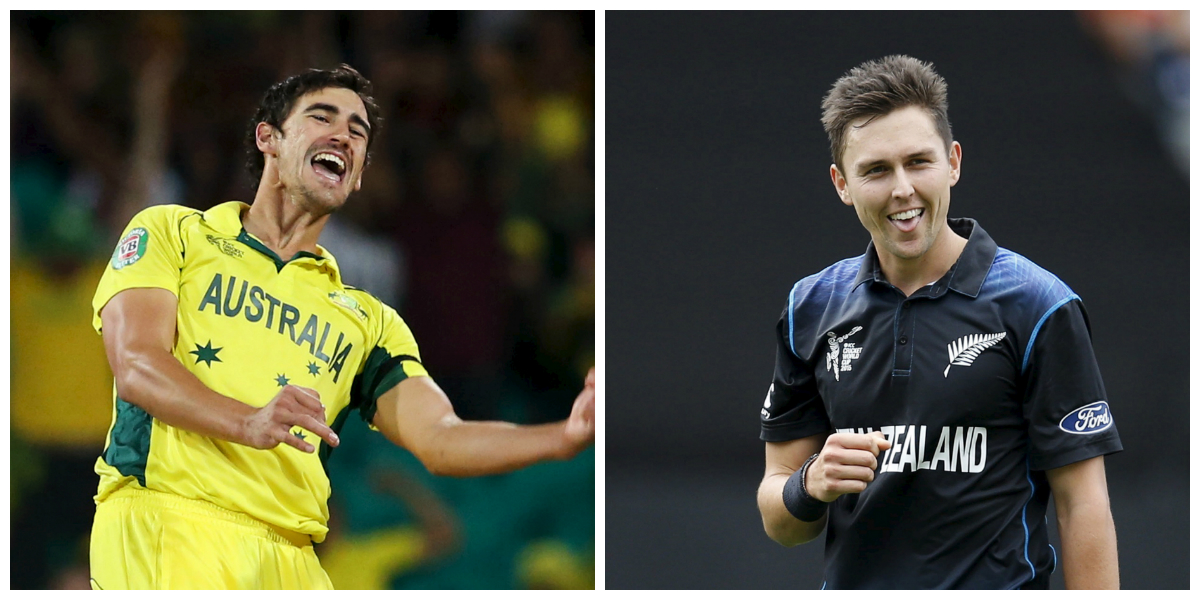
Boult and Starc set to come full circle

Almost four years since they made their Test debuts, the left-arm duo finally get another chance to faceoff – this time as vital ingredients in their respective nation’s chances of success.

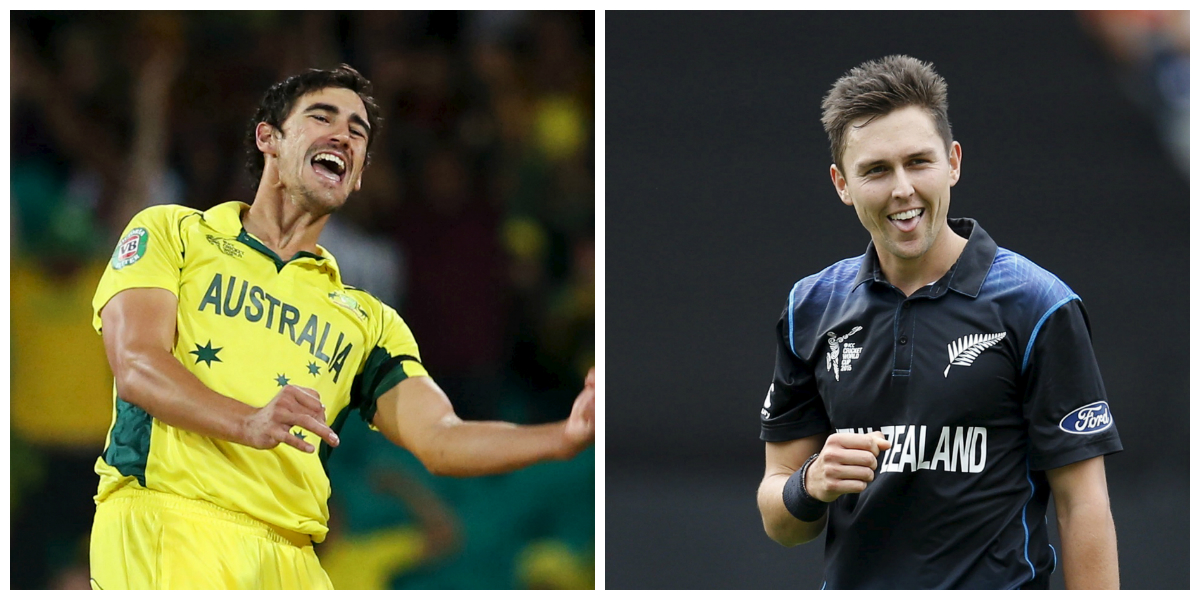
Boult vs Starc

It’s been 1,424 days since Trent Boult and Mitchell Starc last faced off in a Test match. Tomorrow they will go full circle as they prepare to draw battle once more, this time at The Gabba.

The previous and only time the two have met in Test cricket was during a humdinger in Hobart, as long ago as December 2011. Coincidently that match also marked the debut of Boult and just the second Test for Starc. New Zealand would eventually come out on top, claiming a nail biting 14-run victory to level the series at 1-1.

That match remains the last Test meeting between the Trans-Tasman rivals and things will be much different this time around. In Brisbane on Thursday, New Zealand will field seven of the same line-up from that Hobart encounter; Australia will retain just four of theirs.

As Australia begins their home summer a side very much in transition, their little neighbours from across the pond remain a settled unit under the sound tutorage of Brendon McCullum.

Many are making the Kiwi’s favourites for the three-Test series, but for them to overcome the barrier – which has seen them not win a series against the old enemy for 30 years – they must get into the inexperienced Australian middle order with early strikes.

For the home side, who have already made the decision to omit Peter Siddle from their line-up, it’s imperative that they regain the control in their bowling which was largely missing when they surrendered the Ashes during the winter.

With two of the three Tests being played on the fast and bouncy wickets of The Gabba and the WACA – this is set to be a series for the quicks. Moreover the tantalising battle between the left-arm speedsters Boult and Starc is set to be at the forefront of the excitement.

Both men have been in scintillating form this year. And four years out from their debut series, they rightfully come into this campaign with high expectations on their shoulders.

The bar was set exceedingly high earlier in the year. Although it was in white ball format, the two World Cup duels between Boult and Starc at both Eden Park and the MCG – were not for the fainthearted.

Witnessing that low scorer at Eden Park firsthand will live long in the memory. Australia looked dead-and-buried after Boult blew them away during his 5-27. But Starc, not to be outdone, almost singlehandedly hauled his country out of a huge crater with a combination of successful bumpers and inswinging yorkers. His 6-28 eventually wasn’t to be enough that night, but he would gain his revenge in the final a month later.

Another perfect Starc yorker accounted for McCullum in the first over at the MCG and his side never recovered. Despite dismissing Aaron Finch for a duck in the second over of the reply, defending just 183 never really looked plausable for Boult and his fellow Black Caps.

It was a World Cup to savour for both men. Starc was named man-of-the-tournament for his outlandish achievements; 22 wickets at 10.18 in all. Boult spent the six weeks hanging onto the Australian’s coattails, eventually matching him wicket for wicket, his 22 victims coming at a modest 16.86 apiece.

But while both men have enjoyed sustained success in limited overs cricket (Starc sits #1 and Boult #3 in the latest ICC ODI bowler rankings), they have endured contrasting Test careers thus far.

Boult’s 123 Test wickets at 27.12 – represent an excellent return for a fast bowler in this era. He’s been a near-everpresent alongside fellow new-ball partner Tim Southee and the pair have benefitted from and thrived under the imaginative captaincy of McCullum.

Starc on the other hand has often flattered to deceive with the red ball in tow. His career has at times resembled more the Hokey Cokey than Sir Paul McCartney’s Ever Present Past. At one stage he had failed to play any back-to-back matches since the two he played after debuting in late 2011.

Injuries, a perceived lack of consistency and the Mitchell Johnson factor, have all played there part in Starc’s lack of continuity in the Test side since. Despite debuting before Boult, he has played ten fewer matches. His 78 wickets at 31.80 are by no means terrible in today’s game, but the general consensus is, that he could be a much better bowler than those figures suggest.

It’s also worth pointing out the opposing economy rates between both Boult and Starc as a way of calibrating one man’s success and another’s lack of continuity. Boult gives away, on average, a stingy 2.86 runs per over, while Starc goes for significantly more at 3.42. This highlights Boult’s ability to do a containing job when required by his captain – something Starc, up until now, hasn’t been able to offer either Michael Clarke or Steven Smith.

The pair have encountered contrasting build ups to this series. Boult has been relatively held back after recovering from a stress injury of the back – sustained during the ODI leg of the Black Caps tour of England in June. He missed the subsequent tour of Africa to focus on getting himself 100% right for this series and has participated in just one first-class match since; albeit taking 5-97 for Northern Districts in a Plunkett Shield fixture against Wellington.

Starc, meanwhile, has been in breathtaking form – crushing through any batsman put in front of him. He shrugged off the postponed tour of Bangladesh with alarming ease – claiming a record 26 wickets at the scarcely believable average of 8.11 in the recently concluded Matador one-day Cup.

If that wasn’t enough he then picked up eight wickets in his one and only Sheffield Shield appearance, swinging the pink ball considerably throughout that match as he warmed up for a return to the Adelaide Oval in a little over three weeks time.

Away from the game, it’s fair to say the two men share plenty of similarities. Boult is Starc’s senior by just six months and one senses both men are relatively quiet characters when compared to their often more exuberant teammates.

Boult has gone on record saying this series is to be the highlight of his career. He will again be expected to spearhead the Black Caps pace attack, whilst offering McCullum both control and penetration in equal abundance.

Since his debut against the Australians, the Rotorua-born seamer has taken more Test wickets (123) than any other left-arm quick in the game, even Mitchell Johnson (116) trails in his wake. More of the same and Smith’s men could be in real trouble.

For Starc this summer offers a chance to finally make his mark and dominate a Test series after a stellar year in domestic and ODI cricket. He showed glimpses of his potential during the Ashes, but more often than not, he has proved much too expensive in a side already affording the added luxury of Johnson.

It’s not unreasonable to suggest that Starc has the correct tools to dominate Test cricket much like his teammate Johnson has done for the past two years. However whether he can finally make the evolution from white to red ball, remains to be seen.

Still, one thing’s for certain. Come The Gabba on Thursday morning we’re sure to expect some left-arm fireworks.

I, for one, can’t wait.

Damned if they do, damned if they don’t

Ridiculed by many, the Australian selectors find themselves stuck between a rock and a hard place as they try to find the right balance in their batting lineup.

Photo Credit: Getty Images

At a time when Michael Cheika and the Wallabies’ coaching staff face potential life changing selection dramas ahead of their World Cup final showdown with the All Blacks, back home their compatriots of the cricketing kind are faced with their own selection issues as they try to regenerate a team with the present and future in mind.

Chairman of selectors Rod Marsh and his four-man committee comprising of himself, Mark Waugh, Trevor Hohns and coach Darren Lehmann were faced with difficult selection decisions to make ahead of their three-match Test series with Tasman rivals New Zealand.

While they were never likely to please everybody with their 12-man squad for the first two Tests of the series, one has to symphonize with the panel after they came in for criticism over their decisions to omit Western Australian duo Cameron Bancroft and Michael Klinger in favour of Queenslanders Joe Burns and Usman Khawaja.

It’s been a tough year for Marsh and his panel. The former Test wicketkeeper admitted to making some fundamental selection blunders during the catastrophic Ashes campaign earlier this year. Now he and his fellow selectors must make sure they make the correct calls during a vital period for Test cricket in the country.

But while Marsh must now “live and die” by his selection decisions made in the wake of a huge transitional period in Australian cricket, you can’t help but have some symphony towards him and his fellow selectors. Especially at a time when all and sundry have had their say on who should replace the five retiring mainstays of Australia’s recent past.

While the four quicks somewhat pick themselves for the first two Tests after solid recent domestic form. Getting just three from the four of Siddle, Josh Hazelwood, Mitchell Johnson and Mitchell Starc, won’t be such a no brainer.

This decision was of course made easier due to injuries sustained to Pat Cummins and Nathan Coulter-Nile, as well as the continuous workload concerns surrounding James Pattinson. Although where Andrew Fekete now stands in the pecking order, is anybody’s guess.

On the other hand, selecting the batting order is, and has been of much greater concern in recent years.

The batting has for long been a contentious source for debate ever since Chris Rogers, Michael Clarke, Shane Watson and Brad Haddin decided to call it a day at the conclusion of the recent Ashes disappointment.

In fact, it most probably goes back much further to a time when Australia could call upon many batsmen regularly churning out 1,000 run Sheffield Shield seasons. Men like Stuart Law, Jamie Siddons and Brad Hodge would undoubtedly all have been mainstays of this current Australian batting outfit.

Sadly for Marsh and co the current domestic system is not in such rude heath. The selectors have in recent times found themselves stuck between and a rock and a hard place.

On one hand, they wish to have an eye to the future. On the other, they need in-form batsmen who can perform in the present. Bancroft and Klinger are two batsmen at different ends of this spectrum.

On the third hand, there is Burns and Khawaja. Where Shaun Marsh now fits into this way of thinking is perhaps still unclear. I’d have a guess at somewhere between the veteran’s Klinger and Adam Voges and the mid-twenty something’s Burns and Khawaja.

There is almost a good argument for each category of batsmen.

Bancroft is a solid opener in the mould of his mentor Justin Langer. At just 22-years-of-age, he has the potential to open the batting for Australia for over a decade – What’s not to like about that? On the flipside, has he done enough to warrant instant selection? (An average of just 36.25 across 25 first-class matches, suggests perhaps not).

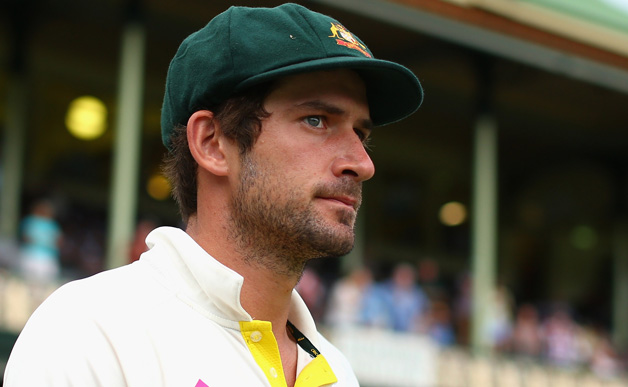
Joe Burns
Joe Burns has won the race to partner David Warner at the top of the Australian order. Photo Credit: Getty Images

There is definitely evidence of something promising there though. You don’t score a first-class double hundred against New South Wales or a 150 in India, without having something about you as a batsman.

Bancroft’s time will come. It would have come earlier than expected had the Test tour of Bangladesh not been postponed, but with David Warner now fully recovered from a thumb injury and Burns getting the nod to be his opening partner; instead Bancroft will have to head back to Shield cricket to improve on his game. Perhaps it’s not such a bad move.

Klinger’s case is an interesting one. If selection was based purely on runs and hundreds scored across the past year, then he would be a shoo-in. But there’s the age factor to take into account.

He was clearly in the discussion – Rod Marsh said as much. His sheer volume of recent runs across all formats demanded it would be impossible not to discuss him. Only Steven Smith and Kumar Sangakkara have scored more runs in the past twelve months.

Despite these highly impressive feats, you can understand why the selectors would be weary of picking another veteran in the top five.

With Voges, 36, already cemented in at five for the time being at least, justifying a place for Klinger in the top order would have been problematic for the selectors. If both men were to be selected and then fail, it would place the selectors in a difficult position. After all, when in bad form, older players are spared much less leeway.

Picking older players has worked for Australia in the recent past, most noticeably with Rogers and to an extent Voges, but now is the perfect opportunity to introduce the mid-twenty something’s – otherwise Australia will constantly find themselves in a phase of transition.

And Marsh was adamant he and his selection committee had chosen the right options in selecting Burns and Khawaja, whilst looking beyond Klinger:

“Of course we’ve looked at Michael Klinger,” Marsh said. “He’s got to keep making runs.

“Have you looked at Michael Klinger’s batting average in first-class cricket? It’s not as good as the other boys.

“Part of our selection policy is if you’ve got two blokes that are absolutely equal, you go for the younger bloke and I think that’s very fair.

“If one bloke is noticeably better and is more likely to influence the outcome of a game, then you pick the old bloke.

“But if they’re not noticeably better and they’re not likely to influence the outcome of a game, then you must always go with your youth.

“That’s our policy and whether you agree with it or not, it’s irrelevant.”

In many ways, it’s certainly hard to argue against such a policy. But what now for Burns and Khawaja?

Both are solid and relatively unsurprising selections. Burns was unfortunate to be overlooked (in favour of Voges) for the winter touring parties to the West Indies and England after scoring back-to-back fifties in his second Test against India last summer.

After starting out as a middle-order batsman for Queensland, it’s at the top of the order in which Burns has impressed in recent times. Opening for the Bulls he averages 46.58 compared to his overall first-class average of 40.40.

Furthermore the 26-year-old has already gained two-years of experience in English conditions after county stints with Leicestershire and Middlesex – A deed that won’t have been overlooked by the selectors.

Khawaja, 28, on the other hand is a relative veteran of Test cricket. Having debuted against England almost five years ago, the classy left-hander has long been earmarked as a potential star, but he never quite being able to reach the heights many have expected of him, playing his last Test during the 2013 Ashes campaign in England.

After fighting his way back from a serious knee injury, sustained last summer, Khawaja has impressed the selectors with his run scoring and leadership qualities and will now primed to add to his nine Tests – with the potential to finally make the number three position his own this summer.

While there will still be those who criticise the selectors for their decisions to look beyond Klinger, arguably the country’s most in-form batsman after Smith, and the younger and rawer Bancroft – the expectations have to be realistic. Young batsmen are no longer growing on the Sheffield Shield trees they once were 15 years ago.

Since Rogers played his first Test in early 2008 – then as a 30-year-old, a total of 13 specialist batsmen have debuted for Australia with an average age of over 27.

Between them Burns and Khawaja have an average age of 27. While in an ideal world the selectors would love to pick batsmen in their early twenties, circumstances deem they can’t.

Marsh and his men seem damned if they do, and damned if they don’t.

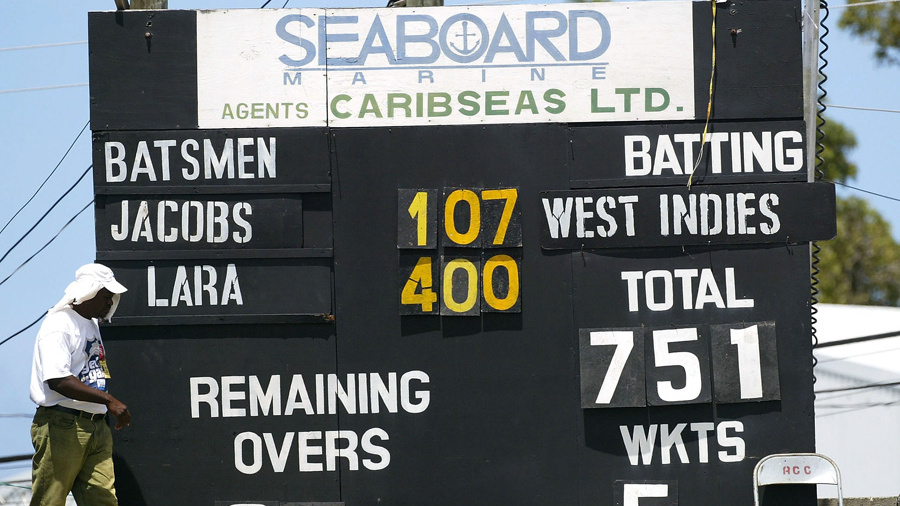
Rewind – When Lara ruled the world, again

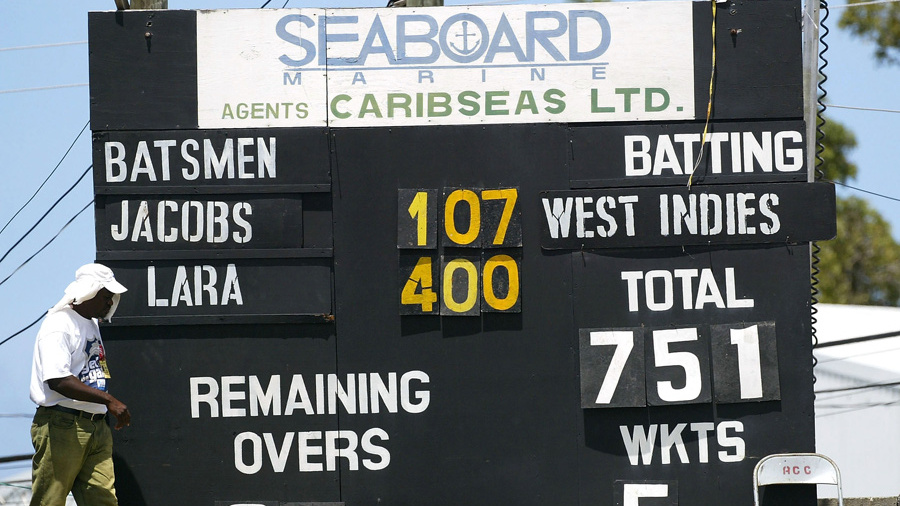
Six months after losing his world record, The Prince of Port-of-Spain was back leading redemption over England to the small tune of 400 not out.

Photo credit: AFP
Photo credit: AFP

When Brian Lara broke Sir Garfield Sobers 36-year-old world record Test score in 1994, he achieved something all of us could only ever dream of. When he regained his own record ten years later, he achieved greatness.

It was the Easter weekend of 2004; War-torn Iraq was implicated in more conflict as it marked the first anniversary of Saddam Hussein’s fall as president, Nepal witnessed protestors lining the streets of Kathmandu pleading against the suspension of democracy and Phil Mickelson celebrated victory in the 68th Golf Masters at Augusta.

Meanwhile over in Antigua, Brian Charles Lara, a month shy of his 35th birthday, was once again being hailed as the saviour of West Indies cricket. Maybe it was fate. How else can you explain the freaky circumstances in which he regained the world record Test score? It was ten years to the week since he first achieved the feat, at the same ground and against the same opposition.

Much had changed in West Indian cricket since Lara made 375 in 1994. They entered that series a domineering presence under the guidance of Richie Richardson, however just a year down the line they began a steady decline towards the lower reaches of the cricketing hierarchy, which was now dominated by the Australians.

Revisiting a young Lara back in 1994 and it was already abundantly clear that here was a batsman destine for great things. Already four years into his international career, he was certainly no stranger to big scores. His maiden Test hundred, in early 1993, was a monumental 277 against a strong Australian attack in Sydney and his appetite for batting long and scoring heavily was already evident among those in the game.

This was eminently underlined during his epic 538-ball knock in Antigua, an innings that was compiled against a solid English attack including; Angus Fraser, Andrew Caddick, Chris Lewis and Phil Tufnell. It shot the talented Trinidadian to instant international recognition and fame, and just two months later he followed it up with another record marathon innings.

Batting for county side Warwickshire against Durham at Edgbaston, he belted an unbeaten 501. Twenty years on and Lara still remains the only player to pass 500 in the history of first-class cricket. An individual innings of half a thousand runs still defies belief, even in a day and age when batting usually tips the balance of fairness in the sport.

Lara’s highest Test score record of 375 would go on to last for 3,464 days before it was eventually broken by Australian Matthew Hayden. The powerful Queenslander contrived a brutal 380 against a weak Zimbabwean attack at Perth in October 2003.

The 2004 Brian Lara vintage was a markedly different proposition to the model of 1994. The classy southpaw had endured a decade of West Indian decline that was intertwined with board interferences, heavy expectation and several difficult stints as team captain and spokesman.

In early 2004, they came up against a quickly improving English outfit. Under the relatively new stewardship of Michael Vaughan, the English were at the start of their 18-month ascendency towards the top table of Test cricket.

After three heavy defeats in Jamaica, Trinidad and Barbados, West Indies cricket was in complete chaos. Never had the Windies been whitewashed by the mother country, however this was now a realistic proposition heading into the fourth and final Test in Antigua. Furthermore it coincided with Lara being in the midst of a rare barren patch, with his six previous innings yielding just a combined 100 runs.

Stephen Harmison had the wood over Lara and the West Indians. His 7-12 had destroyed the home side for just 47 at Kingston, and he returned to contribute heavily to English success in Port-of-Spain, this time dismissing Lara for two single figure scores. While the West Indies captain improved his form at Bridgetown, hitting a pair of gutsy 30’s, he was still looking a far cry from the fluent strokemaker we had become to expect.

But that was all to change at the Antigua Recreation Ground. Lara would be no Easter bunny for Harmison and co on this occasion. Instead he would unfurl misery on a tired English attack and send the streets of the Antiguan capital into utter jubilation. In the process he became the first man to pass 400 in 127 years of Test cricket history.

***

Good Friday April 10th 2004 – Antigua Recreation Ground, St. Johns, Antigua

Brian Lara strolls out to bat at the fall of the first wicket as opener Darren Ganga is dismissed an hour into the fourth and final Test of the series with the score on 33.

He looks calm and determined, as if to say: “Today is gonna be my day!”

Greeting The Prince to the crease is his nemesis Harmison.

The wicket looks as flat as a pancake, typically with the Recreation Ground of late; England needs to strike while the ball is still hard and newish.

After an early optimistic LBW shout from Harmison, he has Lara nicking off fourth-ball. Or so he thought. So convinced is Harmison that the batsman has feathered through to the keeper, he doesn’t even turn around to check Darrell Hair’s finger go up before celebrating.

Hair, an umpire who would go on to surround himself with controversy in later years, is having none of it and duly rebuffs the bowler’s pleas.

Lara turns away and looks suspiciously back at a despondent Harmison and England’s chances of a second dismissal have disappeared.

Typically with such passages of play, the very next ball is put away through backward point. Lara is away with his first boundary.

He begins toying with the English bowlers, regularly cutting them to the vacant third man boundary before and after a rain delay scuppers the start of the second session until just after 4pm.

A fierce cut shot is slashed through the covers as Lara begins to show more authority in moving through the 30’s

He canters to a half century just moments later with a crushing pull through midwicket from his 61st delivery. Simon Jones is the bowler taking the punishment on this occasion.

As the twilight closes in on the picturesque Caribbean venue, play is abandoned for the first day with a relieved Lara trudging off with 86 unbeaten runs to his name.


Saturday April 11th 2004

A healthy crowd gathers into the ground as Lara begins day two greeting Matthew Hoggard with a dreamy off drive down the ground. One ball in and Lara moves into the 90’s.

He moves along to 98, bisecting midwicket with a clip off Hoggard and a 25th Test hundred follows shortly with a couple into the offside against the same bowler. Lara raises the bat with a brief smile – but you can tell he’s not nearly satisfied with just a hundred.

One hundred runs in and already comparisons are being made amongst the commentators of Lara’s previous record on this ground; there is a resounding sense that something special is once again unfolding.

With Lara on 127, this notion is briefly forgotten as Hoggard fires in a direct hit from the deep. For a moment it looks as though his innings will be cut short. Lara doesn’t show the mannerisms of a worried man, but direct hits are often closer than they first appear to the batsman…

Turns out he was in by an inch, maybe two inches.

Another Hoggard throw, this time much more wayward, brings Lara a bonus five runs and the two-hundred-run partnership is soon brought up between himself and Ramnaresh Sarwan, its shortly followed by 150 for the skipper.

Like the first ball of the morning, Lara starts the afternoon session by dispatching Hoggard to the fence, this time through point.

His first six of the innings is a supremely timed straight hit down the ground off spinner Gareth Batty. It was vintage Lara, all majestic high back lift and whistle clean follow-through – it pushes him into the 190’s.

Just two balls later and Lara is leaping for joy as a clip into the legside takes him past two hundred for the seventh time. This one comes off just 260 deliveries.

With England now a bowler short after a stomach bug struck down Hoggard; they are forced into using the military medium bowling of Marcus Trescothick, alongside the even friendlier offerings of captain Vaughan’s offspin.

Flat-pitch, dead rubber and a bowler light – if ever there were at time to make hay as a batsman, it was now.

And Lara duly delivers by blazing his second maximum – a near on replica of his previous effort against Batty.

The procession continues as he begins to sweep everything the spinners have to offer into submission. At one stage he his strike rate is over 150.0 while playing such strokes.

Two hundred and fifty comes and goes, with Batty bearing the brunt of the carnage once again. This time Lara shimmies down the track before backing away to leg and driving inside out over the covers.

He takes 12 off an Andrew Flintoff over including consecutive boundaries, the first a pull in front of square and the second a textbook square drive. Three hundred approaches.

Just seven runs shy, Lara blasts a fierce one through the fingertips of Batty. To call it a chance would be to shameful. It was simply too fierce.

A quick single brings 299. The great Martin Crowe once made 299, so did Sir Donald Bradman. Crowe never made a triple hundred. Bradman made two.

Lara makes sure he joins The Don; a second triple century is secured. Another single brings the elation. It takes him just 404 balls.

He celebrates a third hundred with a third six to finish the day – Vaughan the unfortunate soul this time around. 313 not out.

Photo Credit: AFP
Photo Credit: AFP

Easter Sunday April 12th 2004

An electric buzz enriches the ARG on this fine Sunday morning. Anticipation is high and the excitement is one of a nervous kind.

The 330’s are an intriguing beast in cricket.

Hanif Mohammad, Walter Hammond, Mark Taylor, Graham Gooch, Chris Gayle and Bradman – are all names who have never gone on beyond the 330’s. Perhaps there is a curse.

As Lara reaches the 330’s on this occasion he is greeted with a bouncer brigade from Harmison armed with the third new cherry.

As he breaks through the curse of the 330’s, he now has his sights set on 350. This is achieved 494 balls and 681 minutes into his innings with a couple through the onside.

The atmosphere begins to anticipate further. The locals can touch the tumbling records. Sir Leonard Hutton’s 364 is next in his sights. The field now has an ODI feel to it, there are ones and twos aplenty.

He goes past Sobers again, and then toys with Vaughan’s mind and the field once more.

Now the nerves begin to set in. On any other given day, he could well have nicked Batty to the keeper, on this day he missed it by a whisker.

It must then have been simply nervous energy/tension when he launches Batty downtown for a fourth six – 380 not out. He equals Hayden’s record.

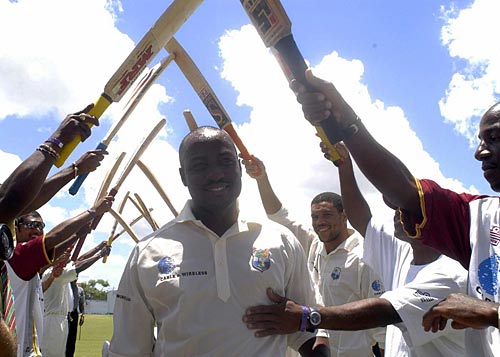
A sweep, a beautiful sweep down to the fine leg boundary and HE’S DONE IT. Brian Charles Lara has retained his world record highest Test score.

The ARG erupts. Lara is greeted on the field by the great Sir Vivian Richards and Antiguan Prime Minister Baldwin Spencer.

He fist bumps with partner Ridley Jacobs, but this isn’t over, he wants 400.

England’s bowlers are understandably spent by now. Harmison is forced out of the attack after repeatedly running on the pitch, while Hoggard is back at the team hotel trying to convince the doctors he’s still unwell.

It is quite fitting in a way when Lara finally brings up his 400th run with another well timed sweep off the unfortunate Batty.

Five hundred and eighty two balls later and Brian Lara is 400 not out.

***

What happened next?

  • Upon reaching 400, Lara duly declared the innings in a bid get the game moving along, but despite following on, England clung on for a draw to win the series 3-0.
  • Lara received criticism from some quarters, including Australian captain Ricky Ponting – who claimed he was selfish in batting too long instead of pursuing victory for his side.
  • Lara would go on to play international cricket for another three years before he retired from all formats after he captained the WI during a home World Cup in early 2007.
  • His record of the highest Test score is still intact, with Sri Lanka’s Mahela Jayawardene since coming the closest to breaking it with 374 against South Africa in 2006.

Overwhelmed Cricket Australia XI not helping anyone

In theory the idea to include a Cricket Australia XI for the ongoing Matador Cup was a great concept, but in hindsight the blueprint was all wrong.

James Pattinson claims another wicket as the CA XI were bowled out for just 79 against Victoria. (Photo credit: Getty Images)

Yes, justifiably, we’re only two matches into the existence of the new CA XI – a two-year trial project side – but still, it’s already difficult to vindicate what good can to be gained from record thrashings at the hands of international-laden New South Wales and Victorian sides.

Sure, exposure to international-quality opposition isn’t a bad thing for this group of youngsters, but will they really benefit from being overwhelmed by the superior qualities of Mitchell Starc and James Pattinson on a regular basis?

While no one was expecting the CA XI to pull up any trees in their first couple of outings, to be bowled out for just 59 and 79 in their two innings just goes to show the vast bridge in quality and more importantly experience between themselves and the rest of the field.

The team that took to the paddock for Monday’s fixture with New South Wales consisted of an average age of just 21. Five of those men were making their List-A debuts with Ryan Lees also debuting against Victoria in the second fixture. While the CA XI boasted just 67 List-A appearances between them, the Victorian’s collective count was 884, in fact six members of their side had individually played more matches than the entire CA XI playing eleven.

Furthermore, Victoria included ten players with international experience with a further two in Peter Siddle and Clint McKay who couldn’t make the side. Fawad Ahmed, an Ashes tourist just two months ago, wasn’t even included in the squad.

Although the postponement of Australia’s Test tour to Bangladesh has strengthened the overall standard of the Matador Cup, it has also heavily disrupted the preparations of the teams with players selected for that tour. This left many players unsure of whom they were going to represent up until a few days before the competition began on Monday.

For the CA XI squad; Will Bosisto, Marcus Harris and Lees were not part of the original squad, while Jimmy Peirson was sent back to Queensland for injury cover before returning when Joe Burns was declared available.

One also wonders if the squad selected was anything near as strong as what Cricket Australia National Talent Manager Greg Chappell had envisaged before its original make up. He practically said as much upon the squad’s announcement last month:

“There are probably three or four players that we thought we might have in the CA XI side who have gone on and been selected by their states and would expect to play prominent roles in their state squad.

“So maybe we have frightened some of the states into thinking they needed to pick some of their young players and, if that’s the case, that’s terrific.”

But while captain Bosisto was adamant that his side would improve in their final four fixtures, it’s hard not to foresee further mismatches if the squad remains the same.

“We’ve got the talent, we just haven’t performed to the best of our ability,” said Bosisto after top-scoring with 21 against Victoria.

“I’ve heard people say ‘do you need an experienced player in your line-up?’ and I guess that would be one approach.

“But I think the whole idea of having a Cricket Australia XI in the tournament is to give 11 young guys exposure and the opportunity to see what it’s like at the next level and what we need to do to be able to perform at this level.”

It’s abundantly clear the CA XI could benefit from further guidance in their side – starting with the inclusion of a few more experienced faces along the way – something in which Cricket Australia will inevitably look into at the conclusion of this year’s tournament.

Surely more could have been done to include the likes of veteran legspinner Fawad Ahmed and batsman Mark Cosgrove who were both omitted from their respective State squads.

Cosgrove, who has just returned from the UK after captaining Leicestershire in the County Championship, could certainly have offered plenty of support and guidance to the young CA XI squad. Likewise, could names such as David Hussey or Chris Rogers – still active players – have been sort out by Cricket Australia to play a role in the development of a youthful and inexperienced CA XI outfit?

Another route Cricket Australia could go down is to follow a concept derived by the ECB. The model was based under the name ‘Unicorns,’ and was a team made up of the best Minor Counties players along with promising youngsters and un-contracted County pros. By including Minor Counties players, the most of whom have at some point played County cricket, the team at least had some experience and knowhow to guide them through the difficult times that often occur against stronger opposition.

While the Unicorns no longer participate in the English one-day cup tournament – they instead exist in the County second XI competition – they are a model in which Cricket Australia could at the very least acknowledge going forward.

In the meanwhile it is hoped that the current CA XI will start to show greater signs of improvement as the tournament progresses into its second week – although it won’t get any easier as they face a Tasmanian side, containing three World Cup winners in their ranks, next.

Improvement is needed, if only just for the creditability of the tournament or else the CA XI’s name could one day become a trivia question like that of the Canberra Comets.

Disappointment for fringe players as Bangladesh tour postponed

Tour cancelled due to security concerns, leaving the newcomers to wait a little longer for an opportunity.  

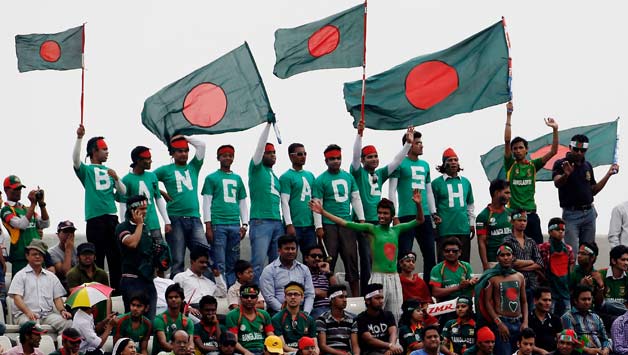
banglasedsh

It was being billed as the start of a new era in Australian cricket. The Ashes were gone, but not all was lost as new skipper Steven Smith was given an almost-blank canvas in which to begin his reign. However, in the end safety concerns put pay to the tour of Bangladesh, with the questions still far outweighing the answers.

The wait for a new beginning in the Australian Test setup will have to wait a little longer. Their next fixture isn’t until the start of November – when they host the first of three Tests against a strong-looking New Zealand outfit at the Gabba in Brisbane. Nevertheless a lot can happen in cricket in the space of a month – Could there be mass changes when the squad for that series is announced in a couple of weeks?

Other questions remain too. Where do people like Cameron Bancroft and Andrew Fekete now stand within the setup with the likes of David Warner, Josh Hazelwood and Mitchell Johnson due back into the side against the Kiwi’s?

Bancroft, it seemed, was vying for an opening berth alongside the more experienced pair of Shaun Marsh and Joe Burns. While Warner’s broken thumb was to rule him out of contention for the Bangladesh tour – meaning two new openers were to be found to fill the void left by Warner and the newly-retired Chris Rogers. Now when Warner, if as expected, regains full heath for the New Zealand series – only one other opening spot will be vacant.

While it’s hard to guess which of the three mentioned above is ahead in the selector’s mind, one suspects that Joe Burns could be given first refusal after he was chosen to open the batting in the recent ODI series in England. Burns performed admirably in his two Tests against India last summer and was unfortunate to be excluded from the winter tours to the Caribbean and the United Kingdom, and now could be his chance to solidify his place in the side. A lot could now also depend on how each batsman performs in the upcoming Matador Cup.

The selection of Melbourne-born Fekete for the Bangladesh series surprised many. The 30-year-old has only played two summers of first-class cricket in his short career with Tasmania and his subcontinental inclusion somewhat echoes that of the horses-for-courses selection of New South Wales’ seamer Trent Copeland for Michael Clarke’s first tour in charge in Sri Lanka four years ago. Copeland played three matches on that tour and was never seen in a Baggy Green again.

Will Andrew Fekete get another opportunity to make his Test debut?

Fekete isn’t a bad bowler of course. He was the leading quick in last season’s Sheffield Shield campaign where he took 34 wickets at 24, and his versatility and ability to find reverse-swing on dry pitches impressed the selectors during the recent A tour of India enough to warrant his inclusion for Bangladesh. That all being said, it seems unlikely, with other younger and faster options available, that he will be in the squad for the first Test of the summer at the Gabba.

The postponement of the tour is also disappointing for the likes of batsman Adam Voges and wicketkeeper Peter Nevill. With Warner out injured, Voges was appointed vice-captain for the tour, and due to turn 36 in the next few days, he will know that his opportunities to lay stake to a regular berth in Australia’s middle order aren’t going to last forever.

Nevill’s case is different, unlike Voges he has more time on his side. The 29-year-old made a solid if not spectacular start to his international career after replacing Brad Haddin one match into the Ashes series and would therefore have looked at the Bangladesh series as one where he could really nail down his spot in the side with Matthew Wade hot upon his heels after an impressive showing in the ODI series that preceded the Ashes.

On a whole the series would have been a great opportunity for a young and regenerating Australian side to test themselves against a fast improving Bangladeshi outfit in difficult conditions, but in the end common sense had to prevail with the safety of players and support staff taking precedence.

The wait will have to continue a little longer.

Strong Yorkshire, Strong Australia?

The folk from Yorkshire and Australia have shared cricketing links for over a century.

12029000_10154440603287281_136459258_n

Watching England play Australia in the recent ODI at Headingley really got me thinking. Why as an Englishman do I have such a soft spot for the Australian’s and their never say die attitude?

As Glenn Maxwell pulled off two miraculous catches – one a full length grab at point to get rid of the dangerous Eoin Morgan, the other a seemingly impossible piece of work in front of the Western Terrace boundary to take down Liam Plunkett – It finally came to me.  We’re pretty alike us Yorkshiremen and those Australians.

Even though some from “God’s Own County” might be too proud or stubborn to admit it, there are plenty of similarities between themselves and their compatriots from Down Under. Maybe it’s the shared shear bloody-mindedness to win at any cost, or perhaps the nature of the personalities. Both are assumed to be brash and uncomplicated people at times – certainly on the cricket field. But make no mistake about it, win or lose, there will always remain a sense of pride and respect between them.

Many of the same values are shared between t’Yorkshire folk and those ‘Stralian’s, and not just on the cricket field. Rugby League has shared strong links between Yorkshire and Australia for generations with players and coaches regularly moving between the Super League (of which six teams are based in Yorkshire) and Australia’s NRL. Furthermore in football, Australian-born pair Harry Kewell and Mark Viduka were paramount to Leeds United’s success at the turn of the century.

Australian's Harry Kewell and Mark Viduka both enjoyed stints at Yorkshire club Leeds United.
Australian’s Harry Kewell and Mark Viduka both enjoyed stints at Yorkshire club Leeds United.

The association with Yorkshire and Australian cricket goes back afar. Look through the Wisden archives and you will find many a tough battle between an unshakable and assured Yorkshireman and his Aussie counterpart. Think Hedley Verity against Sir Donald Bradman or Ray Illingworth against Ian Chappell or even Geoffrey Boycott verses Dennis Lillee – there is a world of history between England’s biggest county and the former British colony and to this day the pair continue to have strong links.

Certainly for this Yorkshireman, many of my early cricketing memories are intertwined with my first vague cognizance of the land Down Under. Be it the soothing and easily recognisable voice of Richie Benaud or stories from my grandmother – who watched on as Bradman led his invincibles side against an HDG Leveson-Gower’s XI at Scarborough in 1948.

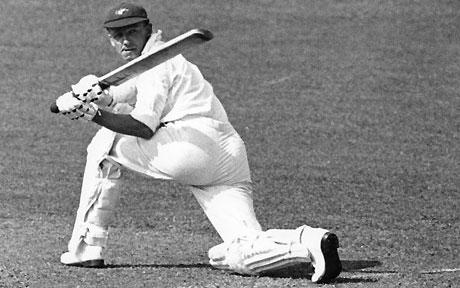
Bradman of course had his own special connection with Yorkshire. It was at Headingley, in which he scored his highest Test score of 334 on the Ashes tour of 1930. Three hundred and nine of those runs were made on the opening day as t’Yorkshiremen flocked in from all around to witness the beginning of the greatest career of them all. The Don would go on to average 192 at the famous Leeds ground.

When Yorkshire CCC announced in 1991 that they were to abandon their unwritten policy of only allowing those born within the borders of the county to represent them, they originally turned to an Australian.

Before Sachin Tendulkar, then just 18, famously became the first non-Yorkshireman to play for the county, Australian seamer Craig McDermott was initially lined up for the role, however when injury ruled him out Yorkshire instead went down a different route.

McDermott would have become the first of a long list of Australians to represent the White Rose but instead that mantle went to Michael Bevan. The Pyjama Picasso signed in 1995 and played for two summers. Whilst he scored nine centuries and averaged 58 in his first-class assignments, typically with Bevan, it was the limited overs stuff in which he really excelled. In fact no Yorkshire cricketer – who has appeared in at least ten List-A matches, has bettered his average of 61.82.

Once Bevan was selected for Australia’s 1997 Ashes campaign, opener Michael Slater was originally intended as an overseas replacement, but when he was surprisingly involved on that same tour, Yorkshire were led to the services of a 27-year-old South Australian going by the name of Darren Lehmann. The rest, as they say is history.

For seven summers between 1997 and 2006, ‘Boof’ dominated the shires, scoring over 14,000 runs across his 88 first-class matches in the process. Yorkshiremen don’t easily accept outsiders but boy did they respected this one. Lehmann’s first-class average of 68.76 is higher than anyone else with at least 500 runs for the Tykes.

Darren Lehmann sweeps fellow countryman Shane Warne during a county match for Yorkshire.
Darren Lehmann sweeps his fellow countryman Shane Warne during a county match for Yorkshire.

His 1,416 Championship runs in 2001 marshalled Yorkshire towards their first title in 33 painfully barren years. For this inspiring deed, Lehmann’s name will be forever sketched into Yorkshire folklore. The ideal overseas player, he was also the original Australian flag bearer for Yorkshire cricket. He famously went on to sign off with an innings of 339 against Durham at Headingley in 2006, helping his adopted county save face and starve off relegation in the process.

Of the 30 overseas players employed by the county since 1992, 14 have been Australians. After the early successes of Bevan and Lehmann the county had a substantial pulling power when it came to attracting the Aussies and prominent names arrived in the following summers: Greg Blewett (1999), Matthew Elliott and Simon Katich (2002), Damien Martyn (2003), Phil Jaques (2004-05/2012-13), Ian Harvey (2004-05), Mark Cleary (2005), Jason Gillespie (2006-08), Clint McKay (2010), Mitchell Starc (2012), Aaron Finch (2014-15) and Glenn Maxwell (2015) have all served Yorkies cricket with varying degrees of success since.

For Gillespie, a late career flourish was never really in the offering as his two summer’s mustered just 59 wickets at 34; howbeit his appointment as first team coach in 2012 has led the county to new highs not seen in these pastures since the late 1960’s. It appears no coincidence that the three and only times Yorkshire have won the County Championship since the teams of Brian Close five decades ago, they have been under the keen watch of an Australian. Wayne Clark led the way in 2001, before Gillespie emerged with consecutive honours in 2014-15 to reinstate Yorkshire as the powerhouse of old.

After being overlooked for the England coaching position earlier in the summer, it’s not out of the question that Gillespie will one day follow Lehmann into leading his country – Is it too early to suggest that Yorkshire is now a breeding ground for Australian cricket?

Maxwell has certainly benefitted from his short stint at Headingley this summer, originally just signed for the NatWest Blast; ensuing injuries sustained to compatriot Finch opened the door for his involvement in red ball cricket and a solid showing has subsequently led to a Test recall for next month’s tour of Bangladesh.

Maybe the old saying should now read “A strong Yorkshire, strong Australia.”

After all, we’re pretty alike us Yorkshiremen and those Australians.