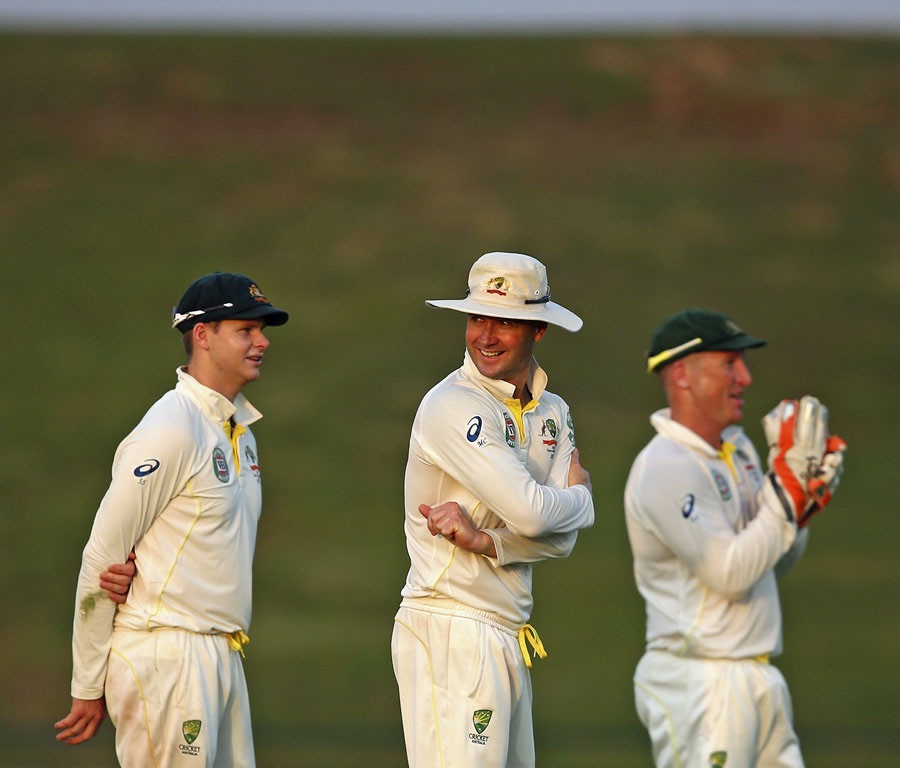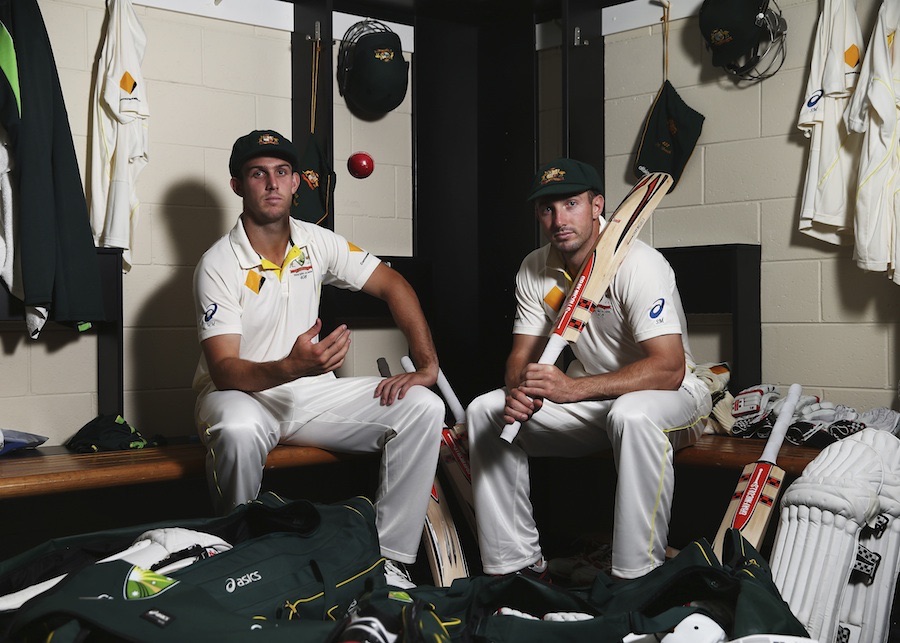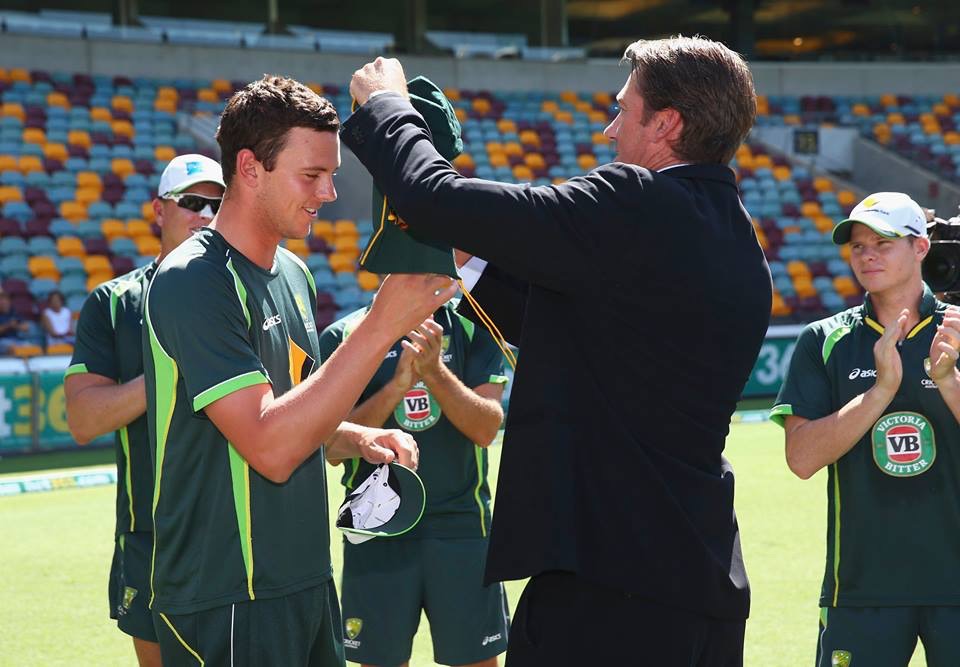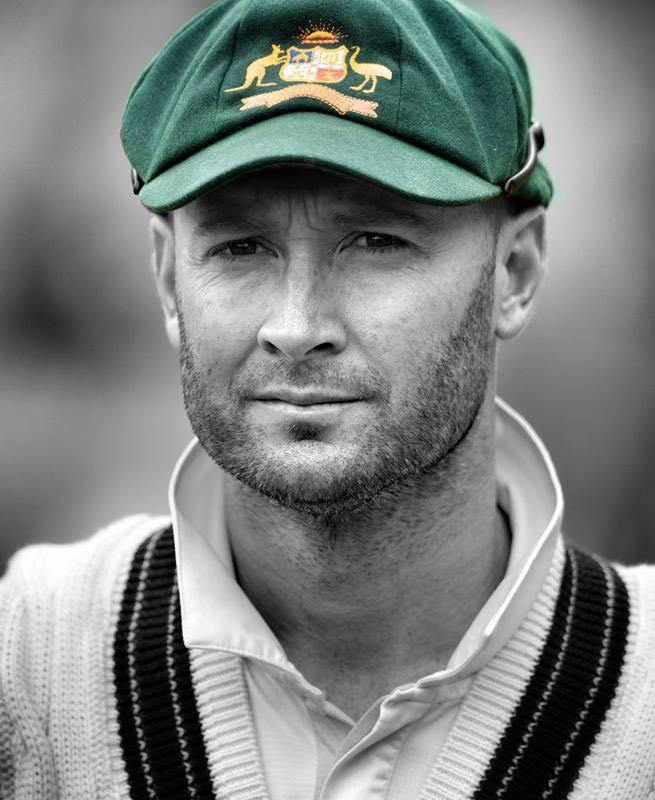
The pup who became top dog

Facing the axe, Clarke bows out on own terms.

In the end it had all become inevitable. Each scratchy innings bringing the end ever closer, and with those at home baying for blood and demanding casualties after a disastrous Australian Ashes campaign – there appeared nowhere else to go. All the signs pointed towards the end of the illustrious career of Michael Clarke.
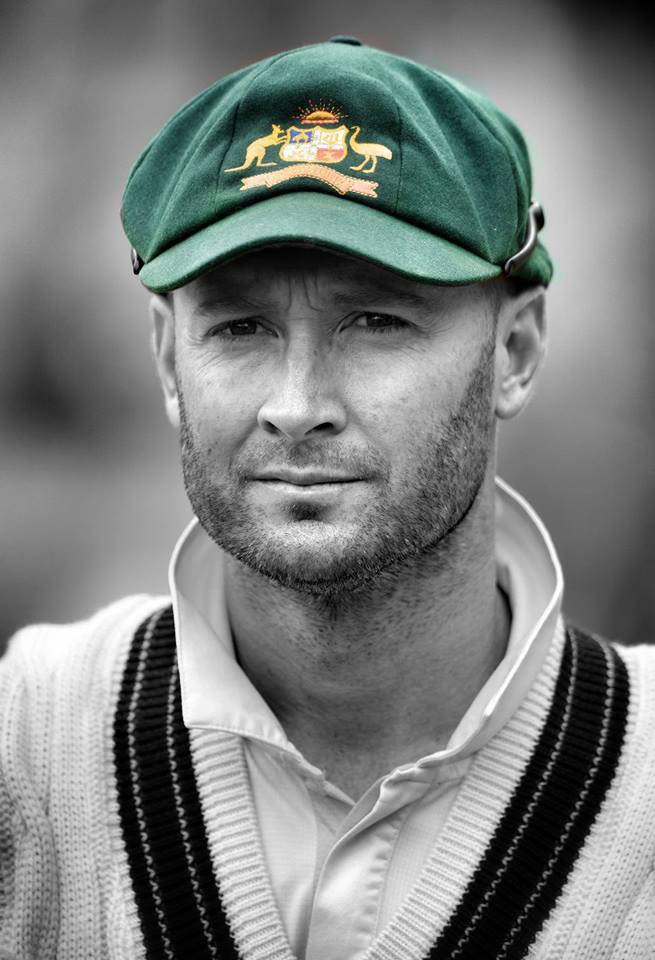
pup farewellIt’s been a roller coaster year for the Australian captain. The highs of leading his country to World Cup glory on home soil were hugely overshadowed by huge lows. Lows that saw him blighted by chronic hamstring and back injuries alongside the pain of losing his great mate Phillip Hughes in tragic circumstances at the Sydney Cricket Ground last November.

Like many great players that have gone before, the end had slowly crept upon him. His form hadn’t been ideal for some time now but somehow you expected him to get through it, get those feet moving again and turn the shape of a match with one of his signature hundreds – one which he used to be capable of producing. But in the end sport waits for no man, with the Ashes now handed over this will be no fairytale ending for Clarke.

With each innings that passed it had become clear that he was no longer the player he once was and that it was time to hand over the leadership duties to Steve Smith as Australian cricket seeks to revive a beaten, embarrassed and ageing side with future assignments to follow shortly.

After scoring a superb 151 on Test debut at Bangalore in 2004, Clarke or ‘Pup’ to his teammates remained the last surviving link to the great Australian Test sides of the late 90’s and early 2000’s. His debut was made alongside the likes of McGrath, Warne, Gilchrist, Hayden and Langer as this great Australian side finally conquered their final frontier by winning an away Test series in India for the first time in 35 years.

But unlike many of his predecessors from that great era of Australian dominance, Clarke’s career has perhaps not been given the high plaudits it deserves. There have always been the whispers. Over the years there have been murmurs that he rubbed up people the wrong way earlier in his career. There was the ‘Katich incident”, and the time when he responded to been asked to field at short leg by suggesting he’d rather hand his baggy green back instead of fielding under the helmet, or maybe the time he left a tour of New Zealand midway through to return to Australia and split up with his then glamour model fiancée Lara Bingle.

Even in the days following the announcement of his retirement at Trent Bridge on Saturday, Clarke has continued to receive criticism out of his home country. Former teammates Matthew Hayden and Andrew Symonds have both weighed in with their opinions in recent days. Hayden suggested that Clarke “ruffled feathers” during his time in the Australian side while Symonds’ questioned his captaincy qualities with a view that he was not a “natural leader” in the mould of other previous Australian Test captains. And they weren’t the only ones to have their say, with former national coach John Buchanan also chipping in by saying he felt Clarke may not have wanted to adopt the “baggy green culture” and that there were times when he felt Clarke didn’t understand or want to understand what it meant to represent his country.

For Clarke this must all feel like “water off a ducks back.” Not many players have divided public opinion throughout their careers quite like he has. He was booed by both home and away supporters at the MCG during his catastrophic Ashes campaign of 2010/11 – before becoming Australia’s 43rd Test captain in the following match at the SCG. With Ricky Ponting’s tenure of captaincy coming towards its end, a public poll was conducted by a Sydney newspaper to gauge who the majority believed should be the new Test leader – although Clarke was the current vice-captain and Ponting’s natural heir apparent he got less than 15% of the public favour to succeed the Tasmanian.

It seemed the Australian public didn’t like a working class boy from Sydney’s western suburbs, he who thought he had made it before his time. The love of fast cars, flashy threads and the glamour model girlfriend wasn’t the Australian way. It wasn’t what Allan Border did or Steve Waugh or Ponting either – this was a new breed of Australian cricketer with diamond earring and bleached blond hair to boot. What the public didn’t see was the hard work Clarke put in off the field.

It had all started so much brighter for Clarke. He was the young pup amongst a field of legends. The debut hundred in India was followed by another against New Zealand in his first Test on home soil and just fifth overall. The good times were rolling, but they weren’t to last. It would be two more years and nineteen more matches before he would score another Test century. In this time he was dropped twice from the Test side.

His return coincided with the famous Ashes whitewash series of 2006/07, where he finally cemented his place in the side with hundreds in both Adelaide and Perth. The series marked the retirement of his good mate and mentor Warne along with both McGrath and Langer. It would be the beginning of the end for Australia’s decade of dominance.

After playing a hand in his country’s second successive World Cup final victory in the Caribbean in 2007, he was also instrumental in the Test side’s record-equalling sixteen victories in a row which was achieved with a late win against India at the SCG in January 2008 – Clarke himself claiming the final rites with three wickets in an over to secure the match. Later that month he would take time away from the game to be with fiancée Bingle with her father battling terminal cancer, whilst his own father, Les, also battled Hodgkin’s disease. Despite family always coming first, many in Australia believed his shouldn’t be missing Test matches. But like he would do after splitting from Bingle during the New Zealand tour two years later, he returned with a century – this time in a victory over the West Indies in Antigua. Fighting adversity would become hallmark of his character throughout his Test career.

In 2009 Clarke suffered his second away Ashes series defeat in four years, but fared better with the bat than he had done in 2005, as he scored back-to-back centuries at Lords and Edgbaston to cement himself as one of the world’s premier batsmen. His next Ashes campaign would be his last as lieutenant as the English swarmed down under and wiped the floor with Ponting and his men. Not only was it a terrible series for Ponting, but for Clarke too. His 193 runs at an average of 21 were only marginally better than the 113 runs at 16 scored by the man he would soon replace at the helm just months later. His popularity with the public was at an all time low.

Why was this hugely talented batsman still so unloved by his public? By now he had split from Bingle and started a relationship with his childhood sweetheart Kylie Boldy, and he was about to be charged with bringing back the glory days to a nation that expects success from its cricket side.

His first full series as captain was a successful one. Scoring a hundred in the third and final Test he led his side to a 1-0 series victory in Sri Lanka. Then for the hundred he calls his finest. A magnificent 151 in Cape Town whilst batting against the South African trio of Morne Morkel, Dale Steyn and Vernon Philander on a difficult wicket in which others struggled to adapt. Sadly for Clarke all of the attention surrounding the match came in his sides second innings. 47 all out – Australia’s lowest total in over a hundred years. The jury was still out on Clarke and his leadership credentials.

Then came the breakthrough. The year that Pup became the top dog, and the year in which the Australian public started to warm to the man from Liverpool in Sydney’s west – this was 2012 and it was Clarke’s year. He started it off with a hometown hundred for the ages. 329 not out to be precise. Batting against India at the SCG he was given a standing ovation by the Sydney faithful as he declared with his score just five runs shy of the record held by Sir Donald Bradman and Mark Taylor for the second highest score by an Australian batsman in Test cricket. This is what he had dreamed of, his own people standing as one to cheer their local hero at SCG. You can’t always win over everyone but for Clarke this was as good as it got.

The triple hundred in Sydney was just the beginning as he became the only man in history to score four scores of over 200 in a calendar year. The second came just two Tests after that memorable effort in Sydney, again against India, this time in Adelaide, a ground that would become his most prolific in term of runs made (1414 runs at a touch over 94), on this occasion it was in unison with his former skipper Ponting as the pair each recorded double hundreds in a partnership worth 387.

When South Africa toured later in the year Clarke was at it again. An unbeaten 259 at The Gabba in Brisbane was followed with 210 again at the Adelaide Oval. These were heights that had never been reached before by an Australian. His magical year was rounded off with a boxing day hundred against Sri Lanka at the ‘G’. It was 2012 that moved Clarke from a good cricketer to a potential modern day great. Only three men in the history of Test cricket had scored more runs in a calendar year than Clarke’s 1595 in 2012 and none of them were Australian.

The accolades were forthcoming as he picked up his fourth Allan Border Medal in early 2013 to go alongside both ICC awards for cricketer and Test cricketer of the year. But the heights scaled by Clarke in 2012 were never quite repeated, yes there were the occasional pieces of brilliance and innings that showed his determination and skill but not the ultimate consistency. His chronic back issues were beginning to cause him real strife and he lost long term middle order rocks Ponting and Michael Hussey to retirement.

The start of 2013 was a difficult one for Clarke and his troops. A 4-0 reverse in India highlighted the difficulties this current side faced in adapting to foreign conditions – especially on the subcontinent. Cracks had started to appear in the camp, and when the “homeworkgate” episode exploded out of India, Clarke and his coach Mickey Arthur has some serious questions to answer. The tour ended with Clarke missing his first Test match in five years as back issues continued to plague him. Shane Watson, one of those suspended for not doing his homework just weeks earlier, took over the captaincy amongst ciaos in the camp. Arthur would later claim that Clarke suggested Watson was “a cancer on the team.”

With his close ally Arthur dismissed before the Ashes campaign got underway in England, there was more upheaval for Clarke to deal with. It didn’t help that David Warner went around throwing drunken punches at England cricketers in Birmingham nightclubs, but big management changes were just around the corner and Darren Lehmann, an old school Aussie larrikin, was brought in to shake the place up.

It has always been difficult to judge the relationship between Clarke and Lehmann. On the surface they appear completely different characters, but by and large the two years they have served together have been successful ones. Defeat in England was overlooked by an astounding whitewash of the poms back home just months later. Clarke led the fight, warning James Anderson to “get ready for a broken f**king arm,” as Mitchell Johnson terrorised England into submission.

A series victory in South Africa in early 2014 was perhaps the highlight of Clarke’s captaincy career. His 161, achieved with a broken shoulder in the series decider at Cape Town was as courageous as they come. After being repeatedly peppered by Morkel short balls, he gutsed it out to lead his side back to number one in the Test rankings.

For Clarke and Australia the year ended in heartbreak. In late November the unthinkable happened. The death of Philip Hughes from head injuries sustained through a bouncer at the SCG rocked Clarke more than most. Hughes was his “little bother.” A teammate, who the often reluctant captain was particularly close with, was taken whilst playing cricket.

Perhaps Clarke’s greatest legacy with be the way in which he spoke for the country during the loss of his great mate. He stayed bedside with Hughes in a Sydney hospital before acting as a spokesperson for the family of the fallen batsman. The 128 he scored in Adelaide just weeks after will forever be his best knock. The way in which Pup conducted himself during this devastating time will forever be his legacy more than any flash cars or snazzy threads could ever be.

As a batsman, like Ponting before him, Clarke was a once in a generation player. As a captain he was fresh, imaginative and always ahead of the game – for that he must rank up there alongside Mark Taylor as one of Australia’s greatest captains in the modern era.

Like many of his predecessors he looks set to follow a familiar path trodden by ex-Australian Test captains. A career in the Channel Nine commentary box awaits.

But before that there’s one more Test match to win next week.
Australia capitulates to swing and seam, again.

The Investec Ashes 2015

If spin won’t get them then swing and seam surely will.

The Australian total of 136 all out on the first day of the third Ashes Test reads all too familiar for this side on their travels in the recent past. Make no mistake about it, this is no aberration for Australia, they have been notoriously bad tourists for a long time now.

voges goes
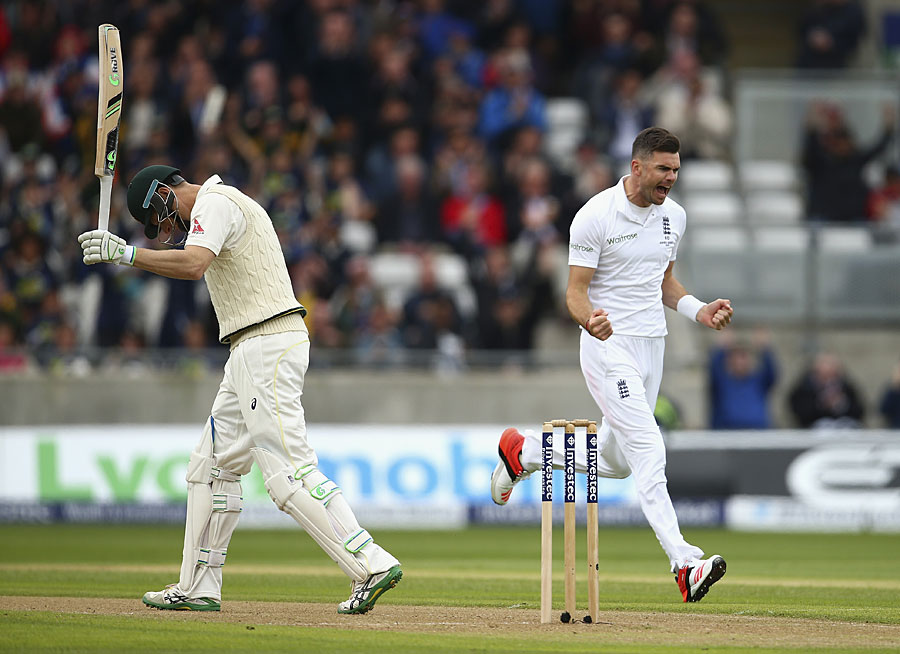
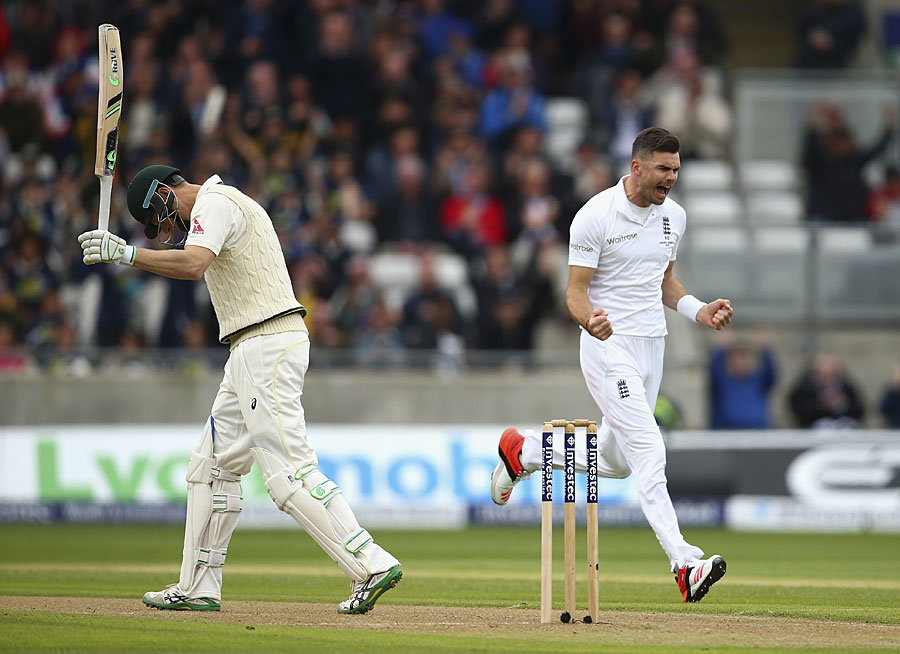
Adam Voges is caught behind trying to leave a James Anderson delivery as Australia’s recent woes against swing and seam bowling continued at Edgbaston.

Too many times their top order batting has collapsed in the face of decent spin or swing bowling – on many occasions they have been bailed out by their lower order, but not on this occasion as even though their final three batsmen all made double figures (the same total the top eight managed) they look sure to surrender the advantage they gained in the series with a thumping victory at Lords ten days previous.

If it not for Chris Rogers, who just a few days ago looked uncertain to even play in this match, then they would have struggled to have even past three figures – all on a pitch that had Michael Clarke grinning with glee upon winning the toss at 10:30 this morning.

It was hardly a surprise that Rogers was the most accustomed batsman in trying but not treacherous conditions as James Anderson and co made use of the overcast conditions to send the Australians back to the shed almost quicker than their teammates could open their kit bags.

Rogers, almost certainly due to retire at the conclusion of this series, is the only Australian batsman who looks comfortable when the ball is seaming and swinging like it did in Birmingham today. Part of this is of course because he has enjoyed over a decade of service in County cricket, where he has represented Derbyshire, Northants, Leicestershire and Middlesex – scoring over 15,000 first-class runs in due course. But another way in which Rogers has succeeded is that he has been particularly strong at waiting for the ball to come to him as much as possible and playing it as late as he can – many of his teammates should take notice.

David Warner received a good one first up from Anderson, a ball that nipped back to trap him in front before Steven Smith, fresh off a double hundred at Lords, played too aggressively at one from the returning Steven Finn that left him a touch to be caught in the slips. One soon became two for Finn as he yorked the horribly out of form Clarke with a delivery that he seemed slow to pick up.

As the rain came and went, Australia post-lunch batting was a precession of ordinary shot play on a pitch that was no minefield. Adam Voges nicked off after trying to leave a ball from Anderson and the same man soon picked up Mitchell Marsh, playing an expansive drive to one he should have left to be out for nought.

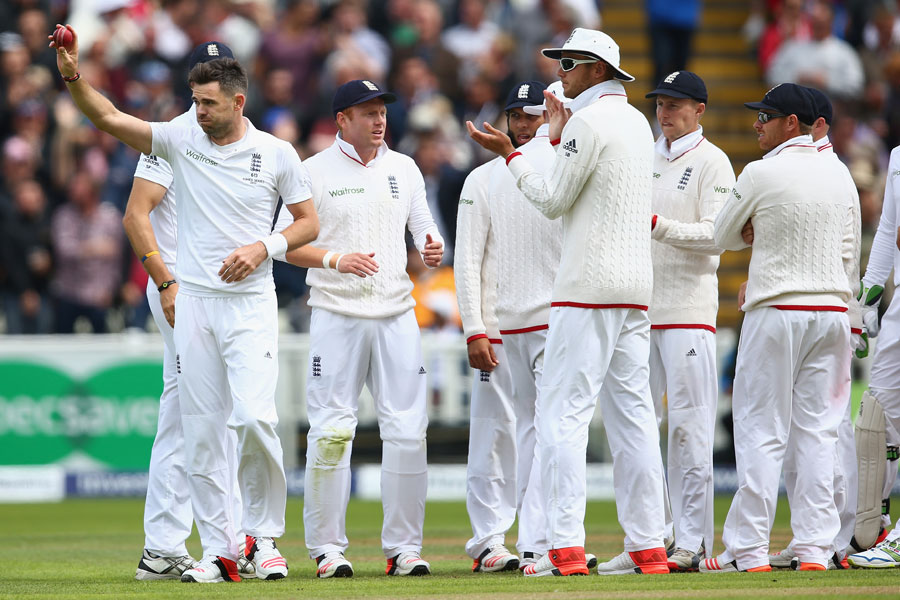
Peter Nevill, chosen ahead of the more experienced Brad Haddin for this encounter, left one he should have played only to see his off stump knocked back and Anderson was soon celebrating his five-for with the wicket of Mitchell Johnson, who was caught low down in the gully. Anderson’s 6-47 were his best figures against Australia.

When Stuart Broad returned to finally nail Rogers for 52 with a straight one that he seemed to completely miss, the damage was well and truly done, Australia will have their work cut out to not find themselves 2-1 down with two to play.

Much was made of England’s inability to leave the ball well while they were being rolled over for just 103 in their second innings at Lords, and much of the same can be directed towards their Australian counterparts. England lasted just 37 overs in that innings. Here Australia lasted two balls less than that.

It’s not the first time the Australian batting has collapsed away from home to either quality pace or spin. Times such as the 47 all out at Cape Town in 2011 spring to mind as does the 128 they managed against England at Lords in 2013 from which they never recovered from in the series as they lost their third successive away Ashes campaign. The same could be said of their capitulation here – a potential series turner perhaps.

In the grand scheme of things this latest setback should not be a surprise to those who follow Australian cricket closely. Since they won a two-Test series in New Zealand in early 2010, they have only won back-to-back Test matches once on the road, and that once came in the West Indies last month against a poor side ranked eighth in the world.

Since, they have struggled against the wobbling ball in England and South Africa and against the spinning ball on their two previous tours to the subcontinent, in India 2013 and the UAE last year.

This is not a great batting outfit when taken out of their own conditions. Rogers has struggled hugely in spinning conditions, whilst the likes of Warner, Smith and Shane Watson have all previously struggled against the swinging ball, when you also throw in that Voges, Mitchell Marsh and Nevill are fresh to Test cricket and Clarke is ridiculously out of form then it doesn’t read for pretty reading. If Clarke continues to struggle in this series, it’s not inconceivable that it could be his last – certainly as captain and maybe even as player.

Anderson claimed his best figures against Australia as the tourists were routed for just 136.
Anderson claims his best figures against Australia as the tourists were routed for just 136.

But it’s hard to find alternatives at this stage. Shaun Marsh has also previously struggled against the new swinging ball and is next in line among the batsman on this tour whilst Joe Burns, another who has debuted in Test cricket recently, has just finished a stint with Middlesex, in English conditions without a whole heap of success. The end line of it is that there just isn’t enough quality young batsmen knocking on the door in Australia who are accustomed at playing the swinging ball – hence the reason that 37-year-old Rogers and 35-year-old Voges are still donning the baggy green this series.

For England, they finally got the pitch they have been crying out for since the series began in Cardiff – one with something in it for their fast bowlers. This pitch had both more grass and pace in it than the previous two offerings at Cardiff and Lords. In a nutshell it was tailor made for Anderson.

After their 169-run defeat at Cardiff, Australian coach Darren Lehmann was suggesting if not moaning about the lack of pace in the wicket produced in south Wales, at Lords a similar wicket was rolled out with the Australian’s coaxing far more out of it than their English counterparts.

On that occasion Johnson, Mitchell Starc and Josh Hazelwood, (all generally quicker bowlers than any of the English), used the conditions far better to their advantage and suggestions in the England camp were that they needed to make better use of their home comforts and start producing English wickets to aid the likes of Anderson and Broad.

Low and behold it was an English wicket and standard English cloud cover at Edgbaston, to their detriment the Australian’s played it the way they have been playing on seamer-friendly wickets far too often on their recent travels – very badly. Advantage England.

One series too many for Australia’s dad’s army?

The Investec Ashes 2015

Just one Test in and three senior players are already out of the side.

While it’s far too early to suggest the wheels have fallen off – Australia’s start to the Ashes has been less than ideal.

Much was made of Jason Gillespie’s “Dad’s army” comments made in the build up to the Ashes. While the comments were taken with a pinch of salt by the Australian camp, much more was made of them in the British media and perhaps in retrospect, quite rightly so.

With the Ashes campaign just four days of cricket old, the visitors find themselves heading to Lords tomorrow without three of their veteran players in the starting line up.

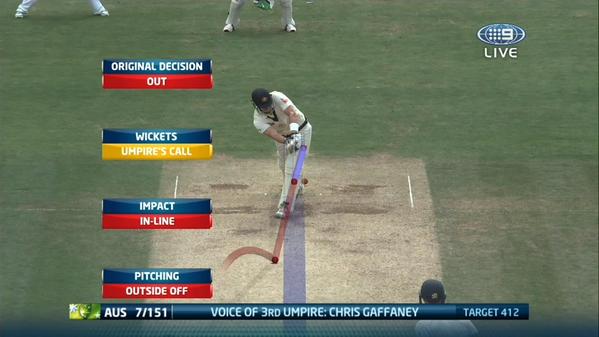
One LBW too many...Shane Watson has been dropped for the second Test of the Ashes series.
One LBW too many…Shane Watson has been dropped for the second Test of the Ashes series.

While there is inevitably casualties in any Ashes series, Australia wouldn’t have imagined they would be going into the second Test of the series 1-0 down and without arguably their number one bowler, all-rounder and wicketkeeper. But with Ryan Harris having to announce his retirement ten days ago and Shane Watson facing the drop alongside the unavailability of Brad Haddin for personal reasons that remains the case.

Things started to go wrong before the series had even began when Harris pulled up before the final tour match at Chelmsford. Although not a likely starter for the first Test in Cardiff, Harris’ type of accurate bowling was missed dearly during his side’s 169-run reversal and with doubts surrounding the fitness of Mitchell Starc ahead of the second Test, Harris’ name would surely have come into serious contention with the selectors.

After another couple of starts, 30 and 19 to be exact, Watson’s luck has finally appeared to run out. There has been for a long time, endless running jokes both on social media and in also in the media itself about Watson’s ability to consistently fail to contribute significant match-defining performances for his country, while at the same time seemingly being un-droppable.

This time Watson’s place in the side became untenable. His continuous ability to get out LBW (29 times in 109 Test innings) after making yet another start in the middle order appears to have reached its point of no return in the eyes of both chief selector Rod Marsh and coach Darren Lehmann.

For too long Watson has been chosen on what he might be capable of doing on the field rather than what he really delivers on the field. For all of his beautiful off drives and fierce pull shots he has continued to frustrate with innings of no great substance – pretty 20’s or 30’s and not match winning contributions.

Watson will be replaced by 23-year-old Mitchell Marsh and it is hoped that he can provide some youth and enthusiasm in the side after they looked old and ragged in the field at Cardiff. For Watson in Test cricket the end looks nigh. Marsh, being Watson’s junior by over ten years, should now be given a fair run in the all-rounders role with an eye on both the present and the future.

The future of Brad Haddin remains far more unclear. The 37-year-old is missing the second Test at Lords due to a personal family matter and is widely expected to call it a day from Test cricket at the conclusion of the Ashes in August. Although his batting and keeping has reclined in the past eighteen months, he remains a vital part of the dressing room for his vast experience in the game. While his place for Lords will be taken by his long time New South Wales understudy Peter Nevill – It remains to be seen if Haddin will play any further part in the series or in a baggy green for that matter.

While Australia are only one-nil down after one of five Tests, it was the way in which England grabbed the momentum from the moment Haddin dropped Joe Root on nought mid-way through the first session that defied the entire match and could have follow on effects as the series unwinds. Yes England had some luck along the way but the way they played Australia at their own game and came out comfortably on top will worry the visitors.

England was far better at batting, bowling and fielding and at times they looked a much younger and fitter side in the field. That’s probably because they were. The average age of the Australian side in the match was just under 31 while the England side was just above 27. That same English side still included plenty of experience though with James Anderson, Alastair Cook and Ian Bell having all played over 100 Tests and Stuart Broad 80.

Compare this to the Australian side which includes both Chris Rogers and Adam Voges who have a combined 74 years but just 24 Test caps between them and it says a lot about the current situation this aging Australian side faces.

The careers of Australian and English players, rightly or wrongly are usually defined by the Ashes and each campaign brings with it an end to a certain player cycle. England’s five-nil whitewash eighteen months ago more or less brought with it an end to the careers of six men. Graeme Swann retired after just three Tests, Kevin Pietersen, Michael Carberry and Chris Tremlett haven’t been selected since, while it was effectively the end for Matt Prior, who was dropped before the fourth Test and played just four more matches last summer, and Jonathan Trott who went home after one Test and played just three more since before retiring from international cricket.

Although Australia expected the retirements of Haddin, Harris and Rogers at the conclusion of the Ashes series, they would not have expected to be entering the Lords Test without Watson and two of their key components from that Ashes whitewash less than two years ago.

Aggression key in Ashes duel – Preview

The Investec Ashes 2015

The fates of David Warner and Jos Buttler vital to either side

Hurrah, the build up is finally over! The sledging, the predictable interviews and all the nonsense that goes with an Ashes series build up is almost complete – It’s time to bring on the cricket!!

The form of the aggressive Jos Buttler and David Warner are key to the Ashes.
The form of the aggressive duo Jos Buttler and David Warner is key to the Ashes.

Australia will start as slight favourites, due to their superior fast bowling depth, but only slight favourites. A tight series waits between two sides that are not by all means finished articles. England is still a side in transition while Australia still has a few worries with their batting and the age of their squad.

Like the beginning of most Ashes campaigns there remain plenty of questions to be answered for both sides.

Will England walk the talk and play with the aggression and freedom they have promised and that they showed in their recent ODI series with New Zealand?

They certainly have the players in their side to go with this new philosophy brought about by a combination of a new coaching set up, some new blood and a mimicking of a Brendan McCullum-led New Zealand. If they are to go with this new theory then they will need huge contributions from their attack-minded middle order of Joe Root, Ben Stokes and Jos Buttler.

Buttler could well be the key player for England. If you look at the way in which Brad Haddin outperformed Matt Prior in the 5-0 whitewash eighteen months ago, you could say after destruction caused by Mitchell Johnson, the way that Haddin rescued the Australians with counterattacking innings was the defining moment of the series. Buttler could well be that man for England.

Despite playing just eight Tests since being fast tracked into the side to replace the injured Matt Prior, Buttler has made a promising start to his career with the bat in particular. He has the ability to play not just the swashbuckling innings that he is renowned for in one day cricket but to get his head down in times of need and pace a ‘proper’ Test innings. This was evident during his most recent Test innings where he scored a rearguard 147-ball knock of 73, as others around him simply threw their wickets away.

But of course with his exploits in ODI cricket in the past year, the hundreds against Sri Lanka and New Zealand of course stand out; he has the ability and talent to take the game away from the opposition in Test cricket too, much in the way that Adam Gilchrist used to for Australia. Another bonus for Buttler is that he has Moeen Ali behind him in the batting order at number eight. This should allow Buttler even more freedom, knowing that he has a batsman who has made his living in county cricket as a number three, below him in the order.

Like England, questions still remain for Australia. How will Steve Smith react to batting at number three in English conditions is a question that has been flying around in the media for the past few weeks, but equally important is how David Warner will go about his business conquering both James Anderson and Stuart Broad with the new cherry in their hands.

Warner is certainly coming into the series a more compact and mature cricketer than the one who arrived on English shores two years ago and made the headlines first by having a twitter row with two Australian journalists and then by punching Joe Root after a Champions Trophy defeat in Birmingham.

Warner’s game has improved massively to the point that it’s hard to look past him, alongside an inform Alastair Cook and India’s Murali Vijay as the world’s top opening batsman. But while he remains a superb player on the fast and bouncy wickets found in Australia and South Africa, opening the batting in overcast English conditions remains a different kettle of fish.

Warner must find the correct balance between his batting with gay abandon approach and the caution required to succeed in England. If he is to do this, then forget Smith, Warner – with his ability to take the game away from the opposition in just a session, could well be Australia’s key batsman in the series.

Another key battle that could go some way to deciding the winner of the Ashes is the fates of the veteran pair Michael Clarke and Ian Bell. After both making their Test debuts in 2004 the pair now aged 33 and 34 respectfully are the only survivors from what was perhaps the greatest Ashes series of them all ten years ago and it’s not inconceivable that it could be their final campaigns against their old foes.

Ian Bell and Michael Clarke are the sole survivors from the 2005 Ashes series.

They have both played 110 Test matches and between them they have scored almost sixteen thousand Test runs to go with fifty Test hundreds and unlike many current batsman on either side, they have the experience of having performed in previous Ashes campaigns.

Clarke has seven Ashes hundreds to his name, while Bell has four – including three in the series between the sides two years ago, a campaign in which he went on to become the player of the series.

But while both men remain vital to their sides, their current form remains a concern. Clarke has averaged just 30 in the last year and has had serious back and hamstring injuries which have affected his ability to play long innings in the middle, he has been replaced by Smith as the sides best batsman and one wonders how long it will be until he is replaced by the younger man as the teams captain. He did spend vital time in the middle against Essex in the last warm up fixture at Chelmsford, where he scored 71 and will be confident he can return to lead his side with the crucial runs he has scored in the past.

For Bell it’s a similar story. Despite scoring a hundred in the first innings of the first Test during his side’s tour of the West Indies in April and May, it has been a lean time with the willow in hand. His recent Test scores read: 11, 1, 0, 0, 1, 29, 12 and 1. Like Clarke with Smith, he too has been replaced as his Country’s premier batsman by the emergence of Joe Root. Bell though still has plenty to offer this England side which includes plenty of youth and not a whole lot of experience. Alongside his captain, Bell has to step up as a senior batsman especially as the side step away from the era which included Kevin Pietersen and Jonathon Trott in the middle order.

………………………………………………………………………………………………………………………….

There was talk of England including Adil Rashid in their side as an extra spin option alongside Moeen Ali, but with recent weather in Cardiff keeping the pitch wet and damp that idea will now be put on the backburner. It remains likely that they will go in with the same side that played the two Test matches against New Zealand earlier in the summer with Mark Wood getting the final seamers spot ahead of the recalled Steven Finn.

For Australia, the retirement of Ryan Harris means that its likely they will go in with the same bowling line up that they used in Jamaica last month, meaning Josh Hazelwood and Mitchell Starc with start alongside England’s tormentor of eighteen months ago Mitchell Johnson. With the current grass on the wicket, there has been talk that Clarke will go into the match with four seamers but it seems unlikely that Peter Siddle with get the nod ahead of spinner Nathan Lyon.

Elsewhere, Shane Watson looks to have won the all-rounder’s spot ahead of the younger Mitchell Marsh. Watson’s bowling is seen as the stronger between the two especially in English conditions and he will be given at least the first Test as the current incumbent in the side.

Likely line-ups:

England: 1. Cook, 2. Lyth, 3. Ballance, 4. Bell, 5. Root, 6. Stokes, 7. Buttler, 8. Moeen Ali, 9. Broad, 10. Wood, 11. Anderson.

Australia: 1. Rogers, 2. Warner, 3. Smith, 4. Clarke, 5. Voges, 6. Watson, 7. Haddin, 8. Johnson, 9. Starc, 10. Hazelwood, 11. Lyon.

Ryano the Great

The Investec Ashes 2015

How does one define Ryan Harris’ career? Short. Wholehearted. Full blooded. And….Great.

The lionhearted Harris beat most sides – but in the end he couldn’t beat himself, his body and his right knee.

While the term “there are no fairytale endings in sport” is often used when a sportsman retires in usually unfortunate circumstances, for Harris more than most this old cliché runs very true.

On one leg, Harris drives Australia to a series victory in South Africa.

For over six months Harris has undergone extensive rehabilitation and substantial training for one farewell Ashes series. The chance to beat the Poms in their own back yard was too much of a dream to turn down.

In the end it wasn’t to be. Come Cardiff on Wednesday and Australia will have to march on without their solider and best seam bowler since Glenn McGrath. The gap that Harris will leave will be hard to fill. Despite it looking increasingly likely that Australia would have started the series without him in their line-up, five match Ashes series aren’t usually completed with just three seamers. If Harris didn’t start in Cardiff then you could be rest assured that he would have done at either Lords or Edgbaston.

Peter Siddle, for all his worth as an honest line-to-line bowler, and 192 Test wickets aren’t to be sniffed at, he just isn’t Ryan Harris. Harris just made things happen. According to his captain Michael Clarke he would run through brick walls for his country and after watching Ryano bowl it’s hard to disagree with that claim.

While he won just one of his three Ashes campaigns, England will no doubt be pleased to see the back of him. Against the Poms, his figures stack up alongside the best of them all, 57 wickets in 12 Tests at 20.63. His career average of 23.52 isn’t too shabby either, make no mistake about it, Harris was an excellent bowler. During the era in which he played – perhaps only Dale Steyn and James Anderson could claim to be better exponents of fast bowling.

It took the Sydney-born Harris almost ten years of toil in domestic cricket with both South Australia and Queensland to finally get a crack at Test cricket and earn that precious baggy green. He made his long awaited debut against New Zealand at the Basin Reserve in March 2010 and would go on to play just 26 more Tests in the next five years.

Harris and injuries unfortunately went hand in hand and that in a way was a part of who he was on the cricket field. The fact he was never far from another injury made it more remarkable in the way in which he continued to have success on the pitch when his fitness would allow. In the 27 Tests in which he played, Australia won 16.

It’s hard to look back on his career without revisiting his superman like performance in Cape Town last year. With South Africa seemingly looking like holding on for a draw, Harris summoned one final effort to drive his side towards a series victory. With two wickets remaining and bone cartilage floating around in his right knee, he rewarded his captains faith with the wickets of Steyn and Morne Morkel in the space of three deliveries to claim a famous victory – just days after the series success he was back in the surgeons chair for another knee operation.

During his career Ryano was the first name on the team sheet and the first on the physio’s bench and in between he was a great.

Helping the old enemy too much?

The Investec Ashes 2015

Has English cricket got the balance right between upholding the standards of the County Championship or allowing their Ashes rivals too much an upper hand in local conditions?

The silly season is upon us – But with the Ashes not yet underway, many Aussies are already dominating across our land.

As the Australian Ashes squad gets settled into life in England for the next two months, it will already feel like home for a few, that’s because for a few members of the tour party, for a few months of the year it is their home.

Both Peter Siddle and Adam Voges have already had success on these shores this summer, and they are not alone – there is as many as twenty Australian qualified players participating across formats in this summer’s county game.

It was just a few weeks ago that Voges scored a match defying debut hundred in Dominica, and one wonders how much his early season stint with Middlesex helped him keep in the form he showed for Western Australia during their recent Sheffield Shield campaign.

Although there is little doubt that his call up to the Test side was earned through a blockbuster Shield season, in which he scored 1358 runs at 104, there is also a claim that his county stints – spread across eight years at Hampshire, Nottinghamshire and Middlesex – have helped him hone his skills into a Test quality batsman.

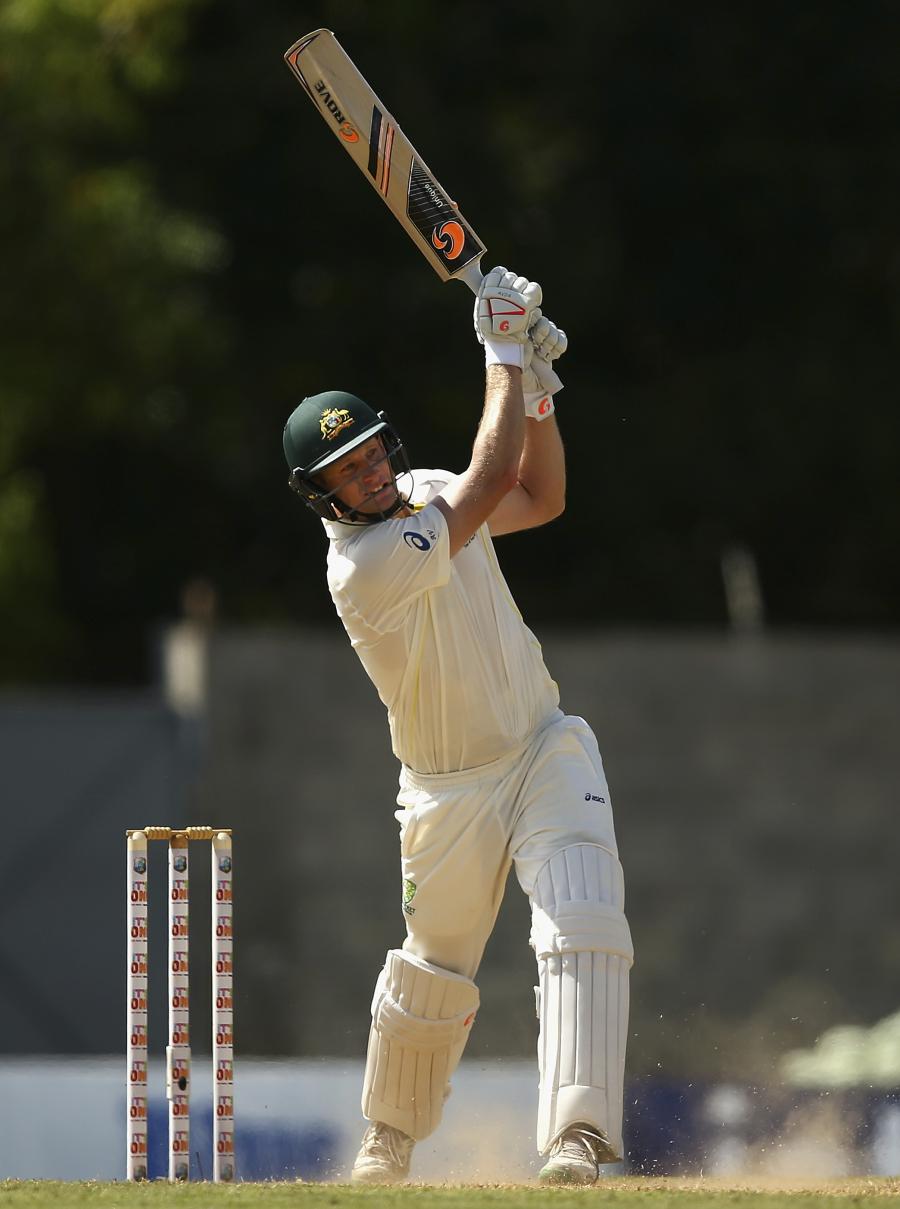
Adam Voges on his way to a debut hundred in Dominica.

Voges, of course, is not the first Australian batsman to have trodden a familiar path from the shires to international cricket.

The likes of Michael Hussey, Marcus North and Chris Rogers have all received their Baggy Green’s after many winters of toil in county cricket and like Voges they have all managed early success.

North scored a debut hundred against South Africa in 2009, while it took Hussey just two Tests, and Rogers five to register their first three figure scores.

Despite constant suggestions from the Australians that the Sheffield Shield is a tougher competition, and in many regards there is a lot of truth in that argument, the English county system has continued to act as a finishing school from domestic to international cricket for many Australians.

Alongside giving the Australians more first-class experience, the fact that so many Australians are currently plying their trade in county cricket and not sitting idle back home in Australia, could have major impacts on the forthcoming Ashes campaign.

Should injuries strike upon the Australians – not uncommon in a five-Test Ashes battle – then the visitors will have many back up fringe players around who have already played in England this summer.

When Siddle joined Nottinghamshire last season, he had just been dropped from the Test side during their victorious tour of South Africa, by the season’s end he was reinstated to the team for a tough away date with Pakistan in the UAE – all after a fruitful summer at Trent Bridge. When he was dropped by the green and gold for a second time in less than a year he turned to Lancashire and again strong county form has led to a national recall.

While the early season spring conditions have helped both Voges and Siddle gain more exposure to red ball cricket in England ahead of the Ashes – Perhaps the greatest benefit to Australian cricket could come in the form of a trio of their key limited overs players, who have been given the chance to play more first-class cricket.

Due to limited over commitments – including ODI series against South Africa and India as well as a home World Cup – three of Australians most talented cricketers managed just seven Sheffield Shield matches between last season.

James Faulkner (3, Appearances), Aaron Finch (2) and Glenn Maxwell (2) have all spoken of their desire to play Test cricket, but with Australia’s home ODI commitments running alongside the Sheffield Shield campaign, their opportunities to play more red-ball cricket have been few and far between – Until the counties stepped in that is.

Yorkshire coach and former Australian quick Jason Gillespie has handed opportunities to both Finch and Maxwell this season as his side look to defend their Championship crown without a host of batsmen plucked away by England.

Finch was originally signed last summer as a limited overs bet, but his attitude and willingness to play the longer form left an impression on his coach – who was then rewarded when the Victorian helped lead the White Rose towards their first title in thirteen attempts.

Finch was rewarded with a second season as Yorkshire’s overseas, but a hamstring injury sustained in the IPL led to a delay in his arrival, in his place was Maxwell, who like Finch last year, was originally signed as a t20 Blast prospect but ended up, much to his delight, being awarded an unlikely first-class opportunity.

Faulkner, who incidentally replaced Siddle at Lancashire, has proven an instant hit at Old Trafford. A valuable hundred and a hat trick in his first handful of Championship appearances have made a huge impression on those in Manchester and for Faulkner himself the opportunity could not have come at a better time.

Although the Australians have arrived in England with their most exciting quick bowling line up in recent memory – five match Ashes series with back-to-back Tests involved have a habit of testing the fitness of even the most durable of fast bowler. An injury or two and with Faulkner already in the country then perhaps another Ashes opportunity could arise.

Like Faulkner, Jackson Bird last made a Test appearance on English soil almost two years ago. Since that defeat at Chester-le-Street, a spate of serious injuries has threatened to put his international career on the backburner – this is where Hampshire has stepped in.

Bird was signed by the newly promoted south coast outfit after missing some of the Australian summer with various injuries and like his Tasmanian teammate Faulkner, the left-armer will hope that a potential opportunity could arise as the summer unfolds.

Like those mentioned before him, Ben Hilfenhaus’ mid-season stint with Nottinghamshire is looked upon as a good opportunity to get back into the national selectors minds should an opening arise – Despite last playing for his country in 2012 – he was last called up just last October as an injury replacement for Shane Watson against Pakistan.

Joe Burns, who last played county cricket for Leicestershire two years ago and who made his Test debut against India in December, was a surprise exclusion from the Test squads for the tours of the Caribbean and the United Kingdom. His place in that squad was taken by Voges, but after one window was closed another one was opened and he managed to secure another spell in the County game as Voges’ replacement at Middlesex. With another former Middlesex player in Chris Rogers retiring from Test cricket after the Ashes, runs on the board for Burns will likely quicken his return to the national set-up.

While young batsman Peter Handscomb, fresh off a breakthrough Shield-winning season with Victoria, has had an early season stint with Gloucestershire filling in for regular captain and Western Australian Michael Klinger. Handscomb like Burns and Maxwell will soon join up with the Australia A squad on their tour of India due to start later this month.

Can it have a negative effect for some Australians?

Despite the fact that many Australians (Who can’t get an IPL contract of course!) would jump at the chance to play some pre-Ashes cricket in the County Championship, it doesn’t always lead to success in the main showpiece later in the summer as two examples from previous Ashes campaigns can relate to.

Much was made of Nottinghamshire’s decision to sign Australian Test opener Ed Cowan ahead of England’s previous home Ashes campaign in 2013 but in the end it didn’t seem to matter as the previous incumbent opener was dropped after the first Test, in which he scored just a total of 14 runs, to date his final Test appearance.

Four years previous it was Phillip Hughes who’s five innings for Middlesex in early 2009 included three hundreds and two fifties – all this coming after he scored back-to-back hundreds in just his second Test match in South Africa – A fine start to Test cricket indeed.

When Hughes arrived to England he was an unknown quantity – An aggressive young opener who liked nothing more than width outside off stump so that he could free his arms into his favourite square cuts and drives. Unfortunately when the Ashes arrived he ran into a fired up Andrew Flintoff. Fred, much like he had done to Adam Gilchrist in 2005, found a weakness in Hughes’ technique outside off stump and Hughes lasted just two Tests before he was dropped from the side in favour of Watson.

Does it benefit the County game?

While it appears to benefit most Australians in getting more first-class exposure in English conditions – how does it benefit English cricket?

For starters having the calibre of international standard players is sure to strengthen the competition. A competition that has been criticized in recent years for a tightening on the rule of overseas and Kolpak players – leading to a dilution of the talent spread across the eighteen counties.

Another reason that the counties chose to sign Australian players is that they usually more available than players from other countries during the summer months. Many Australians look towards the UK to play county or club cricket in their winter before returning for pre-season ahead of their state season back home.

With the IPL running between April and June and the CPL between June and August, many international players who used to consider county cricket as a summer option are now taking their talent elsewhere for a shorter stint and a heavier pay packet.

There are exceptions of course and a host of Australians are now part of the furniture in the county game. The likes of Jim Allenby, John Hastings and Michael Hogan, Michael Klinger and Steve Magoffin have strengthened the county circuit in recent years much as the likes of Hussey, Rogers and North have in the past.

While all have had success in their own right across many years in county cricket, it’s the stability that they provide their counties that makes them such valuable players. The fairytale stories of the likes of Rogers and Voges also provide hope to these players that sustained success in the county game can lead to unexpected national call ups.

Leicestershire are a perfect example of a club who have looked towards the Australian winning mentality to resurrect their fortunes that had seen them not win a single Championship match since 2012. Andrew McDonald was appointed head coach with Mark Cosgrove captain, while seamer Clint McKay was brought in to spearhead the bowling.

Do English cricketers benefit in return?

With so many Australians rightly or wrongly allowed to progress their careers in the English game, does the game in Australia return the favour to English cricketers?

With just six state sides involved in the Sheffield Shield, it has in recent times become very rare to see any overseas involvement – with only Johan Botha of South Africa appearing in the competition in the last few years.

With very little chance of any English players being involved in first-class cricket in Australia, it’s another form of the game that has enticed many Englishmen down under in recent years.

This year’s Big Bash competition included nine Englishman. While it’s highly unlikely that Michael Carberry, Andrew Flintoff, Michael Lumb or Kevin Pietersen will appear for England again, the benefits that the likes of Tim Bresnan, Alex Hales, Eoin Morgan, Luke Wright and Ben Stokes will have gained from the competition could prove invaluable.

Stokes especially benefitted enormously. After a year in which he fell from grace as an English cricketer, he turned to the Big Bash and the Melbourne Renegades after a poor ODI series in Sri Lanka, although it wasn’t enough to secure him a place in the England World Cup squad, a 37-ball 77 against the Hobart Hurricanes in January seemed like the catalyst for a resurgence in the confidence and freedom missing from Stokes’ game after his dismal 2014.

While the competition in the Big Bash is currently higher than that of England’s NatWest Blast equivalent, another area that the Australians have long mastered is the high standard and competitiveness of their grade and club cricket competitions.

Each winter hundreds of English cricketers, of various degrees of age and talent, escape the cold of home and head down under to participate in grade or club cricket in Australia. For many years this has been viewed upon as a vital learning experience for young English cricketers.

Essex's Daniel Lawrence is one of a number of players to have benefited from club cricket down under.
Essex’s Daniel Lawrence is one of a number of players to have benefited from club cricket down under.

This past Southern Hemisphere summer saw two of English cricket’s most promising young batsmen follow this route down under as they looked to gain valuable cricket and life experience that will later benefit English cricket.

One of those batsman was Surrey’s Dominic Sibley, who hit the headlines in late 2013 when, aged just 18, he became the youngest ever double centurion in the history of the County Championship when he blasted his way to 242 against Yorkshire. Sibley spent his winter playing for Midland-Guildford CC in the WADCC First Grade competition in Perth. This season has seen Sibley become a regular in the Surrey side.

Another player who has benefitted from his winter spent in Australia is Daniel Lawrence of Essex. Lawrence left the comfort of home for Geelong and more specifically Newtown and Chilwell CC – where he was the club’s top run scorer with 556 at 42.77. In just his second first-class match upon arriving back in the UK he became the third youngest century maker in the history of the county game when he defied his tender years of 17 and 190 days to score 161 against Surrey in April.

Sibley and Lawrence are just an example of two amongst many English cricketers who have benefitted from a stint in Kangaroo country. While of course the County Championship is littered with Australians – it’s too simplistic to suggest that the English game is helping the old enemy without any favours in return. The beauty of cricket is that we will perhaps never know the true worth of the player development each country benefits from their Ashes rival.

England’s slow bowling options in a spin

The Investec Ashes 2015

In a week where there has been plenty of clamoring and debate over the selection or subsequent non-selection of legspinner Adil Rashid in England’s pre-Ashes holiday party to Spain – It’s easy to forget that England selected a legspinner in their previous Ashes encounter – In the form of Scott Borthwick.

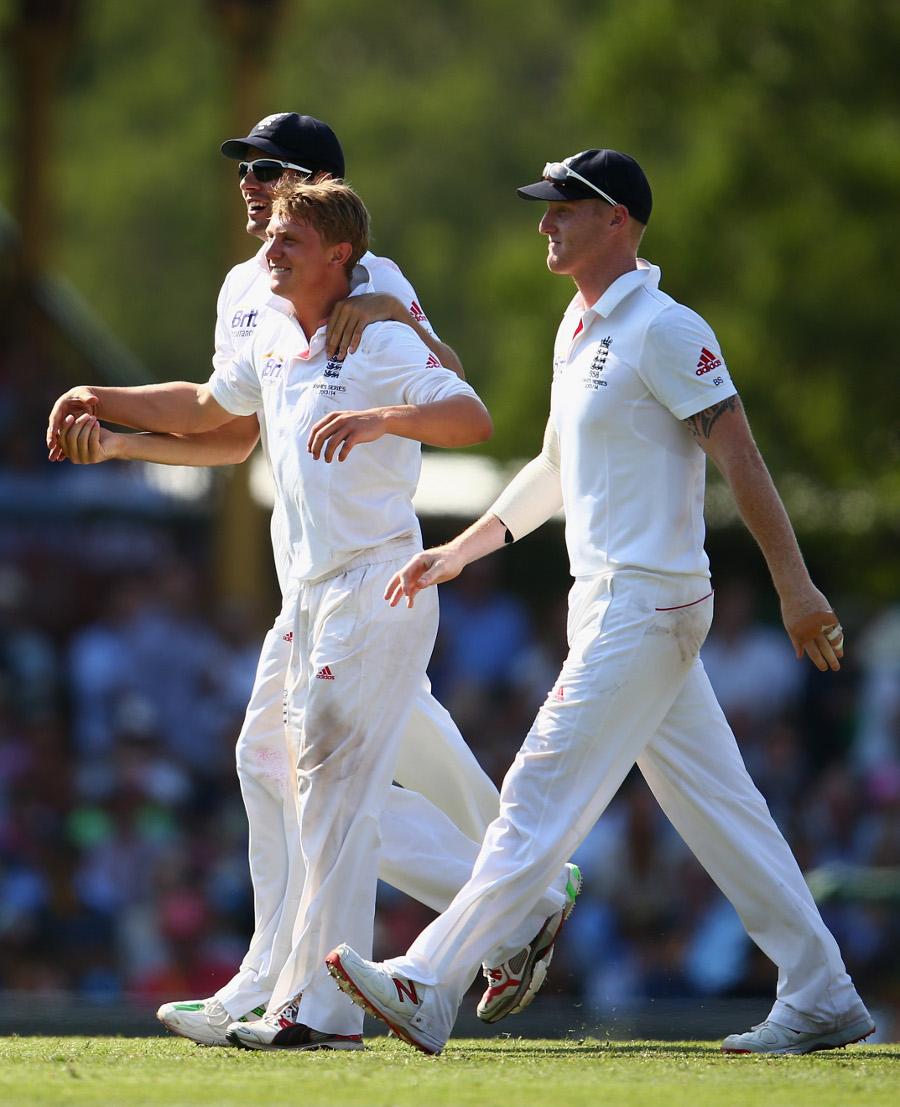
Scott Borthwick (centre) was the last legspinner to represent England in an Ashes Test.

On that occasion, a three day hiding in Sydney, Borthwick was almost brought in as a last resort. Graeme Swann decided he had had enough after Perth and Monty Panesar was so bad in Adelaide and Melbourne that he was almost deemed as “un-selectable” as Steven Finn had been on that same tour. Borthwick was seen as a “horses for courses” selection – He was already in the country playing grade cricket and it was hoped his enthusiasm would help boost an English morale that was already a long way past shot.

A similar section was made by the Australians three years previous when they called up a then little known legspinning allrounder going by the name of Steve Smith. “I’ve been told that I’ve got to come into the side to be fun,” said Smith. “For me, it’s about having energy in the field and making sure I’m having fun and making sure everyone else around is having fun, whether it be telling a joke or something like that.” For Smith the rest is history as he enters his fourth Ashes campaign as the world’s number one ranked Test batsman.
Borthwick subsequently took debut match figures of 4-82 but it was his lack of control and high economy rate of 6.30 that has prompted the selectors to turn their attention elsewhere in a time when spin bowlers in England don’t exactly grow on trees.

That Borthwick is now a number three batsman who only very occasionally rolls his arm over for his County side Durham is indicative of where the slow bowling stocks now lie in English cricket.

Borthwick, who took 4-46 in Durham’s victory at Arundel on Thursday – to more than double his tally of three championship wickets for the season, is now a long way down the pecking order in the English spin cupboard with his only realist chance of selection now being as a middle order batsman – But where are the English spinners to take this new looking aggressive England side forward?

After Panesar and Borthwick were tried and quickly disregarded as viable options, England has since stumbled across Moeen Ali as their chief spin hope. Despite his success against India last summer he remains more middle order batsman and less front line spinner.

Much criticism was directed towards Moeen after his inability to bowl out the West Indies on a spinning deck in Bridgetown and if England were ever going to select Rashid then that Barbados Test was the perfect opportunity.

Despite the fact that Rashid bowled poorly in the two Test warm up matches in St. Kitts he should have also been given an opportunity ahead of the reliable but steady James Tredwell in the series opener in Antigua.

Instead a half fit and undercooked Moeen returned to the side in Grenada where the exceptional James Anderson masked over any dramas with the Worcestershire spinner by leading England to victory. The same can’t be said of Barbados where Moeen underwhelmed in the fourth innings on a pitch inductive to spin, claiming just 1-54 while going at over four an over.

He went only marginally better in the recent home series against New Zealand where he picked up just five wickets at 50 apiece. Despite having his solid batting to fall back on, the successful promotion of Ben Stokes to number six in the line up means that Moeen now bats as low as eight in the order.

His recent form or lack of will not have gone unnoticed by the Australians and they will look to target the offspinner in the way that they targeted Swann during his Ashes swansong eighteen months ago – leaving Alastair Cook to over bowl his front line seamers.

A big concern surrounding Moeen is his lack of variation on the international stage. Although Swann was an out and out

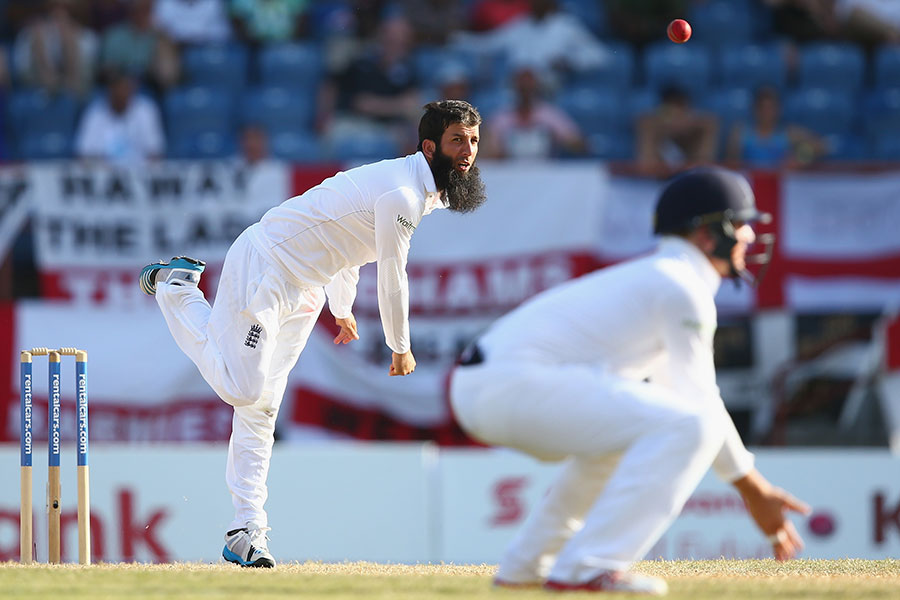
Moeen Ali's form remains a huge concern ahead of the Ashes.
Moeen Ali’s bowling form remains a huge concern ahead of the Ashes.

orthodox off spin bowler he used his subtle changes in flight and pace to gain many wickets – while Moeen doesn’t have the same skill set as Swann he does possess a doosra. He learnt this off his great friend Saeed Ajmal whilst they were teammates at Worcestershire, but while he has the doosra in his repertoire, his reluctance to use it in Test matches could prove a huge downfall.

Rashid on the otherhand has impressed with his all round game in the recent New Zealand ODI series. Mixing sharp turning legbreaks with the odd googly and slider he claimed 4-55 as England ran out huge victors in the series opener at Edgbaston.

Having been a player and coach in Australia during Shane Warne’s dominance in the nineties, new coach Trevor Bayliss should know more than most the importance of an attacking legspinner, especially in a side lacking as much variation in its attack.

Another positive reason for having a legspinner in the side is the recent struggles the Australians have faced against such bowling on their two latest away tours. First Pakistan’s Yasir Shah claimed 12 series wickets at just 17 last October before Devendra Bishoo picked up 6-80 in the West Indians 9-wicket defeat in Dominica earlier this month.

During the dominance of Warne and to a lesser extent India’s Anil Kumble, having an aggressive legspin bowler in your attack was seen as a necessity. These days the infatuation has moved on to left arm pace bowlers – which are seen as cricket’s latest fashion accessory in the wake of the recent successes of the two Mitchell’s, Johnson and Starc along with Trent Boult. To counter this recent trend England have called up Derbyshire’s Mark Footitt.

Along with the introduction of Footitt now was surely the right time to include Rashid in the side as a make way for Moeen. Despite his exclusion from the 14-man party which leaves for Spain next Saturday, Rashid will return to county action for Yorkshire with one eye still on the Ashes.

Look beyond Moeen and Rashid and the spin bowling stocks in England remain extremely thin.

Offspinner Adam Riley, 23, of Kent showed promise last summer whilst keeping Tredwell out of the Canterbury-based side but his 2015 returns of four wickets at 86 don’t make for pretty reading. While Simon Kerrigan, 26, has a respectable mid-season return of 20 wickets at 31, it is still unknown how much a disastrous Ashes debut two years ago affected his confidence as Shane Watson and co. pummeled his slow left arm bowling to all parts of the Oval.

It also looks like Panesar’s international days are a thing of the past after the slow left-armer recently took an enforced break from all cricket – At 33 it remains to be seen if he will ever return to the game.

England will hope it doesn’t take them as long to find a permanent replacement for Swann as it did for Australia when Warne, the greatest legspinner of them all, retired in 2007.

From Beau Casson to Steve O’Keefe, thirteen men were tried before the Australians decided to put all their trust in Nathan Lyon – who recently became their most successful offspinner of all time. Their current legspinner Fawad Ahmed, like Rashid, looks set to watch the Ashes from the outside looking in.

Hagley Oval hopes to ease earthquake pain

Christchurch ready for World Cup opener.

image
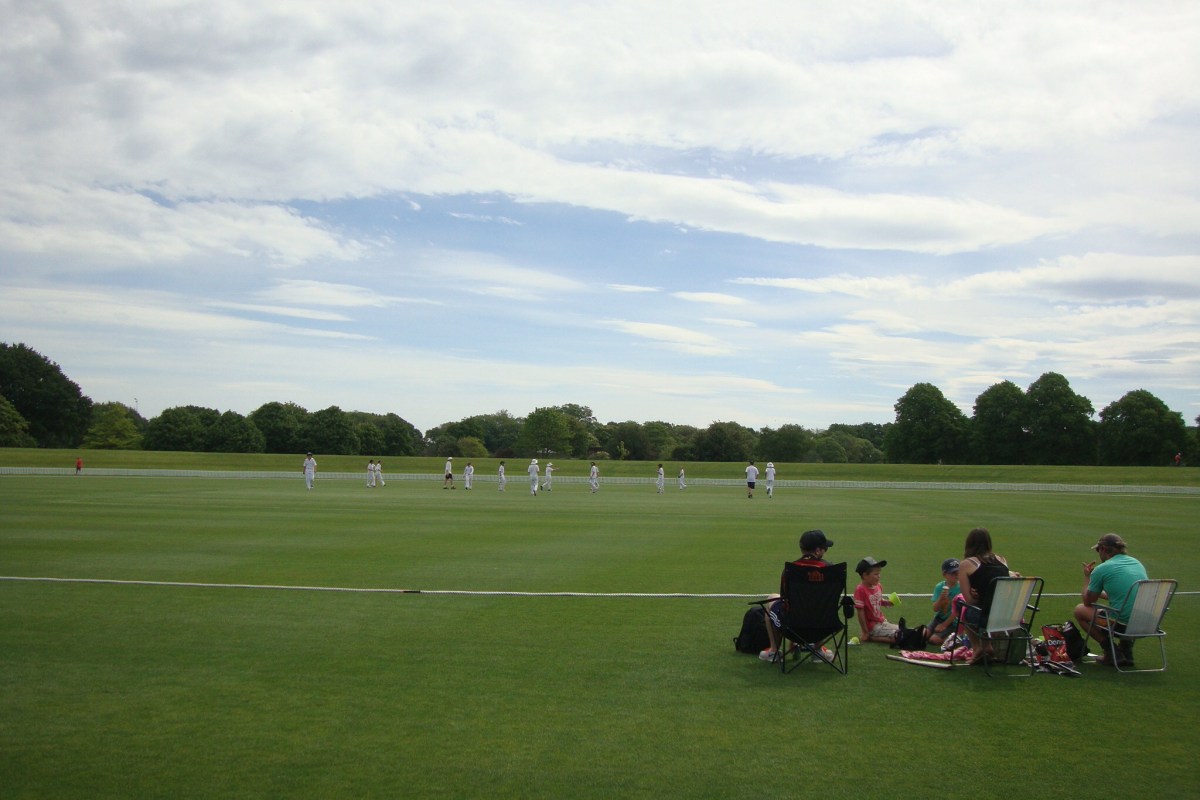
Christchurch is set to launch the cricket World Cup on Saturday.

On February 22nd 2011 things changed forever for Christchurch and its people. In what was one of the worst earthquakes of all time to hit New Zealand, the city of churches was almost completely wiped out leaving 185 people dead and many more seriously injured. Almost four years on and the city is still in its early stages of rebuilding – a process that is expected to take another fifteen years.

With a sporting heritage that goes back many decades, Christchurch, the country’s second largest city after Auckland, had hosted international cricket and rugby for many years prior to its earthquake devastation, but during its early years of re-build the city has to do without either the All Blacks or the Blackcaps until recently.

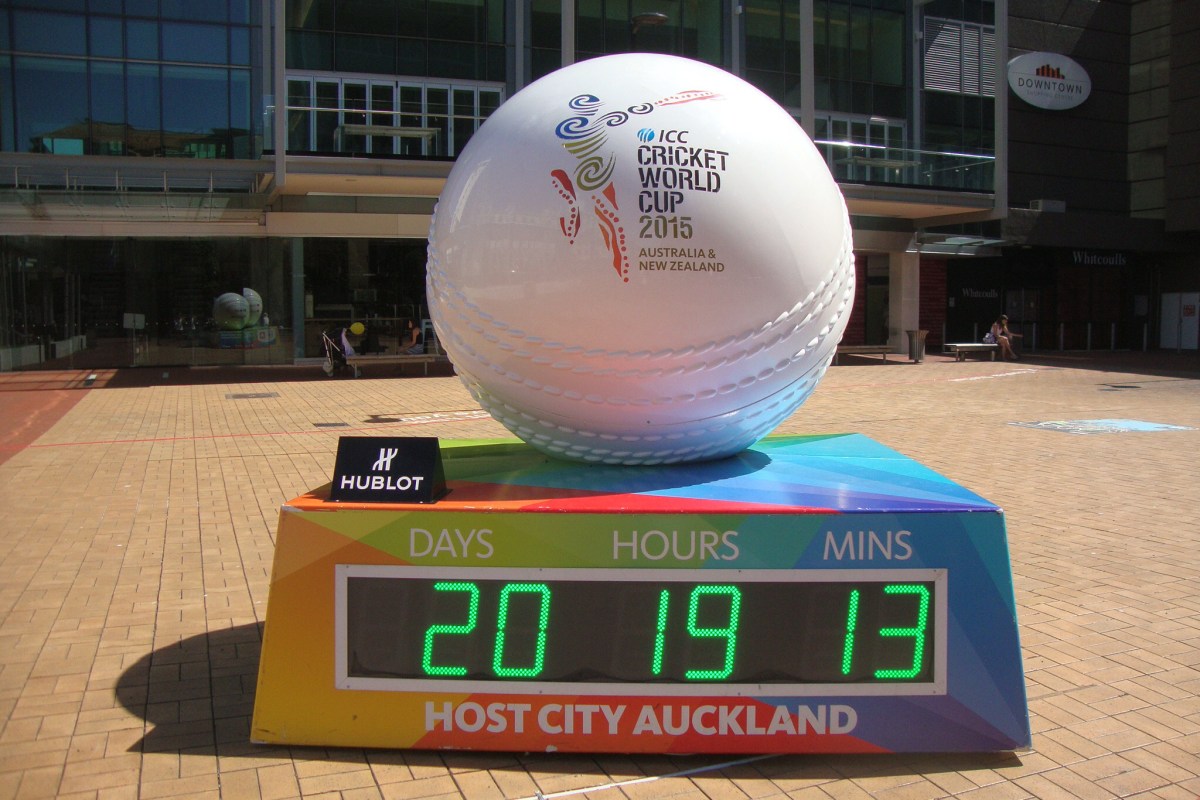
As World Cup cricket returns to the country for the first time since 1992, the cricket committee thought it was very important that cricket was returned to Christchurch as the city tries to get back on its feet again.

On Saturday the Kiwi’s as set to open the 2015 World Cup when they play host to Sri Lanka in the tournaments first match, almost fifteen thousand miles away Australia host old enemy England in Melbourne at what is expected to be in front of a crowd of 90,000 at the MCG. The Hagley Oval seems a million miles away from the ‘G’ but the people of Christchurch will hope a sold out Oval of around 20,000 will make equal noise and get this once vibrant city back on the world stage.

Despite hosting its first cricket match in 1867, Hagley Oval has for long been an afterthought amongst the cricket faithful in Christchurch as its big brother Lancaster Park (also known as AMI Stadium and Jade Stadium) hosted international cricket for decades until it was fatefully damaged in the 2011 earthquake.

A derelict and overgrown Lancaster Park awaits demolition.

Lancaster Park had been the home of international cricket in the city since 1930, when it hosted New Zealand’s first ever Test match, an 8 wicket defeat to England. It has since hosted many remarkable matches over the years and despite not having been used as a Test venue since 2006 due to poor crowd attendance, its 36,500 captaincy was seen as an ideal ODI and T20I venue right until it was closed following severe damage caused to its foundations.

With no other international standard venue in Christchurch the people of Canterbury had been deprived of any international cricket since the quake, until a plan was forced to redeveloped the Hagley Oval, a small corner of the 164.637 hectare Hagley Park, located next to the beautiful Botanic gardens and just outside of the badly damaged CBD.

The Oval was developed with an eye on the country’s other traditional cricketing homes such as Wellington’s Basin Reserve and Dunedin’s University Oval and apposed to the grand stadia of the previous Rugby sharing Lancaster Park as well as the likes of Eden Park in Auckland and Westpac Stadium in Wellington.

Many people were apposed to an international sports venue been located inside an urban open space but others were just pleased that their city would get a chance to host a global international tournament after the earthquake damage to Lancaster Park ended their hopes of hosting seven matches in the 2011 Rugby Union World Cup including two quarter finals. For a rugby loving country like New Zealand, that was a devastating blow to the people of Canterbury.

Something had to be done to make sure the city didn’t suffer the same fate again when the cricket World Cup came to the country and plans were quickly put in place to revamp the Hagley Oval in 2013.

The controversial plans put forward by Canterbury Cricket were approved by the Environment Court and by late January 2014 the Oval was hosting its first international cricket match, when Canada and Scotland met in a ODI World Cup qualifying match – three years after the city had last hosted an international match when the Blackcaps hosted Pakistan less than a month before the earthquake disaster.

By October of last year the ground was given full ICC accreditation as an international cricket ground and it soon became New Zealand’s eighth Test venue when it hosted the country’s first Boxing Day Test since the Basin Reserve was a regular host of the event up until 2003.

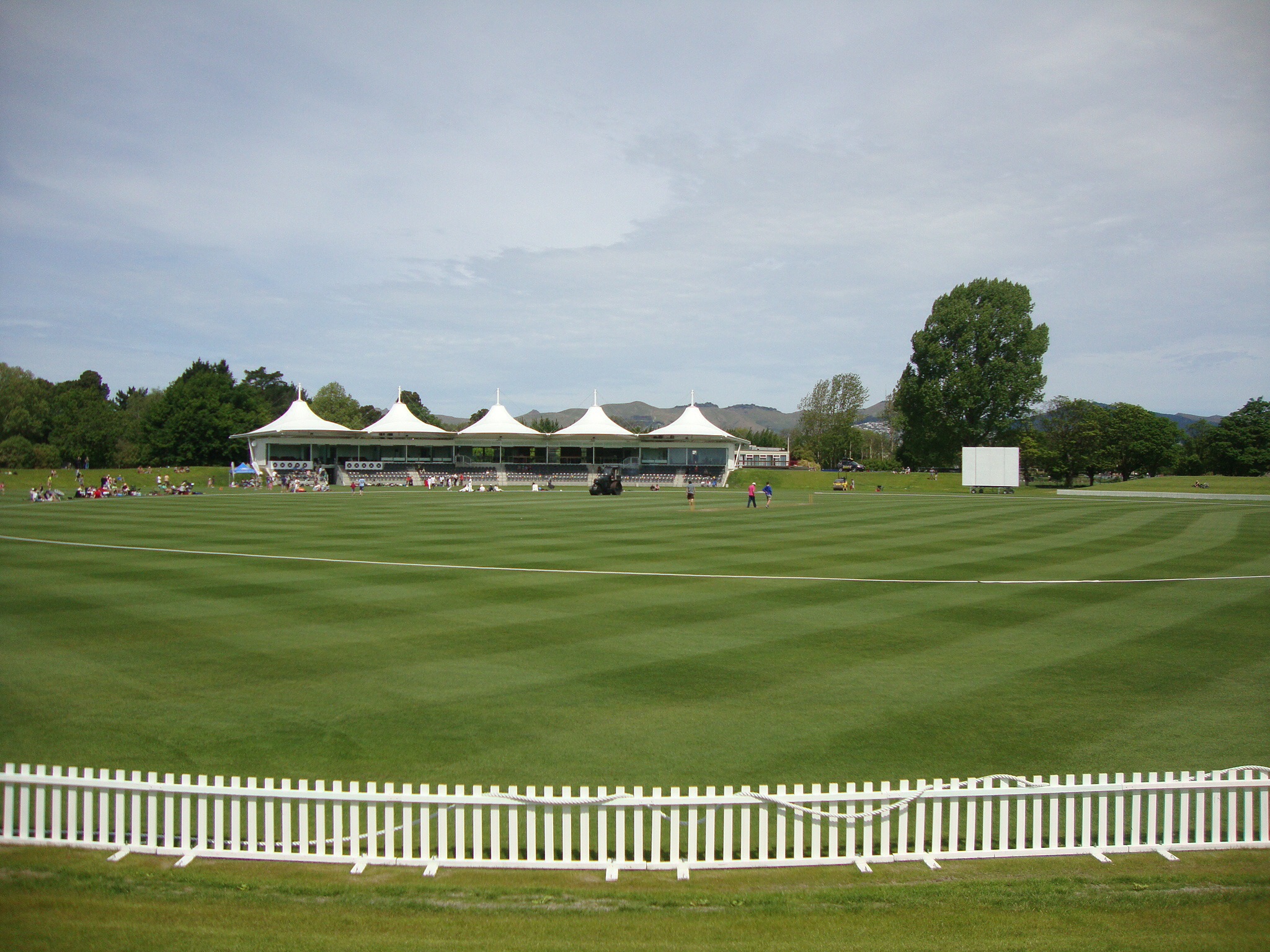
Hagley Oval during a recent visit in November 2014.

The Blackcaps’ return to international cricket in Christchurch couldn’t have gone much better! A near packed house of 7698 people gave up their Boxing Day to cheer on their side and in return were treated to a delightful sunny day and a Brendan McCullum special (195 off 134). The Kiwi skipper fell just five runs short of what would have been the fastest Test double hundred of all time as the home side dominated proceedings, eventually winning the Test by 8 wickets.

McCullum was certainly impressed with the design of the new ground from a spectator point of view. “I think the way the crowd can interact… being quite close to the action and the grass embankment, there’s a bit of romance about that from a purist’s point of view.”

A return to international cricket was an important step for the city known as the hometown of the greatest Blackcap of them all, Sir Richard Hadlee.

Hagley Oval has since hosted a ODI, also against Sri Lanka, as well as a host of World Cup warm up matches this past week, but the best is still to come. After an eventful opening ceremony on Thursday evening, the main stage begins on Saturday at 11am.

Once again the world’s eyes will be on Christchurch, thankfully this time it’s for the right reasons.

The Finishers

ICC CRICKET WORLD CUP 2015

The wait is almost over.

With just a week to go until world cricket’s major limited overs tournament kicks off in Christchurch, I take a look at a vital role in the ODI game – The role of “The Finisher.”

The pressures that come with the World Cup bring together hero’s and villains alike. Batsmen and bowlers who keep their nerve to guide their respective sides to glory or the polar opposite and guys who wilt in the heat of the moment and fail under the expectations.

The term finisher originates from the man many believe was the finest finisher of them all – Australian Michael Bevan. Bevan was part of the 1999 and 2003 Australian World Cup winning sides and scored 6912 runs from 232 ODIs at 53.58. When it came to an ODI chase, the burly left-hander came into his element. In successful run chases his 45 innings brought him 25 not outs and 1725 runs at 86.25 – which also included three hundreds and twelve fifties.

The importance of being a good finisher is keeping calm, often when batting with the tail, with the run rate increasing and regular wickets falling at the other end. Many batsmen panic and fall to the big shot in these situations while others simply keep calm and back their abilities to see the job through using calculated risks whilst also making sure they often rotate the strike and shepherd the tail.

With history showing the role of the finisher to be an important factor between glory and failure I have picked five key finishers to look out for during the upcoming global tournament.

……

James Faulkner – Australia

imageDespite the fact that he’s set to miss the first week of the tournament due to a side strain, the all-round abilities of Faulkner remain a vital part of a strong looking Australian outfit.

Although he is primarily seen as a left arm medium fast bowler, it’s his late order hitting and composure with the bat that has seen him talked up as Australia’s latest finisher – following in the footsteps of the greats in Bevan and Michael Hussey before him.

With the all round depth that Australia currents possesses in their ODI side, the Tasmanian is not usually scheduled to come in until number eight and often doesn’t get a bat. But when he is required to strap the pads on he is often the man for a crisis and a high pressure run chase.

In twelve ODI second innings he averages 109.50 with eight not outs and a strike rate of 131.53 – A record better than any other player going to the World Cup.

The 24-year-old currently averages 48 in ODI’s and first truly showcased his lower order hitting prowess in a 2013 ODI series in India – where he scored an impressive 230 runs across just four innings at an average of 115 including a career best 116 and a stunning unbeaten 64 off 29 balls to lead his side home in Mohali.

Best finisher innings: 69no v England (at Brisbane – Jan 14′)

Coming in at number nine with his side staring down the barrel at 7-206 chasing a further 95 to win with 15.1 overs remaining, Faulkner pulled off a remarkable heist and led his side home with three balls to spare.

After seeing two wickets fall at the other end he was joined by number 11 Clint McKay with 57 runs still required but kept his cool and launched three 4’s and five 6’s in a 47-ball 69. His partnership with McKay was the second largest ten-wicket stand to win a match and Faulkner duly knocked off the final 25 runs needed in just seven deliveries.

…….

Luke Ronchi – New Zealand

imageThe wicketkeeper-batsman returned to the country of his birth in 2012 after initially representing Australia in four ODI’s back in 2008 and by 2013 he was a fixture in the Blackcaps limited overs sides.

By picking him in their ODI side the Kiwi’s have allowed skipper Brendon McCullum the freedom to focus on the captaincy and his aggressive batting without worrying about keeping wicket.

But Ronchi isn’t just here to keep the balance of the side intact. Coming in at number seven he has started to put his own mark on the side and compliment their strong middle order with his late hitting and finishing skills.

In a recent ODI against Sri Lanka at Dunedin he blasted the highest ever ODI score by a number seven when hitting a brutal 170 not out off just 99 deliveries. His century came of just 74 balls as he, alongside Grant Elliott put on a world record unbeaten 267 for the sixth wicket, having come to the crease at 4-82 they left the visitors with a chase of 361.

Best finisher innings: 32no v Sri Lanka (at Nelson – Jan 15′)

Despite his record breaking hundred getting all the plaudits he also helped the Blackcaps chase down Sri Lanka’s 276 in Nelson with an unbeaten 32 from just 15 deliveries. With centurion Kane Williamson having just been dismissed, Ronchi walked to the crease with 47 runs still needed from the remaining 36 deliveries, when Corey Anderson was then run out, Ronchi had seen enough and quickly made light of the chase by taking 24 runs off one Thisara Perera over to all but finish the game off.

Two other performances of note came in a pair of matches against South Africa in Mount Maunganui last year where he made 99 and 79 in losing causes.

……..

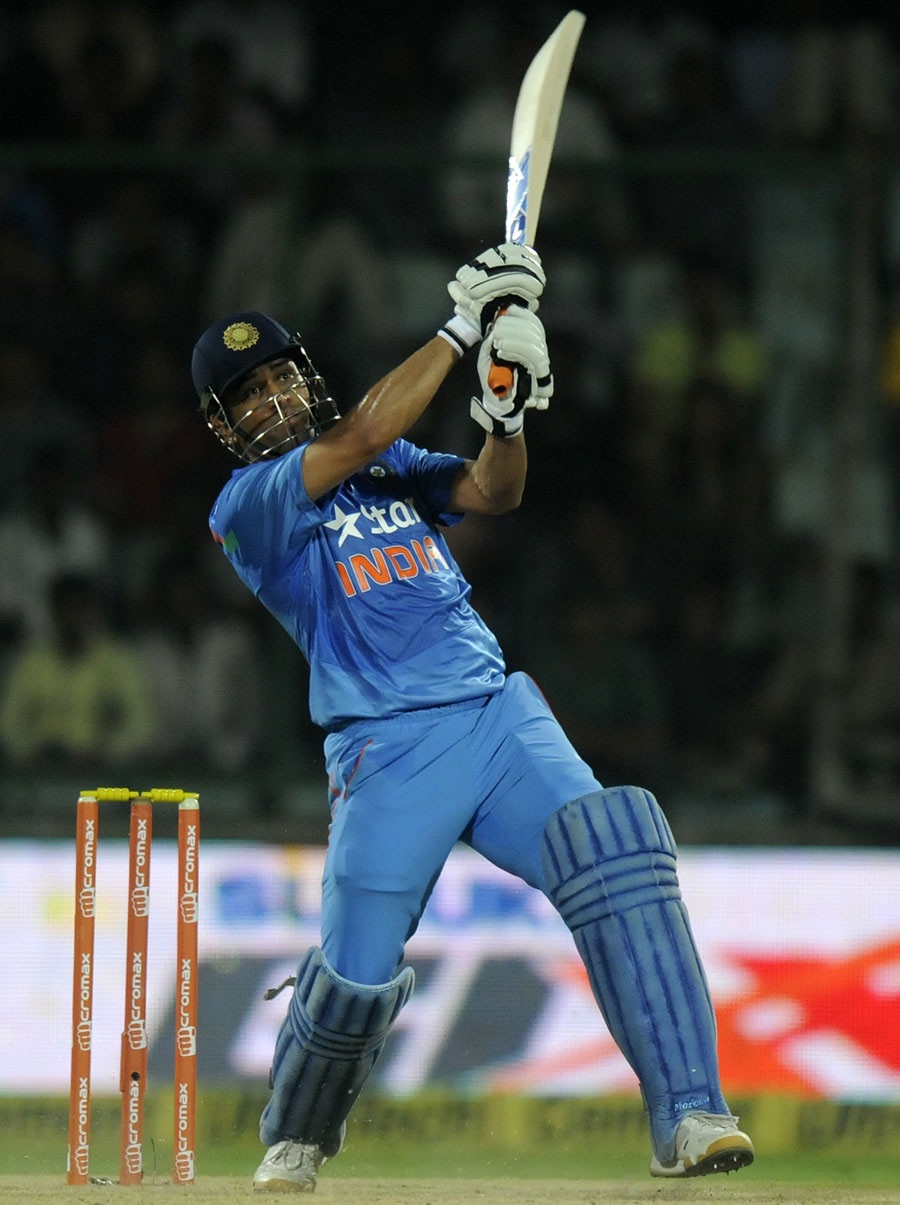
Mahendra Singh Dhoni – India

imageWhat more needs to be said about Mr Calm.

A veteran of 254 ODIs and 90 Test matches, India’s most successful leader is approaching his third World Cup after an appearance in 2007 and a winners medal in 2011. The man known as ‘Mahi’ is undoubtably ranked up their with the finest limited overs players of all time.

Time and time again the cultured right-hander has snatched his side victory from the jaws of defeat with powerful and calculated hitting toward the end of the innings and he is regarded alongside Bevan as the greatest finisher in the history of one day cricket.

Only Sachin Tendulkar can claim to be adored by the billions of India public more than Dhoni – Especially after the latter led his side to their first World Cup title since 1983 four years ago with a breathtaking finishing act to the scale of 91 unbeaten runs on home soil.

An ODI average of 52.29 is almost unrivalled in the modern day, but for a player who plays the risky and entertaining brand of cricket that Dhoni does – it strikes of greatness.

After giving up Test cricket recently, the 33-year-old has decided to stake more of his time in ODI and T20I cricket alongside his commitments for IPL side Chennai Super Kings and India will hope there are a few more years left yet in his hugely successful limited overs career.

Best finisher innings: 91no v Sri Lanka (at Mumbai – April 11′)

The world’s premier finisher of course had to show off his skills under pressure on the world’s biggest stage, the World Cup final.

Leading into the final, Dhoni had had a quiet time of things during the World Cup with teammate and national icon Tendulkar taking centre stage, but his captain wasn’t to be out done – cometh of the hour cometh the man.

Chasing 275 to win, India lost openers Tendulkar and Virender Sehwag inside the first seven overs and when Virat Kohli also fell with more than half the target still required, Dhoni decided to promote himself ahead of the in-form Yuvraj Singh.

Alongside Gautam Gambhir he took the Sri Lanka’s on for a tournament winning undefeated 91 from 79 balls adding a 109-run partnership in the process and eventually sealing the victory with a huge six into the grandstands to send over a billion Indians into party mood. Well played sir, well played.

…….

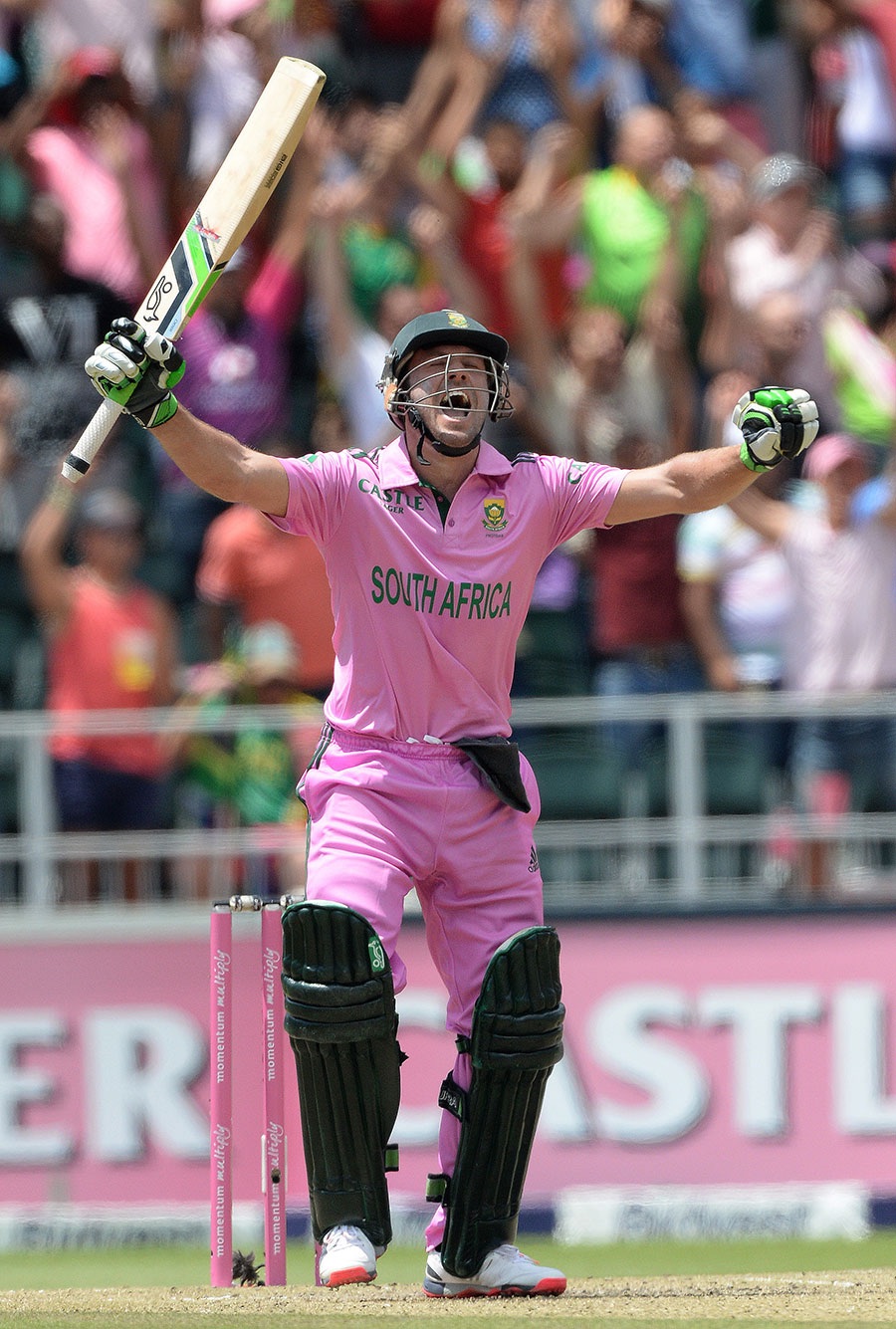
AB de Villiers – South Africa

imageThe man of the moment! de Villiers recently stopped the world in its tracks after blasting the world’s fastest ever ODI hundred against the hapless West Indians in Johannesburg.

Although he only came to the crease just eight deliveries before the 40th over, the brilliant right-hander somehow managed a brutal 31-ball hundred and still didn’t bat out the innings after falling for 149 in the 50th over chasing yet another six. He hit sixteen in total to go alongside his nine fours.

Despite this magnificent achievement, it perhaps didn’t shock that many people. That’s AB de Villiers for you, there’s not many things that he can’t do on a cricket field!

Although it seems he has been around forever (he made his ODI debut almost exactly a decade ago) he will only turn 31 during the tournament and could have at least another 5-10 years of cricket left in him.

If South Africa are to win their first World Cup and finally rid themselves of the chokers tag that has followed them for years, then they need their captain and talisman to perform the Lance Klusener like finishing skills of the late 90’s.

Test and ODI averages of over 52 confirm de Villiers as the best batsman in the world at present and with 19 ODI hundreds at a strike rate of 97.16 few would bet against him leading his side to next months World Cup final in Melbourne.

Best finisher innings: 136no v Australia (at Harare – Aug 14′)

Faced with a steep target of 328 against a good Australian bowling attack, the Proteas made light work of the chase thanks to hundreds and a 206-run partnership from de Villiers and Faf du Plessis. They eventually chased the total down with 20 deliveries spare.

De Villiers’ unbeaten 136 was made off just 106 balls and was at the time the second highest score by a South African captain in one day cricket.

The innings was typically clinical de Villiers – including both power and finesse on equal measures and helped with eleven fours and two sixes at a high strike rate of 128.30.

If there’s one man who knows how to pace an ODI innings, it’s the Proteas captain.

……..

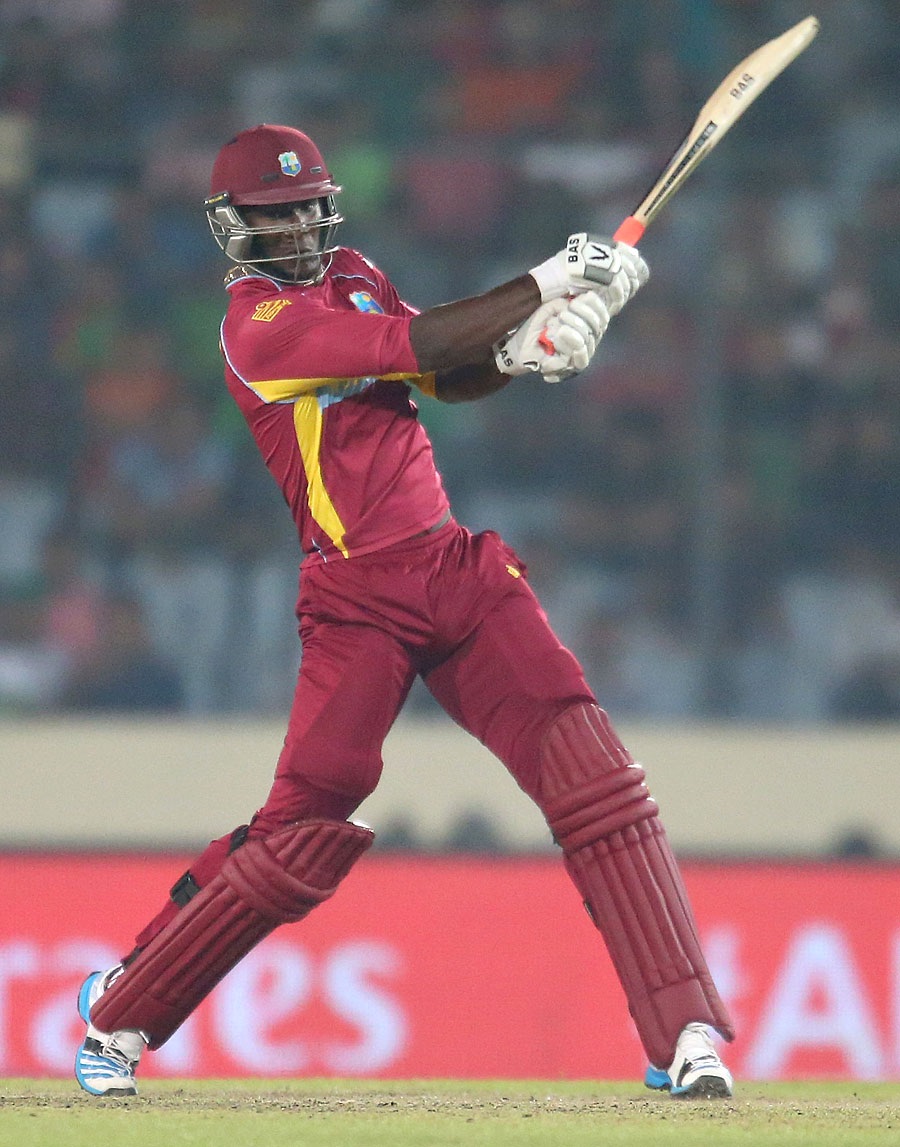
Darren Sammy – West Indies

imageSt. Lucia’s first international cricketer has had a turbulent past 12 months in international cricket and his previous visit to New Zealand ended with him resigning from the Test captaincy and retiring from the format altogether.

Since then he has also been involved in contract disputes and was originally left out of the squad for the recently concluded 4-1 ODI series defeat in South Africa before been reinstated.

Once a captain across all formats for the Windies, Sammy is now just leader of the T20I side and has come back into the ranks as an ODI player with the side now skippered by youngster Jason Holder.

But despite of this he still remains an important part of the side in the forthcoming World Cup not least due to the absence of fellow hard hitting all rounders Dwayne Bravo and Kieron Pollard.

Despite his lack of an ODI hundred, Sammy has a high strike rate of over 100 and previous history of finishing off run chases – A skill he has transferred over from his past experiences in T20 cricket. His remarkable finish’s in T20I’s in the past year include: 30* off 9 (v England), 34* off 13 (v Australia) and 20* off 7 (v South Africa).

Best finisher innings: 63no v India (at Visakhapatnam – Nov 13′)

Up against a powerful Indian side on home soil and facing a stiff chase of 289, the West Indians got home with three balls and two wickets to spare, mainly thanks to Sammy’s unbeaten 45-ball 63.

The chase was set up by fifties to Kieren Powell, Darren Bravo and Lendl Simmons, but wickets kept falling and the asking rate climbing. Walking in at 5-185 with over a hundred still required, Sammy took it upon himself to seek boundaries with four 4’s and as many sixes been blasted from the bat of the tall right-hander.

His innings was reached at a strike rate of 140.00 despite him playing out a maiden when he first came to the crease.

With the current disarray in West Indies cricket, they will need a few more Sammy specials to brighten the spirits of their long suffering fans.

New cycle approaching for Australia?

Progression happening earlier than expected for Australia.

Things are happening thick and fast for Australian cricket. After the tragic death of Phillip Hughes a couple of weeks ago and the dramatic final session victory over India in Adelaide on Saturday the team already has a new (stand in) captain and half a new bowling line up for the second Test against the Indians in Brisbane.

Steven Smith was chosen as the man to replace the injured Michael Clarke as Australian Test captain.

With the clouds circulating over the future of incumbent captain Michael Clarke, who underwent major hamstring surgery on Tuesday. Steven Smith was named Australia’s 45th Test captain for at least the final three Tests of the summer.

While most of us expected previous vice-captain Brad Haddin to take over the helm of the side in Clarke’s absence – As he was lined up to do so when there were worries over Clarke’s fitness for the originally scheduled first Test of the summer at the Gabba, rearranged due to the death of Hughes – The seriousness of Clarke’s injuries and the lack of a timescale for his comeback has led the selectors to promote Smith ahead of schedule.

Although Smith is a good choice as captain and his appointment has been well received by ex-Australian captains Ian Chappell, Kim Hughes, Allan Border, Steve Waugh and Ricky Ponting – Even he must admit that his promotion is way ahead of the expected schedule.

It helps that alongside David Warner, Smith is now the side’s premier and inform batsman. Since the start of the home Ashes series last summer he has scored 984 runs at 61.50 and now looks like replacing Clarke as the sides middle order rock. He has also already moved himself up into Clarke’s number four batting spot as he looks to take more responsibility with the captaincy.

Elsewhere the lineup is starting to evolve much sooner than many expected from the side that dominated England over five Tests just a year ago.

At the end of that whitewash series players such as Chris Rogers, Brad Haddin and Ryan Harris had stated their wishes to continue on to be able to defend their Ashes crown in England next summer and although that might yet happen – things are starting to look less certain now.

The 2015 Ashes tour of England was supposed to be end of a cycle as far as a few Australian players were concerned, but with form and injuries taking over at the present, that day looks like it could be happening rather sooner than expected.

Taking a look at the current side, there remains plenty of questions over the mid-to-long term future of many players. Starting with the top order I take a look at the immediate and long term future of those who’s places could be under threat throughout the next year of Test cricket.

Chris Rogers – Despite a recent from slump which has seen him not pass fifty in his last eight Test innings, he received reassurances from the selectors over his immediate future in the side. Despite not scoring as much as the selectors would have liked, the fact that he has had a huge affect on the development of Warner as a world class opener has earned him some credit in the bank. Another reason for the selectors leniency towards Rogers is the lack of other opening options.

IThe likes of Ryan Carters and Ed Cowan have been amongst the runs in the Sheffield Shield. While Carters could do with at least another season batting at the top of the order after spending more of his early career in the middle order, returning to Cowan would be a backwards step after he was largely found wanting during his previous spell in Test cricket.

The main challenge to Rogers at the top of the order was of course Phil Hughes – Who in an ideal world would have replaced the 37-year-old at the conclusion of next summers Ashes.

Someone else who could possibly replace Rogers in the future is Jordan Silk, 22, but the Tasmanian batsman is currently averaging just 25 during the first part of the Shield campaign.

With no more Shield cricket to be played during the Test summer due to the Big Bash it’s unlikely that Rogers will be dropped even without a significant score and the chances are his vast experience in English conditions will earn him an Ashes swan song next summer.

Allrounder Shane Watson’s place in the side also seems up in constant question. With the inclusion of Mitchell Marsh as a second allrounder batting at six, Watson has not had the same workload of bowling as he once had and can now fully concentrate on his batting.

Like Rogers it has been a long time since Watson made a significant score in Test cricket and with a brittle body that seems to break down after every other match it looks like Watson could be on thin ice if Shaun Marsh makes runs at number five and Clarke returns to the side for future assignments next year.

On top form he remains a lock in at number three for the next couple of years but with the injuries and his inability to make hundreds when they matter the most, Watson’s days could be numbered if an adequate replacement batsman shines through in Shield cricket.

Michael Clarke’s recent back and hamstring injuries a becoming a far greater concern than first feared a couple of months ago, so much so that after hobbling out of his sides victory in Adelaide, Clarke told reporters that he could have played his final cricket match for his country.

Since then he has undergone major surgery on his hamstring injury and has said his future is now in the hands of the medical team. It remains likely that he will return to Australian colours sometime next year and despite the usual two month recovery for such surgery, the World Cup seems to come too soon for him – Perhaps a return to the side for next June’s tour of the West Indies remains more likely.

Jury still out....Brother's Mitchell and Shaun Marsh prepare to play their first Test together.
Jury still out….Brother’s Mitchell and Shaun Marsh prepare to play their first Test together.

Both the Marsh brothers, Mitchell and Shaun have yet to secure their places in the side with any real authority as of yet. Although the young allrounder Mitchell has impressed with his exciting batting style and tight bowling in his three Tests to date, he has yet to score match changing runs or take any vital wickets.

Shaun has been in and out of the Test team since make his debut over three years ago. His two Test centuries have both contributed at difficult times – 141 in Pallekele on debut and 148 in Centurion last February. Despite these two impressive overseas knocks, he has only passed single figures in five of his other thirteen innings.

If he can find some consistency between the all or nothing part of his game then there is likely going to be a spot available to him in the middle order with the futures of Watson and Clarke in doubt.

Despite being over looked for the captaincy Brad Haddin remains the current incumbent wicketkeeper. While he has failed to score more than 22 in his last eleven innings, his exploits in last summer’s Ashes have likely earned him one last chance to win a World Cup on home soil as well as an away Ashes. The shoulder injury he picked up in the UAE perhaps remains a concern for a man of 37 but without Clarke in the side for the next few months, Haddin’s experience will be vital for new skipper Smith.

When the time comes for Haddin to step aside, likely to be after next summer’s Ashes, Matthew Wade remains the front runner to replace the New South Welshman.

Alongside Wade, Peter Nevill and Sam Whiteman will be talked up by many, with Nevill’s current Shield form currently edging him ahead of the younger Whiteman.

The next generation...Josh Hazelwood receives his Baggy Green from Glenn McGrath.
The next generation…Josh Hazelwood receives his Baggy Green from Glenn McGrath.

With his exclusion for the ongoing Test at the Gabba, Peter Siddle has now been dropped twice in the past year. Although the 30-year-old still remains in the picture, he is increasing finding his place more threatened by his younger and quicker counterparts. First in Cape Town he was replaced by James Pattinson and now by Josh Hazelwood.

It has been clear since his axing in South Africa that he has been down in pace and with younger men such as Hazelwood now staking an impressive claim to be in the side, he must accept he is now just a squad bowler and not the spearhead he once was. It’s very unlikely that a man with 192 Test wickets will be disregarded so quickly yet though.

Elsewhere across the quick bowling corps Mitchell Starc has remained performing in ODI and Sheffield Shield cricket earning him a recall to the side for the second Test match despite an ordinary outing in his only match in the UAE. He has yet to play back-to-back matches and remains slightly unconvincing at Test level.

Jackson Bird and Pat Cummins have recently returned from long term injuries to represent their respective State sides Tasmania and New South Wales. But it will be a while out yet for either of them to return to the Test side without decent match practice beforehand.

Another impressive young quick bowler in James Pattinson remains on the sidelines after a series of serious injuries. The 24-year-old last played for his country in the final match of their 2-1 Test series victory in South Africa back in March before a reoccurrence of a back stress problem put pay to his 2014. He has since remodelled his bowling action and hopes to make a return to Shield cricket with Victoria before the end of the summer after playing as a batsman only for grade side Dandenong in recent weeks.

Ryan Harris, when fit, still remains a world class bowler, but following knee surgery in March he is now likely to be managed even more cautiously than last summer – Where it was a minor miracle that his knee managed to make it through five Tests on the bounce.

He will fitness permitting be on the plane to England next Summer where it is expected he will wind down his international career. A career that started when he was already 29-years-old and has crossed between him being a world class opening bowling and a regular member of the physio table.

Mitchell Johnson’s resurgence in the past twelve months has seemingly added a couple of years onto his international career and he will likely remain as the spearhead of the Australian bowling whilst the inexperienced men find their feet.

At least the critical vultures will now be off the back of spinner Nathan Lyon – Who’s twelve wickets in Adelaide have earned him some patience in the side after a disastrous tour of the UAE. His place in the side could have been under threat had his fellow New South Wales colleague Steve O’Keefe impressed more on his Test debut in Dubai, but for the next year at least he will remain the number one tweaker.

Much will be determined by the ongoing series result against India and the performances of those involved as to who will make the tours of West Indies and England next summer, while the final Sheffield Shield matches to be played at the conclusion of the Big Bash tournament in February will also be a chance for those on the outside to claim a place on the plain new year.

Will the the new cricketing cycle start earlier than expected? We will have to sit back and see how the summer unfolds to find out.