On Thursday 27th of November 2014 the cricket world was left in mourning as it lost one of its own.
Phillip Joel Hughes was a hugely popular and successful batsman in the modern Australian cricket circuit and when he was struck on the back of the neck by a bouncer that would eventually claim his life whilst batting for South Australia against New South Wales at the SCG last Tuesday – It became by a distance the most shocking and devastating incident that has hit cricket in my lifetime.
Such a rareness to the injury that he sustained only made it more hard to comprehend that in this day and age a player can lose his life whilst playing the game he loved.
In the day following the devastating death of Australian batsman Phillip Hughes, I thought it would be best to express my sadness of his passing in the way of an eulogy towards his tragically short-lived life.
But my mind wasn’t right to write a balanced piece that would befit the man. I was still in shock and disbelief that an Australian cricketer had died playing cricket. For a while I blamed cricket, how could the game I love take away the life of someone who I had enjoyed watching play the sport so closely over the previous five years.
This is how far I got.
Right now I don’t know how I feel about cricket. I don’t even want to think about watching it at the moment. How can I even think about watching Mitchell Johnson bowl at bouncer at Murali Vijay at the Gabba next Thursday or anyone bowling a bouncer at anyone else for that matter.
For those who know me best, this is hard to comprehend as usually I would eat, sleep and breath cricket. But not right now. How could cricket kill Phillip Hughes? Cricket’s a game, how can it take a life of someone so promising and young?
When I first heard the news of the accident that had put Hughes in hospital, I was of course concerned, but never did I begin to think that two days later I would be left as numb as when Hughes lost his battle – A battle I had assumed he would overcome.
*********
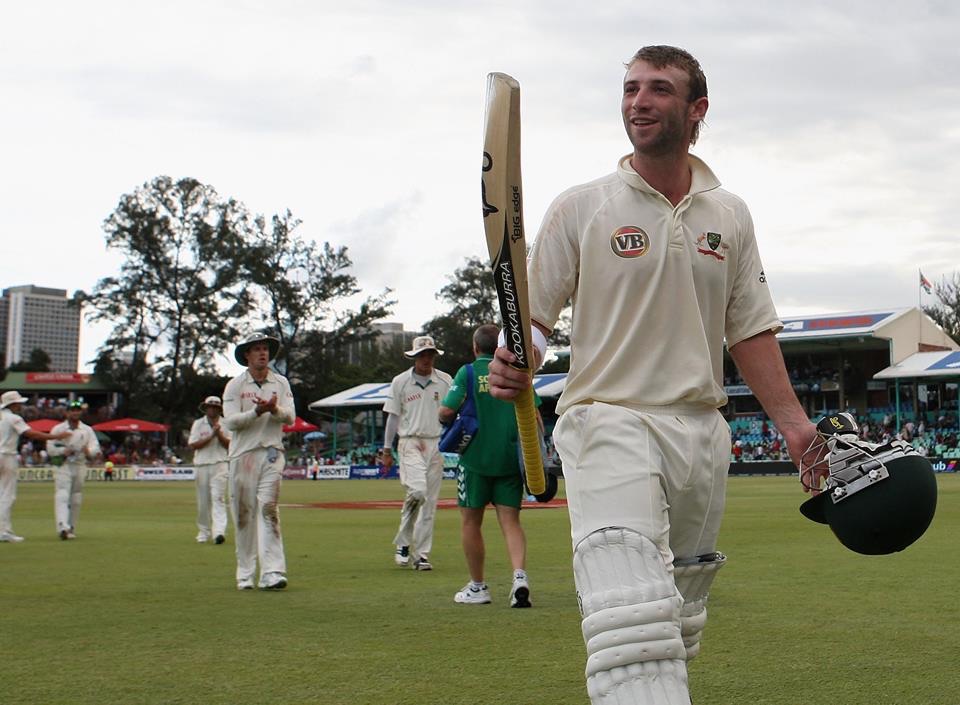
Hughes walks off after scoring back-to-back hundreds in only his second Test match.
As the song Forever Young played out to a packed Macksville sports hall celebrating the life of Phillip Hughes today, I started to finish the piece I had started almost a week earlier. ‘Forever Young’ turned straight to ‘Too Young’ in my head – Taken far too young.
Born Macksville, Northern New South Wales, a few days over 26 years ago, Phillip Joel Hughes was a talent taken from us far too soon.
I first became familiar with the attacking left-hander when he was called up by Australia for their tour of South Africa in February 2009 as a replacement for the legendary retired opener Matthew Hayden – Big shoes to fill I thought, but at least the Aussies were looking towards youth to begin their rebuilding process.
But boy did Hughes fill those shoes. Facing a Proteas attack that included heavyweights Dale Steyn, Morne Morkel, Makhaya Ntini and Jaques Kallis his first four innings in international cricket read: 0, 75, 115 & 160.
Hughes had almost singlehandedly rejuvenated a stagnating and declining Australian side and he became an overnight batting star. His rich form also. continued into the English summer with a hugely successful stint with Middlesex. In short he had become a run machine.
That form soon became short lived though as Andrew Flintoff amongst others, found a weakness in the left-hander’s batting technique outside of off stump. Two Tests into his Ashes debut series and he found himself out of the side for the first of many occasions during his 26-Test career.
He returned to the side on regular occasions during the next five years but always seemed to be the first batsman dropped even when others were suffering a similar form slump.
His batting itself was always exciting to watch. Although he became more of a force as an onside player during the course of his Australian career, he will be forever remembered as predominantly an offside player. And a damn fine one at that.
The sight of Hughes flaying attacks with his square drives and fierce cut shots will be greatly missed throughout the cricket world.
Despite his struggles to maintain a permanent place in the Australian batting lineup, Hughes remained a huge contributor of runs for both New South Wales and South Australia in the Sheffield Shield as well as the Australian A side in various forms. His best attribute as a cricketer was that he was a run scorer. He loved to score runs and usually he would contribute bigs runs at a high strike rate in an attacking manor.
Twenty six first-class hundreds before his 26th birthday suggest he would have eventually cracked Test cricket if he was finally given a sustained run in the first team. With the batting talent and tough mentality that he possessed it surely would have only have been a matter of time before he started scoring regular ODI and Test hundreds for his country.
Despite suggestions he was going to be recalled to the Australian side in the place of the injured Michael Clarke for the first Test against India which was due to start this week, one would imagine his first opportunity to maintain a permanent place in the batting lineup would have been as an opener alongside Dave Warner once Chris Rogers stepped aside next year.
*******
As a man Hughesy or Huge Dog (as he was known by both of his mates and teammates) was a quiet team man with a huge love of life. He was a tough man in the mould of the Chappell’s, Waugh’s, Border’s and Ponting’s before him.
Despite not knowing Phillip Hughes, he seems like a man and cricketer who I would have loved to have met – After all we share the same love for both cricket and cattle!!
He was a player I followed very closely over the years and in recent times I found myself constantly looking at the South Australian and Australian scorecards hoping to see yet another Hughes hundred as I knew that alongside Steven Smith – He was the future of the Australian batting lineup for the next decade.
Unfortunately life can be cruel to the people who don’t deserve it, there will be no more watching his fierce cut shots or seeing his infectious smile.
It’s with a heavy heart I have to say, Rest in Peace Phillip Joel Hughes – Forever 63 not out. X
In the past few weeks I haven’t been able to get Jesse Ryder out of my head.
At the beginning of the month I visited the University Oval in Dunedin, Ryder’s adopted home ground with his third state side Otago and then came out stories in the media of his reintroduction into a national A touring side and talk of a possible World Cup berth for the entertaining hitter.
Things started looked promising once again – could the Wellington-born maverick be making his way back into the Blackcaps setup just in time to make a strong World Cup claim? After all his country has just lost comprehensively to South Africa in a home ODI series – Where the need for another opener was evident…But this is Jesse, Jesse tends to f**k up once things start looking up for him!
And so it was. After been named in the New Zealand A squad for their tour of the UAE – Due to begin this weekend, he withdrew from the squad citing personal matters after a meeting with the Otago Volts management in Dunedin last Monday morning.
Despite the fact that the statement from NZC General manager of national selection Bruce Edgar read: “Jesse Ryder has withdrawn from the tour due to personal reasons, NZC respects Jesse’s decision and is currently considering options for a replacement.” Something didn’t seem quite right.
So It was not a huge surprise to learn that Ryder had missed Otago’s Super Smash match in Christchurch last Sunday because he missed the team’s flight out of Dunedin on the Saturday after an evening drinking in his new hometown following an Otago Volts social golf day on Friday. – It all read a strikingly disappointing but familiar story as far as Ryder is concerned.
It was hardly a shock that it all ended this way. You can’t blame New Zealand Cricket for wanting to reintegrate him back into the side with the World Cup approaching – They know how good both a player and a marketable opportunity he can be, but in the end it’s up to Jesse himself and right now he seems unwilling to want to return to international cricket.
When asked about Ryder after the Blackcaps recent ODI series loss to South Africa, captain Brendan McCullum distanced his team from a return to the powerful all rounder.
The gist of what McCullum said included terms such as: “Got to make sure Jesse is desperate to play for New Zealand” and “We will not compromise the team dynamic.” Hardly terms that make it seem Ryder would have been easily accepted back into the group.
That’s what made his selection a surprising one only a few days after McCullum had made it clear he didn’t particularly want Ryder back in the setup – the national selection committee promptly named him for the forthcoming A tour of the UAE.
Ryder had seemed keen to force his way back into the national team at the time of the squad announcement by saying the right things expected of him:
“It’s just a stepping stone and hopefully it’s a good one for me and I’ll go over there and just do what I need to do to show them I’m still keen to be a part of it.”
It defiantly seemed that he had woken up and realised that there might be a chance of a potential inclusion in the World Cup provincial squad of 30 to be announced next month.
“It’s definitely something I want so I have to put the hard work in first and see whathappens. The A tour is the first step of it.” He added further.
But things change quickly for Jesse. After blasting his way to a match winning 136 off 57 balls against an Ireland XI a month ago, he quickly rejected the chance to take part in a North verses South Island t20 clash to kick start the Super Smash competition – Surely not the act of a man who was desperate to represent his country again in a hurry.
Without knowing the man, it’s hard to figure what goes through the head of Jesse Ryder and why he continually finds himself in such situations and predicaments. Some suggest he struggles majorly whilst in the limelight and it would be easier for him to continue playing domestic cricket instead of accepting the scrutiny that hovers around the game at the highest level.
During a recent visit to the Basin Reserve cricket ground in Wellington, I got speaking to a gentleman who has worked in the ground at the National Cricket Museum for the past five years and he suggested that the vibes he received were that Ryder was an isolated figure and a disruptive influence whilst playing for the Wellington side less than two years ago and many of the players were happy to see him leave for Otago last July.
What could have been?
Despite continuously working with a sports psychologist, it’s a great shame that Ryder hasn’t been able to put aside his personal issues over the years and fulfil the talent we all know he has.
It’s now not inconceivable that he may never add to his 18 Tests and 48 ODIs in the future and that we have seen the last of Jesse Ryder as an international cricketer.
He continues to be a man of the people and a modern day throw back of the cricketing larrikin’s of yesteryear. It’s the fact that he is different personality and enjoys a drink like us all that makes him a standout in a day and age when sport is becoming ever more professional and many of the great characters of the game have disappeared into retirement.
In the days directly following his life threatening assault outside a Christchurch bar in March of last year, one article that has stuck with me to this day was written by Australian journalist Jarrod Kimber on the site ESPN Cricinfo. Due to the seriousness of Ryder’s injury at the time, Kimber was asked to be on stand by to write a eulogy incase the worst happened, it went something like this:
Jesse’s worst made the media’s job quite easy. He churned out headlines, gave angry middle aged men their moral editorials and gave talkback radio days of free funny. Even on the field he never quite gave us what his wrists promised. Unfulfilled potential is the ugliest phrase in the sporting vocabulary.
At his best he was everything that was great about cricket. A shy man in a large body who could play a square drive so perfectly it would stop you in your tracks. If you ever saw one live, you’d never forget it. It was an immaculate cricket moment. This monstrous beast pushing the ball with statue stillness and perfect cricket hands in a gracefully delicate way. It was pure. It was artistic. It was flawless. It was brutal elegance and precision. It was a water buffalo doing a magnificent tango.
It was what cricket should be.
Most people try their whole life to do one thing absolutely as it was intended. Jesse did that almost every time he batted.
Now because of a seemingly violent act of randomness, Jesse has been taken from us. Leaving us with a few moments of cricket perfection, the sort that live in the stories people tell the next generation of cricket lovers.
Heroes, villains and artists don’t often come in the one package.
Cricket exists for men like Jesse Ryder. And men like Jesse Ryder exist for cricket.
Although thankfully Jesse made a full recovery from that dramatic incident in Christchurch and resumed playing cricket twelve months ago, the Kimber article goes to show how adored Ryder is worldwide for his maverick presence on and off the cricket field.
He’s a player you want to come good. I find myself constantly willing him not to go off the rails again, but deep down knowing that he will again eventually let me and more importantly his fellow Kiwi’s down at some point – Just waiting for the day I open a webpage or pick up a newspaper and there it is…The oh for god sake Jesse messed up again story!
In a parallel universe he could have easily already played fifty Tests and made at least ten hundreds – similar figures to that of teammate Ross Taylor (59 Tests and 12 hundreds). But unlike Ryder, Taylor has kept his head down and made the most of his talent at the international level.
So what now for Ryder?
The chances are that he will go back to domestic cricket to be out of the media spotlight and start performing to a high standard once again. In the short term it remains to be seen if he will return to action for bottom of the table Otago Volts for their final two Super Smash matches in the coming weeks. The Volts have currently won only two of their eight matches to date and have no hope of qualifying for the playoffs.
After the conclusion of the current Super Smash series, he is set to head across the Tasman and participate in his first Big Bash tournament for the Melbourne Renegades after signing a deal with the franchise in June that will see him line up amongst the likes of current Australian ODI players Aaron Finch and Matthew Wade. A good performance over the pond could also lead to further interest from the IPL.
After performing outstandingly during his stint with English County Essex in the season just gone he was rewarded with a new two-year contract with the Chelmsford-based side. Despite being signed predominantly as a batsmen, his medium-paced seamers became a surprising weapon. Whilst opening the bowling in Division Two cricket he went on to claim four 5-wicket hauls and ended the summer with a bowling average of just 18.09.
His performances on and off the field certainly left a huge impression on Essex coach Paul Grayson who was in no doubt to the value that Ryder has brought to his side as an overseas player.
“He’s been great. He’s a super lad and he’s one of the most naturally gifted cricketers I’ve worked with,” he added. “Some would say we took a little bit of a risk when we signed him and we probably did. But we felt we could work with him and it’s been great.”
Despite his latest misdemeanour, one amongst many others across the past six years, Ryder is still only 30-years-old and with time on his side, it’s still not out of the question that he can make a name for himself on the international front in the next few years. Again the NZC selectors have taken the first step and shown a willingness to integrate him back into the setup – Now it’s over to Jesse to show he wants to represent his country once more.
Until then we will have to make do with videos such as these.
Just a day after announcing their limited overs and Test squads for the upcoming tour of the UAE, the Australian’s received the best possible news.
Ajmal’s career is now in serious jeopardy after his bowling action is deemed illegal.
Pakistani mystery spinner Saeed Ajmal has been given an indefinite bowling ban by the ICC.
The 36-year-old had been ordered to the National Cricket Centre in Brisbane for expert tests after his action was deemed to be illegal for all of his repertoire of deliveries. He was reported by umpires Ian Gould and Bruce Oxenford during the first of his side’s two Tests in Sri Lanka last month.
The news of course comes as a massive blow to Pakistan. Ajmal has been the world’s leading wicket taker across formats in the last three years and is the spearhead to his side’s commonly spin orientated attack.
Although the PCB could have appealed the decision to the ICC straight away, it could have risked inducing a longer ban on Ajmal in the long run. Instead the spinner is set to begin work with former Pakistan favourite Saqlain Mushtaq next week in an attempt to rectify his action with a hopeful timescale of 3-6 weeks being muted.
With such a timescale being indeed optimistic for a full renovation of a bowling action and with Ajmal having to go through a thorough re-assessment process after modifying his bowling – It is now certain he will still miss the entire Australian programme, which starts in less than a month’s time and includes a T20I, three ODI’s and two Test matches.
For Australia the news must come as a huge boost. It is no secret that the current set of players, Michael Clarke and Steve Smith aside, have regularly struggled against slow bowling in helpful spin conditions and the absence of Ajmal will ease many a heart rate in the camp.
Although Pakistan still have solid spin options in fellow veterans Abdur Rehman, 34, Mohammad Hafeez, 33, Zulfiqar Babar, 35, Atif Maqbool, 32 and Adnan Rasool, 33, it was Ajmal, the current No. 1 ranked ODI bowler and a man also inside the top ten ICC rankings in both T20I’s and Tests, who was deemed their most potent weapon.
Without their key weapon to lead the line, Pakistan must now be looked at as very much outsiders especially in the two Test series. Apart from the five veteran candidates named above it remains to be seen who they will draft in to replace the mystery and nous of Ajmal – who has 67 Test wickets over 12 matches in the UAE.
The likes of 22-year-old left-armer Raza Hasan have been touted as the next spin sensation, but despite bursting onto the scene with impressive first-class and T20I form two years ago, injuries have taken there toll and he remains on the outside looking in.
The current Australian outfit have had a retched time against quality spin bowling on turning surfaces in recent times and their last Test tour of the subcontinent ended up in complete shambles with a 0-4 whitewash to the Indians 18 months ago.
The general theme of that series was the complete inept that the Australian’s played the trio of Indian spinners Ravindra Jadeja, Pragyan Ojha and Ravi Ashwin with. The tour famously ended with an injured Australian captain, three players being suspended for not doing their homework and it was also the beginning of the end for then coach Micky Arthur.
Such a low ebb of course brought about change and the appointment of Darren Lehmann has brought about a change in mentality and an improvement of team sprint and on field success. Despite all of this and the fact that Lehmann was such an aggressive and productive player of spin bowling in his own playing career, his sides struggles against the turning ball still remain.
Australia’s batsmen stumbled against the spin attack of Zimbabwe in their recent 3-wicket loss in Harare.
This was most recently highlighted in Harare last month – where the side were restricted to a total of 9-209 in an eventual 3-wicket ODI defeat to Zimbabwe.
The bowling quartet on that occasion wasn’t the likes of Ajmal or Ashwin it was the lesser known names of John Nyumbu, Prosper Utseya, Sean Williams and Malcolm Waller who each had the Australians in a stranglehold. They would go on to bowl 36 of the allotted 50 overs and claim impressive match figures of 36-3-117-6.
It was unsurprising that Clarke (68no) was the only player to truly get to grips with the Zimbabwean attack before he limped off with a troubled hamstring. Post match the captain was annoyed at the selectors decision to omit Smith for the starting XI that day and said that they had got the decision undoubtably wrong.
Clarke’s hamstring remains a problem, especially after a long haul flight, but he is set to arrive early ahead of the ODI and Test series in the UAE to allow himself extra time to recover.
One area in which CA have sought to improve their handling of spin bowling for the tour of the UAE is the hiring of former Sri Lankan off spinner Muttiah Muralitharan as a coaching consultant. Murali will not only be used as a net bowler and brain to the batsmen but also as a bowling mentor to Nathan Lyon and the freshly called up New South Wales left armer Steve O’Keefe.
O’Keefe’s call up is a deserved one. The 29-year-old topped the Sheffield Shield bowling charts last season with 41 wickets at just 20.43 and has been the leading spinner in the competition for the past two years during a career that has brought him 128 victims at 24.72.
Elsewhere, Clarke has been given a 15-man squad for the two-Test series, which seems to have all based covered. Alongside the spin duo of Lyon and O’Keefe the party includes all rounders Glenn Maxwell and Mitchell Marsh – who have both impressed in ODI and first-class cricket in the recent past.
So with a settled Australian side coming into the series on the back of series wins over England and South Africa, it’s hard to look beyond the baggy green’s against an unpredictable Ajmal-less Pakistan outfit.
Australia must aim for higher feats, whilst for England the postmortem begins…
As the famous line by Norwegian football commentator Bjorge Lillelien goes;
“Lord Nelson! Lord Beaverbrook! Sir Winston Churchill! Sir Anthony Eden! Clement Attlee! Henry Cooper! Lady Diana! Maggie Thatcher – can you hear me, Maggie Thatcher! Your boys took one hell of a beating! Your boys took one hell of a beating!” – Perhaps similar words could have been used by a member of the Channel 9 commentary team to describe the way Alastair Cook and his men fell from grace in their recent Ashes campaign.
As the dust begins to settle on one of the most one sided Ashes encounters in recent memory, its time to catch breath and digest what victory means for Australia and defeat means for England.
Looking at the Australians to begin: First and foremost despite a series of hugely impressive performances across the five Test matches they must not get ahead of themselves.
Despite their undoubted success, they must note that their top order batting collapsed in four out of the five first innings during the series with Brad Haddin and the lower order often rescuing the situation – to which their bowlers could take full control of the match.
Walking to the crease at the fall of the fifth wicket, Haddin was faced with totals of 100, 257, 143, 112 and 97 – hardly promising starts by the countries five best batsmen.
Thanks to the amazing consistency of Haddin the team were able to eventually post first innings totals of 295, 570, 385, 204 and 326 – enough to outscore the feeble English batting on this occasion but harder challenges await…
Looking forward to next months three Test tour of South Africa, it is very unlikely the Proteas fast bowling trio of Dale Steyn, Morne Morkel and Vernon Philander will be so forgiving in their own conditions as the jaded Englishmen were Down Under.
Doubts certainly remain over the top and middle order batting and the selectors have taken the decision to drop George Bailey from the number six position and instead include both the uncapped Tasmanian Alex Doolan and the returning number three Shaun Marsh. Bailey has failed to push on and make the spot his own despite being given the full Ashes series to do so. After making starts in a lot of his innings and blitzing James Anderson for a joint Test record of 28-runs in an over at the WACA, his series stats of 183 runs at 16.14 across eight innings hardly jumped out as being Test match quality.
Doolan was named in the squad for the final Test as cover for Shane Watson and he has remained the “next cab off
A surprise inclusion… Shaun Marsh is recalled to the Test squad for the tour of South Africa.
the rank” in term of selection for the imminent South African tour. The selection of Marsh is a much stranger inclusion. The 30-year-old has had an ordinary Sheffield Shield season for Western Australia thus far with just 275 runs at 34.37 and has had past opportunities to claim a long term spot in the national side.
Despite a hugely impressive 141 on debut in Pallekele two-and-a-half years ago, Marsh struggled to do his undisputed talent justice thereafter and the final straw came when his scored just 17 runs in six innings at an average of just 2.83. His seven Tests to date have yielded just 301 runs at 27.36 and there is a sense that the selectors are arriving back at his avenue due to his impressive recent ODI form (back-to-back scores of 55 and 71no against England) – Wait…wasn’t that the problem with selecting Bailey in the first place? – a great run in the ODI format, no recent first-class form to speak of and a weakness outside off stump against quality quick bowling – it all sounds very familiar from the Aussie selectors. The questions remain.
One player who can count himself unlucky to miss the trip to South Africa is Phillip Hughes. Hughes remains the best domestic batsman outside of the Australian Test side and he must be wondering when his next opportunity to win nationals honours will arrive. His 549 13/14 Shield runs at 61.00 include a double and two hundreds for South Australia and at just 25, his time will no doubt come again.
Shane Watson must also be counting his lucky stars that he was able to finish the series with a couple of big knocks as his place in the side was being questioned for his lack of “tough runs” at number three, were he not to continue operating as a fifth bowling option then his place could well again be up for debate.
Both David Warner and Chris Rogers had success at the top of the order during different stages of the series (Warner at the start and Rogers towards the conclusion), while Michael Clarke started the series with back-to-back hundreds in Brisbane and Adelaide – perhaps the most significant aspect of this was his team’s ability to still score runs without any huge contribution from their captain after the first two matches – something that has not happened since the retirement of Michael Hussey twelve months ago.
The biggest plus to come out of the past ten Ashes Tests must be the ongoing improvement and maturity of Steve Smith. The 24-year-old was reintroduced into the Test set-up during the disastrous tour of India last March and has since become a solid and reliable Test match batsman. This was most underlined with his first innings centuries in both Perth and Melbourne – both scored with his side in a precarious position.
The fast bowling quartet of Peter Siddle, Ryan Harris, Mitchell Johnson and Watson performed better than even their biggest supporters would have imagined. Across the series they took 79 of the 100 English wickets to fall and collectively they averaged just 15.45 in the first innings and 22.00 in the second.
The important thing for the Aussies is that they have tremendous depth in their fast bowling stocks. At 34 and 32 respectively Harris and Johnson are not going to last forever, especially considering that Harris played half of the Ashes campaign on one leg! The fact that he played all five matches of the series is a huge plus for his side – and that he has now played nine consecutive matches this year is something what would have been deemed impossible just six months ago.
James Pattinson and Jackson Bird both return for the South African tour party after they proved their fitness in the ongoing Big Bash campaign. Meanwhile Mitchell Starc, Pat Cummins and Nathan Coulter-Nile will all look to return to the Test setup during the next twelve months and if the young trio of Cummins, Pattinson and Starc can all remain injury-free for a prolonged period of time then the transitional phase from the Harris and Johnson era should eventually be a smooth one.
The three match tour of South Africa is a hugely significant one for Australia as they will return to number one side in the the ICC Test rankings if they were to beat the hosts. Only a few months ago this side was losing 3-0 in England and a shot at the number one spot looked a world away. The tour also marks the only Test cricket the side will play until they visit the UAE to take on Pakistan in October – a series which has already been downgraded to just two Tests after a one day series was squeezed into the schedule by the PCA.
That tour will certainly put their ability to play quality spin bowling under the microscope. Facing the likes of Saeed Ajmal and Abdur Rehman on pitches likely to be doctored to turn from the off is likely to be a huge challenge for a batting line up that performed so abysmally during their tour of India last year.
………………………………………………………………………….
For England a 5-0 Ashes whitewash marks the end of a hugely successful era of English cricket. Despite the team not losing a Test series before this one since they were defeated at home by South Africa almost 18 months ago, the cracks have started to appear for a while and the writing on the wall has not far been around the corner for this generation of players.
Big questions remain for England. Does Andy Flower keep his job? Does Alistair Cook keep the captaincy? and how do the selectors go about freshening up a side in need of a makeover?
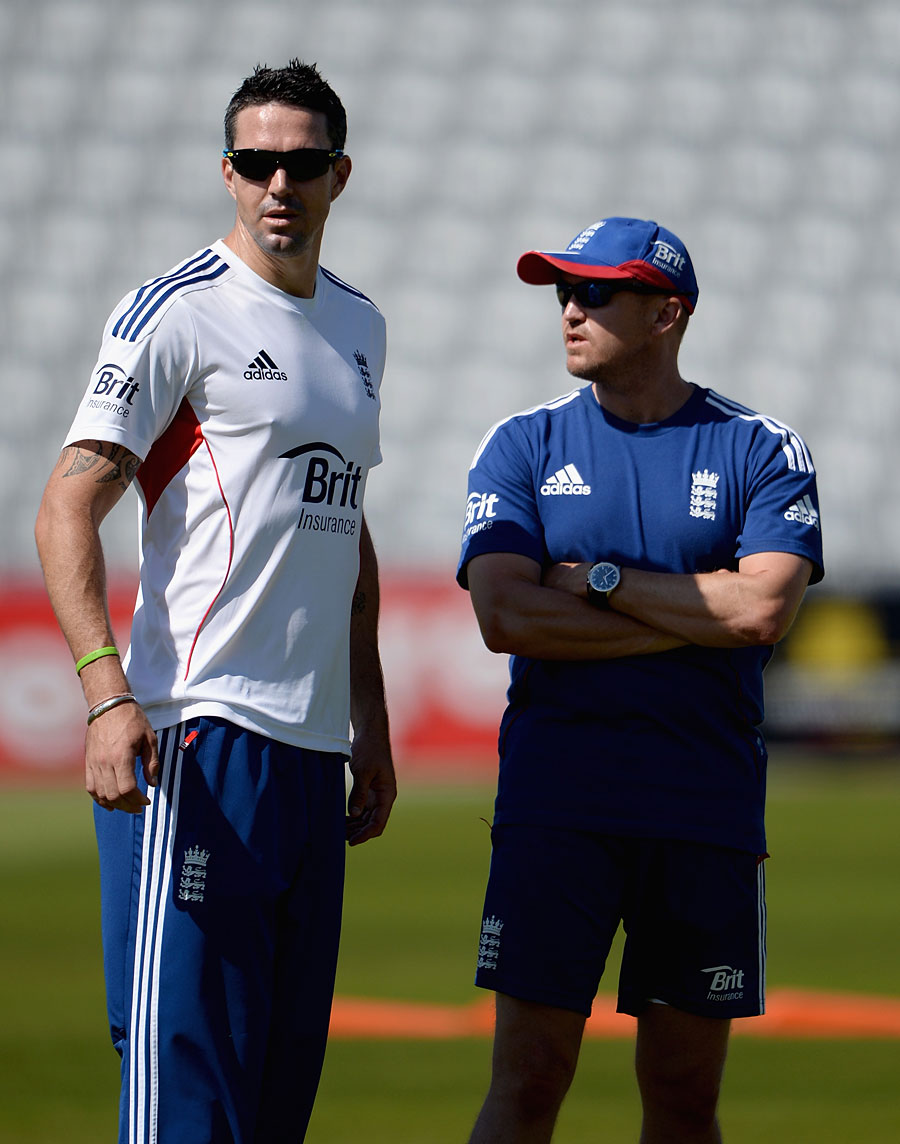
The relationship between Andy Flower and Kevin Pietersen remains in question for England.
Firstly, Andy Flower looks set to stay on as team director after he reiterated his decision to guide his side through their transitional phase. The 45-year-old has had a hugely successful stint as England’s main man, his relationship with captains Andrew Strauss and Cook has been a particular key to England’s consistency across all three formats in recent years, but the way that the team performed in the Ashes has raised questions over Flower’s tough leadership skills in comparisons to the laissez faire approach offered by his counterpart Darren Lehmann, which has seen the Australian’s play a more fun and exciting brand of cricket.
Flower can perhaps think himself lucky to still be in a job, but his past successes over his five years in charge have earned him the right to stay and overhaul the next generation of English cricket moving forward. Likewise Cook will continue as Test captain and perhaps just relinquish the ODI role after the ongoing ODI series in Australia. The lack of genuine leadership contenders leaves Cook in a position where he is still the best man for the job as other options such as Stuart Broad, Ian Bell and Kevin Pietersen all have their own current issues going on. One bad series doesn’t make Cook a terrible captain , but what it did show was that tactically he is along way behind where he needs to be at this stage of his captaincy.
England next Test examination isn’t until they host Sri Lanka in June and before then they must make some tough calls on the way they want to go about trying to rejuvenate this stagnated side. There is no doubt that the side needs freshening up with new blood after the host of recent departures has left gapping holes in their line-up. These decisions must of course be made with careful consideration as in some instances careers could well be on the line.
One such instance is the future surrounding Pietersen. The 33-year-old batsmen has recently suggested that he wants to continue playing Test cricket until at least the 2015 home Ashes campaign, but reports of a recent falling out between himself and Flower seem to have put that quest in jeopardy. Some reports were even going far as to say that the South African-born star could well have played his final Test match and that he will continue playing cricket in a T20 freelance role. England must do all they can to keep Pietersen in the side alongside the likes of Bell and Cook as they look to nurture the next generation of batsmen.
Since their last tour down under in 10/11 this side has steadily started to lose its spine, and by the end of this tour the wheels had well and truly fallen off. Since England won their first away Ashes series in 23 years during that 10/11 series, a number of key players have walked away from this hugely successful English cricket side.
First Paul Collingwood retired from the side at the conclusion of that triumphant tour, leaving them without a solid number six since. Eoin Morgan, Ravi Bopara, James Taylor, Jonny Bairstow, Samit Patel and Chris Woakes have all been tried and disregarded since and only now with the emergence of Ben Stokes do the side look like having a long term solution.
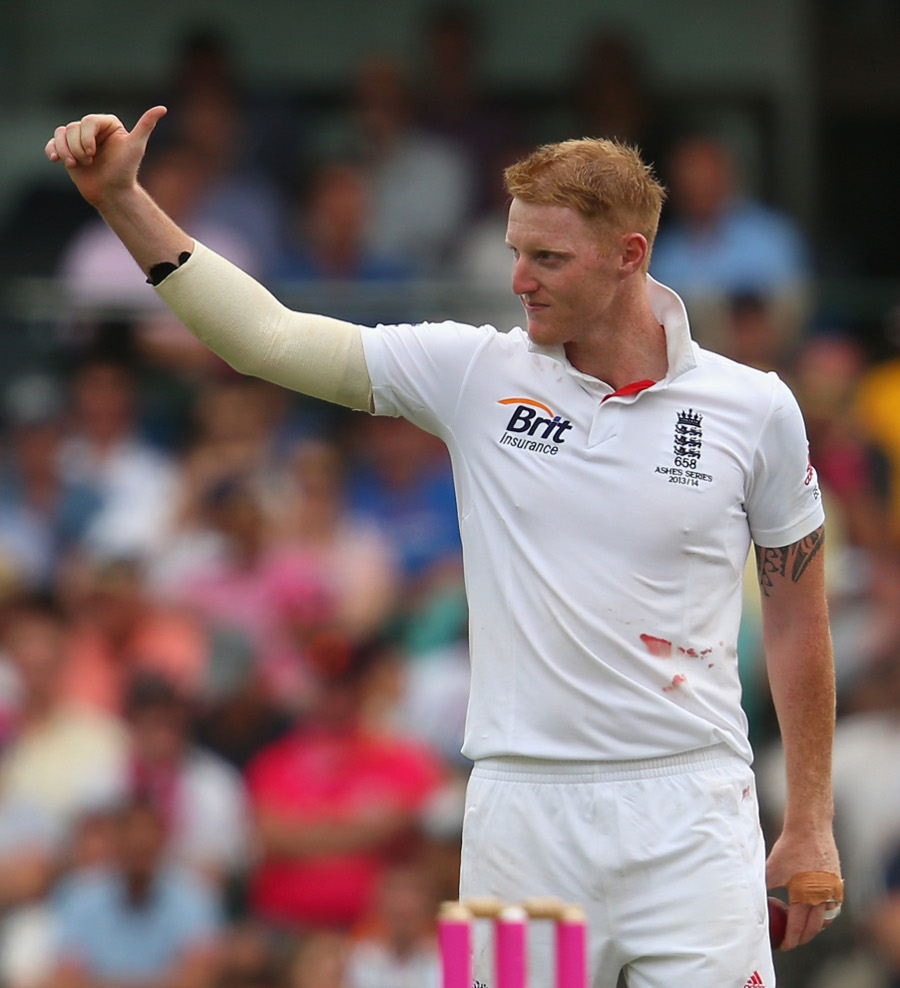
The emergence of Stokes is hugely significant for England, not since the days of Andrew Flintoff have they had a
Shining Light…Ben Stokes is England’s one bright spark from the Ashes tour.
player at number six who can both bowl in the high 80’s and also be aggressive with the bat. Stokes still has a long way to go with both bat and ball to emulate the successes of Flintoff, but his opening few Tests have shown that with the right management and guidance he has to talent and temperament to succeed at Test level – Stokes must now be given a long and fair run at number six.
Another area which England have failed to find an adequate replacement for is the second opening slot alongside Cook. Since Andrew Strauss retired 18 months ago, three men have been given a chance and yet still England don’t have a clue who their best opening combination is. First Nick Compton was tried for the successful tour of India last winter and since the likes of Joe Root and Michael Carberry have also been given the chance to make the spot their own without much success.
Compton was harshly treated by being dropped after England’s home series with New Zealand last summer, despite scoring unnecessary slow at times, he was a solid Test opener who didn’t let any one down in his nine Test matches. After scoring two hundreds in his final five Tests he was pushed aside to allow Root to open alongside his captain. Root at the time was enjoying a purple spell batting in the middle order and in hindsight it was a huge mistake by the ECB to push him to the top of the order before he was fully acclimatised to dealing with the moving ball that comes as a Test opener.
Realising their error, Root was again pushed down the order for the away leg of the Ashes and Carberry brought into the side. Although he performed better than most at times during the series, Carberry didn’t kick on to make that elusive three figures and at 33, the feel is that he will be made a scapegoat for the shambles Down Under and never seen again in an England Test jersey.
Its seemingly possible that England will again turn to Root to open the batting in their next Test series as he is the man they have earmarked to make the spot his own for the next decade or so. Another option for the future opening spot includes Middlesex’s Sam Robson who has impressed in the past two first-class seasons – although he has yet to truly declare his alliance to either England or Australia.
If England didn’t have enough spots to replace in their side, things soon got much worse with their incumbent number three and leading spin bowler both departing during the series. Jonathan Trott left after just one Test match due to a stress related illness and it remains unlikely he will ever represent his adopted country again. Trott’s departure leaves a huge hole in the England top order that was so solid under the Cook, Strauss and Trott era. Ian Bell was eventually moved up the order for the Melbourne Test after an experiment that saw Root fail to adapt to the role in two matches there. With Bell being the side’s best stroke player he must remain there, form and fitness permitting, for the rest of his career.
Replacing a quality spin bowler like Graeme Swann will be a much harder task. Since debuting in Test cricket in late 2008, Swann has taken more wickets (255) than any other spin bowler across the globe and despite not being at his best for the start of the tour, he will be hugely missed in the side for his ability to either hold up an end for the quick bowlers or spin his side to success when the conditions were in his favour.
Graeme Swann called it quit’s just three Tests into the Ashes series.
The English spin bowling cupboard is as bare as it has been in recent memory. Monty Panesar has been the longtime backup ever since he lost his place as the side’s sole spinner when Swann debuted five years ago and although he remains a steady left-arm-orthodox bowler he is not the bowler he was of years gone by and his recent off field antics have not helped his cause either. At 31 though he still has time to get back to somewhere near his best and with 50 Tests behind him he has far superior experience at the highest level compared to his rivals for the role.
Those rivals have included both Simon Kerrigan and Scott Borthwick in recent months and although both are promising spin bowlers in their own right – neither man is yet ready for more Test action. Kerrigan had a unfortunate case of the bowling yips on debut at the Oval in August and has not been included since, while Borthwick was in the right place at the right time when he was called up to make his debut in Sydney at the start of the month. Kerrigan is County cricket’s most consistent bowler of the past few years and his chance will come again once he recovers his confidence for Lancashire this season. Borthwick, a hugely impressive character has the added incentive of being able to bat in the middle-to-lower order but his legspin is still a work in progress and he must find a way of bowling more overs for his county Durham if he is to be considered England’s sole Test spinner.
The fast bowling is also of concern. The main concern being that the two quality fast men that England possess are being run into the ground through a combination of poor management and meaningless scheduling by ECB. Both Stuart Board and James Anderson have looked tired and jaded in recent times and the situation surrounding Steven Finn is also a huge concern. Finn was someone England had picked to be the future of their pace attack for years to come. He ended the tour early and returned to England to clear his mind of the game, no he must go back to Middlesex and start to enjoy his cricket again before returning to the national setup.
Elsewhere Graham Onions, wrongly not selected for the Ashes tour, should be given a further chance to progress his Test career during the Sri Lanka series are he still remains a player with a lot to offer this England setup in the short to medium term. Somerset’s Jamie Overton and Tymal Mills of Essex have both recently been discussed as possible candidates for the England number three bowling slot, but both currently remain raw works in progress and could very well do with at least another year of continuous County action, the same could also be said of Mills’ Essex teammate Reece Topley – who has also shown rich promise in his young career.
At the other end of the age spectrum, both Chris Tremlett and Boyd Rankin could well have played their last Tests for England. The pair both failed to impress in their single appearances over the series and England must now move away from the pair who alongside Finn were seen as the “tall trio to regain the Ashes Down Under.” The fact that Finn didn’t play any of the Tests, Tremlett played the first and was disregarded thereafter and Rankin wasn’t trusted until the Ashes were lost – suggests that the experiment was a complete failure.
Another key area which England must try and find a solution to is that of wicketkeeper. It’s hugely important for Matt Prior to regain the form that made him one of the world’s best wicketkeeper-batsmen just a year ago. He is not just highly influential for his batting and keeping but also for his important influence to the side and to captain Cook. He must go back to Sussex and regain his confidence with bat and gloves in the early County season as his nearest challengers for a long term place in the side, Jos Buttler and Jonny Bairstow are not nearly good enough wicketkeepers for Test cricket at the present.
Eoin Morgan’s impressive recent ODI form will have people mentioning his name again for the England number five spot, but his reluctance, due to his continued involvement in the IPL, to play any first-class cricket at the start of the County Championship each year should count against him, leaving Gary Ballance as the man in possession unless somebody else scores heavily in the early rounds of the Championship to force a claim.
The future for this England side is not entirely as bleak as the media have been portraying it in recent times, but it certainly needs tweaking in certain areas. With young players like Stokes and Root coming into the side in recent times, its important England put faith in them and give them opportunity to develop alongside the experience of Cook, Bell and Pietersen.
England may well have taken one hell of a beating, but in cricket, time and clever management is certainly a healer.
Resurgent and declining fortunes for Haddin and Prior.
Tensions flare in contrasting series for both Haddin and Prior.
Despite all the attention being on England’s annihilation to Mitchell Johnson at both The Gabba and The Adelaide Oval, there have been plenty of sub-plots involved in the Ashes thus far – none more so than the continuing fortunes of each side’s glovesmen.
While Brad Haddin has come out all guns blazing in a bid to resurrect his career, Matt Prior on the other hand has fallen away so dramatically that many are already calling for him to be axed before the series is even three Tests old.
In a spectacular turn around of events from a year ago – where Prior was being hailed as the best wicketkeeper-batsman is the world and Haddin forced to watch from the sidelines behind Matthew Wade in the reckoning, it has been a remarkable turnaround in fortunes for both men.
There remains many striking similarities between the pair. Both are vice-captains of their respective sides and both are important ‘Team before themselves men’ in a sense that they are willing to play in any role that their team requires at any given time. But perhaps the biggest comparison would have to be each man’s willingness to counter-attack with the bat when their side is either ahead or behind the game.
After spending six months completely out of the game, Haddin was reintroduced into the Test side in March for Australia’s tour of India – with the thought being that he was a far superior player of spin bowling to the incumbent Wade, but also more importantly for his off field experience that was vastly needed in a team both low on confidence and togetherness.
That time away form the game, due to a serious illness to his young daughter Mia, in which he spent most of his time beside her hospital bed, has helped Haddin clear his head of any negative thoughts on the game of cricket. After all it is only a game – when there are far more important things going on in life.
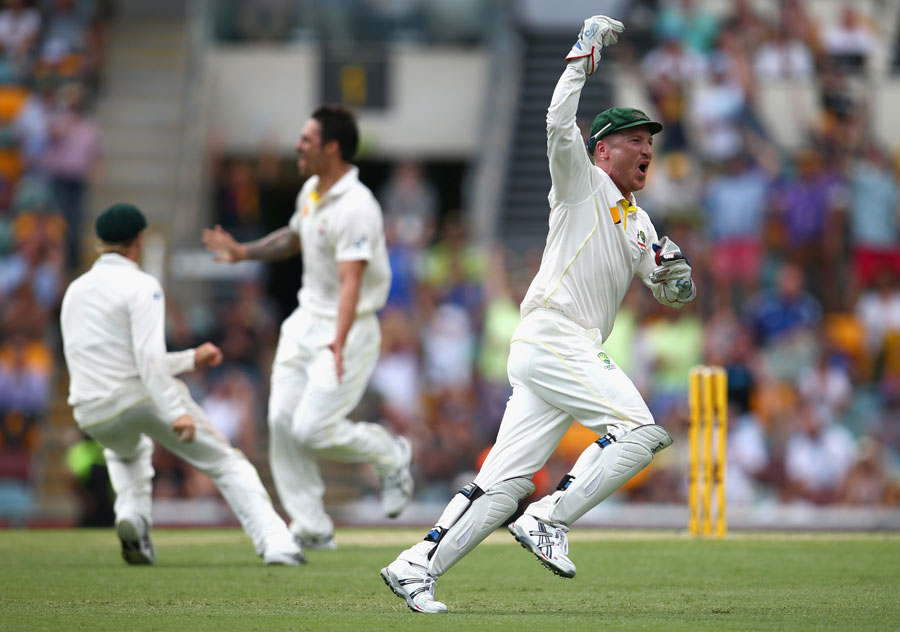
Haddin celebrates his 200th Test catch in Adelaide.
His 50th Test at The Gabba was the true turnaround in his career. Coming in amidst an Australian batting collapse, he added a match turning seventh-wicket partnership of 114 with Johnson to guide his side to a more respectable first innings total of 295. To follow that first innings 94 he scored an almost run-a-ball 53 in the second dig to allow Michael Clarke a deceleration.
The rejuvenated 36-year-old then blazed his way to a superb 118 in Adelaide, again contributing with the bat when his team needed it most. Finding himself at the wicket with the game still in the balance, he was at first watchful alongside Clarke before cutting loose and taking the attack to both English spinners, and in due course adding a 200-run association with his captain for the sixth wicket.
The determination and fight shown by Haddin across the two Tests speaks volumes of a man determined not to lose another Ashes campaign. Despite a good batting record against the old enemy, he has been unable to stop his country from losing their previous three Ashes encounters.
In stark contrast his opposite number Prior has had a six months to forget. His form has seemingly completely deserted him since he scored a match saving hundred in New Zealand last March and was subsequently named England’s player of the year – a richly deserved award after a stellar 2012 with both bat and gloves.
Since then though his form has gone down like a lead balloon. Seven Ashes Tests have brought him just 206 runs at an average of less than 20. Certainly not form befitting a man who has up until now averaged around 44 in his 70-odd Test matches.
At The Gabba, he was out twice to obnoxious Nathan Lyon deliveries for a grand total of five runs in the match. On both occasions England needed much more from their reigning player of the year – its no coincidence that when Prior plays well – so do his country.
A dejected Prior walks back after another low Ashes score.
With many already calling his place in the side into question, he did himself no favours with a tepid first innings knock in Adelaide. After being worked over by the short ball from Johnson for three deliveries he duly obliged by edging his fourth into the waiting gloves of Haddin behind the wicket. Again this was not the way for an experienced campaigner to play when his side were staring down the barrel at 5-117.
Although he batted his way into some sort of nick in the second innings with an innings of 69, it was the way in which he played which suggested a man still struggling with his shell shocked mindset. Whilst his began to look some way towards the Prior of old against the spin of Lyon, he continued to regularly play and miss against the quicks. Playing with little care for the match situation and slogging anything he saw slightly in his zone, his eventual dismissal signalled the end of England’s fight as he became another victim of the ‘Happy Hooking Syndrome’ that has plagued England’s batsmen for the past two Test matches.
With the gloves there is also a contrasting difference between both Haddin and Prior. Haddin has taken everything coming his way, whilst the usually reliable Prior has been sloppy in both Tests. This reached its head none more so than in Australia’s first innings in Adelaide – where Prior missed catches, stumpings and run outs far to often for a man of his stature.
Perhaps the most striking of all the stats from this series so far is the averages between the two men. After his three innings Haddin averages 88.33 whilst after four knocks Prior just 18.25. Whilst stats don’t tell the whole story, they don’t often lie – There is no way Prior should be averaging 70 less than his counterpart.
Whilst there is no doubt that Prior will continue with the gloves for the rest of the series, England’s selectors will still wonder when their once prize asset will return to the top of his game – if he doesn’t then either Jonny Bairstow or Jos Buttler will be given a chance sooner than expected.
For Australia, Haddin will keep believing that he will get a chance to hold up the precious little urn sooner rather than later – for what he’s been through in the past 18 months – very few would begrudge him that.
Australia must stick with Chris Rogers in the mid-term.
So the Ashes are over! Well as a contest that is, England deserve their win as the better side across three of the four Test matches – but for Australia – more questions than answers lie ahead.
The Aussies must re-group and start the post-mortem ahead of the return series down under in November. It maybe that there will be casualties along the way as they seek to find the correct balance for success, but one man who must now surely be in their mid-term thinking is Chris Rogers.
The 35-year-old opener rose above the rest at Chester-le-Street with twin scores of 113 and 49 and he should now be given a decent run at the top of the Australian order.
His first innings 113 – made in difficult overcast conditions suggested that he not only has the technique for grinding it out at Test level but also the mental toughness.
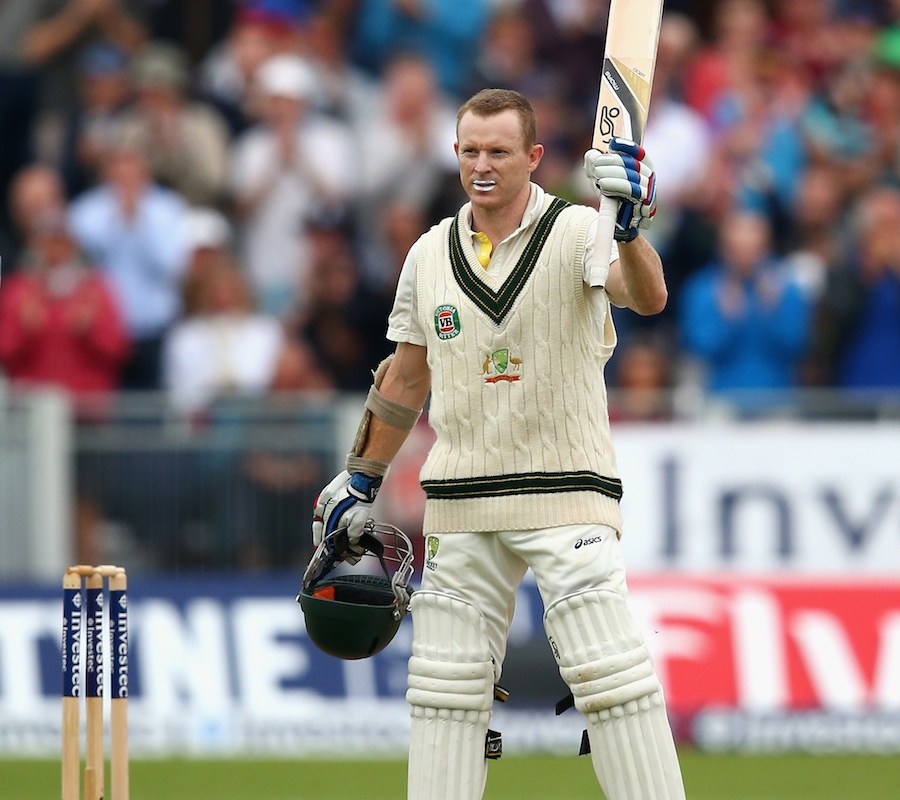
He played and missed, nudged and nurdled but off his 227th ball of a growling second day’s play, Christopher John Llewellyn Rogers could finally say he was a Test centurion.
After been stuck on 96 for 20 deliveries, Rogers could have be forgiven for thinking his maiden Test century would never arrive – but this is the same man who only six months ago thought he would never represent his country again.
When it finally arrived, via a sweep off Graeme Swann, he was calm and reflective in his response – an acknowledgment to his partner Brad Haddin was followed by a brief raise of the bat and a removal of the helmet – fifteen years of toil were finally rewarded.
Rogers is a true fighter, an old fashioned opener, he accumulates his runs rather than caressing them and the innings that brought up his maiden Test ton was nothing unfamiliar – in all honesty it was ‘One hell of a scrap.’
But he is used to a scrap. His fifteen years in first-class cricket has seen him play for four different counties and two state sides – while he has just recently gone past the twenty thousand first-class runs mark – not bad for a guy who almost lost his Victoria contract a year ago – with his side keen on developing younger players instead.
At 35, he is the second oldest Australian to score a maiden Test century behind only Arthur Richardson, 37, who reached the feat in 1926 – but despite his age he is a player Australia must base their batting around in the next 18 months.
Originally brought back into the Test scene for this series as an experienced hand to replace the loss of both Ricky Ponting and Mike Hussey – who retired at the conclusion of the Australian summer, he has suddenly become one of the side’s most important top order players.
After scoring just 4 and 15 – whilst replacing the injured Matthew Hayden on Test debut in January 2008, he had to wait a further five years for his opportunity on the international scene, and he started his comeback with mixed results.
A promising second innings fifty at Trent Bridge was followed by struggles at Lords and the doubters started calling for his head. Unflustered, Rogers went away to work on his game – before he went back to basics at Old Trafford and came out to score a fluent 84 in the first dig.
After so long in the international wilderness, it seemed he needed to prove he belongs at Test level to not only the public but to himself. His 84 in Manchester certainly brought him the confidence that he could succeed against this England attack and although his maiden century contained its fair share of luck – no one could begrudge the man they call ‘Bucky’ his long overdue success.
His second innings partnership of 109 with David Warner also brought positives for the Australians after Warner replaced Shane Watson at the top of the order. The pair seemed to compliment each other well in their differencing styles at the wicket – although they [Australia] will be looking for reinforcements in the batting line-up they should look no further than the current opening combination. Instant success will not come overnight but at least by keeping the opening combination the same they have a good base to work with.
Forget the Ashes build-up for a minute, let’s take time out to reflect on the career of one of the last of cricket’s dying species – “The Rabbit”.
When Chris Martin announced his retirement to the press last week it brought great sadness. Although it had hardly been unexpected after he was dropped during his side’s Test series in January, I wasn’t yet ready to comprehend a cricketing world without him.
Martin had not been an automatic choice for the Blackcaps in past year with the emergence of a younger crop of fast bowlers in the side. The likes of Trent Boult, Tim Southee and Doug Bracewell have all represented a new era in New Zealand cricket – this meant the veteran experience of Martin was no longer a necessary selection.
Martin is a guy who despite being a fine seam bowler in his own right, will forever been remembered as one of the last true number elevens in the modern game.
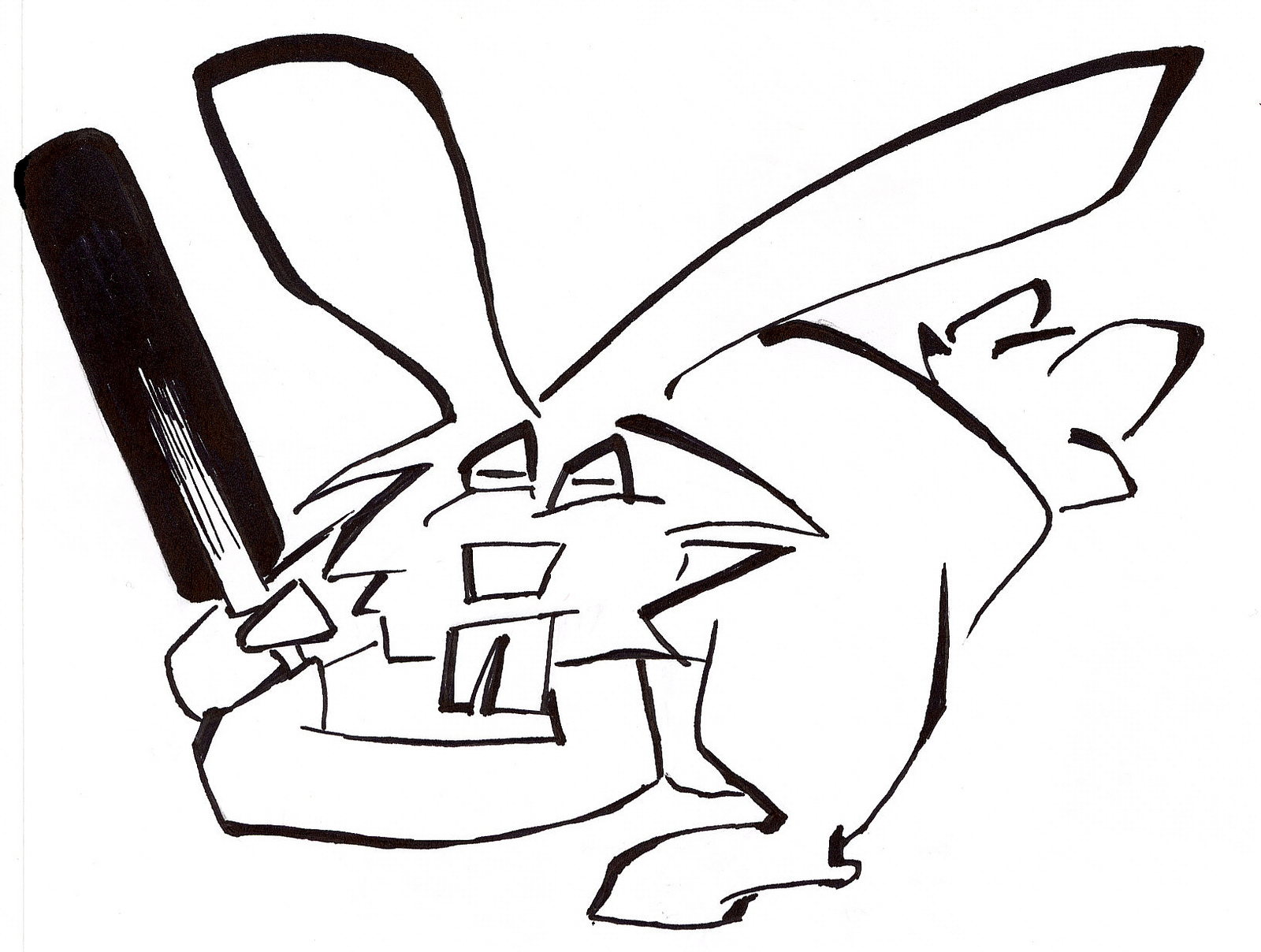
“Rabbit” – A particularly incompetent batsman, who is invariably a specialist bowler. While most lower order batsmen would be expected to occasionally score some useful runs, a rabbit is expected to be dismissed cheaply almost every time. Another term, ferret, refers to a batsman even worse than a rabbit (named as such because, in the wild, “a ferret goes in after a rabbit.”)
By that definition, I should probably refer to Martin as a ferret, but I’ll be kind and stick with rabbit or perhaps even bunny instead.
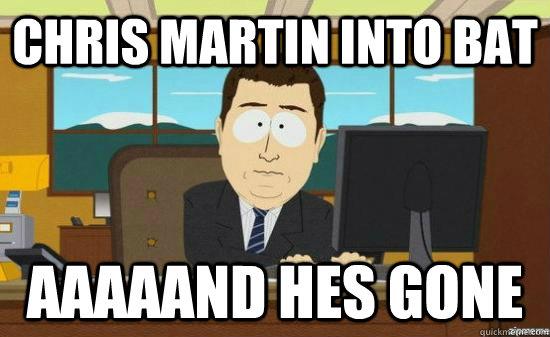
Back to the hutch…Chris Martin records yet another Test duck.
Martin was a true bunny, a man known throughout the cricketing world as a cult hero, a good steady opening bowler but a hopeless batsman. His bowling should not be underestimated though. Among his compatriots only Sir Richard Hadlee (431) and Daniel Vettori (360) have claimed more Test wickets than his 233 and only Vettori of the current New Zealand players has outlasted him in the side.
The now 38-year-old made his Test debut in November 2000 and went on to play a further 70 Tests over a 13-year-period – before playing his final match in January, fittingly against South Africa, a side he made his debut against and in truth a side he had his most success against – Indeed 55 of his Test victims were against the Proteas at a healthy average of 26.72.
In all Martin’s bowling stats are respectable in the modern day and age of flat wickets and heavy bats. He claimed 233 Test victims at 33.81 and took ten five-wicket hauls.
But of course, for the man who shares his name with a certain Coldplay front man, it was always his lack of ability with the bat that attracted most interest among cricket fans worldwide.
Only Courtney Walsh (43) made more ducks in Test cricket than Martin’s 36. While he holds the record for the most pairs in Test matches with seven – three ahead of his nearest challenger.
He didn’t reach 100 Tests runs until his 60th match and finished his 71 match-career with just 123 runs at the lowly average of 2.36.
Martin was the last of Test cricket’s really bunnies. In a new age of ODI and T20 cricket, bowlers are now expected to contribute more with the bat as one dimensional cricketers are being phased out of the game. The days of specialist bowlers such as Walsh, Phil Tufnell and Alan Mullally are now a thing of the past – the retirement of Martin – looks like marking an end to the era of “The Rabbit.”
With a heavy heart it’s time to say farewell Chris, thanks for the memories, the fun and of course that video.
With a 25-point lead at the top of the LV County Championship Division Two table, onlookers could be forgiven for thinking that by September promotion for Northamptonshire will be a foregone conclusion – but things in the County Championship are rarely foregone conclusions.
Just ask the Northants fans – who in 2011 – found themselves in a similar position to what they are in now. That was until they entered the final match of the season against Gloucestershire needing to better Surrey’s points total in their match with Derbyshire.
For Northants it ended in heartbreak. Despite beating Gloucestershire and gaining 22 points, they could do nothing about Surrey result against Derbyshire. As it turned out – Surrey not only won, but they gained 24 points in doing so and pipped Northants to the second promotion spot by just a single point – such margins can be the difference between agony and ecstasy in County Cricket.
This time round Northants will hope that the lead they have built up over their first six matches of the season can help them avoid another final game shoot-out with their nearest challengers.
The fact that they are in such a lofty position is mainly down to their array of fast-bowling allrounders. The quartet of Trent Copeland, Steven Crook, Andrew Hall and David Willey have not only provided the majority of their wickets but have also scored the bulk of their runs – masking the lack of runs from further up the order.
Perhaps the best of the lot has been overseas signing Copeland. The 27-year-old Australian seamer has exceeded all expectations with excellent performances with both leather and willow in hand. Figures of 116 runs at 55.33 and 27 wickets at 18.25 – suggest true allrounder status.
Copeland is not a glamorous name when compared with Northants’ overseas signings of the past (Bishan Bedi, Kapil Dev, Curtly Ambrose, Matthew Hayden and Mike Hussey to name just a few) but he is the ideal modern day County signing – A line and length bowler who can contribute with the bat down the order.
Indeed his batting has surprised many this season but he did come with a reputation as a lower order hitter from his time with New South Wales. It was only as recent as February that he scored his maiden first-class hundred and he finished the Sheffield Shield campaign with a batting average of 34.72 across his eight appearances.
Copeland is not the only Australian-born bowler who has reaped early season rewards in both disciplines for Northants. Journeyman Crook has been a revelation since re-joining the club from Middlesex over the winter.
Crook hasn’t always found the going so well, since making his first-class debut for Lancashire over ten years ago he has managed just 57 first-class appearances. Since first signing for Northants in 2005, he found the going tough and after a spate of injuries at Wantage Road he stepped away from the game in 2009 before signing for Middlesex in 2011 and returning to the form his potential suggested.
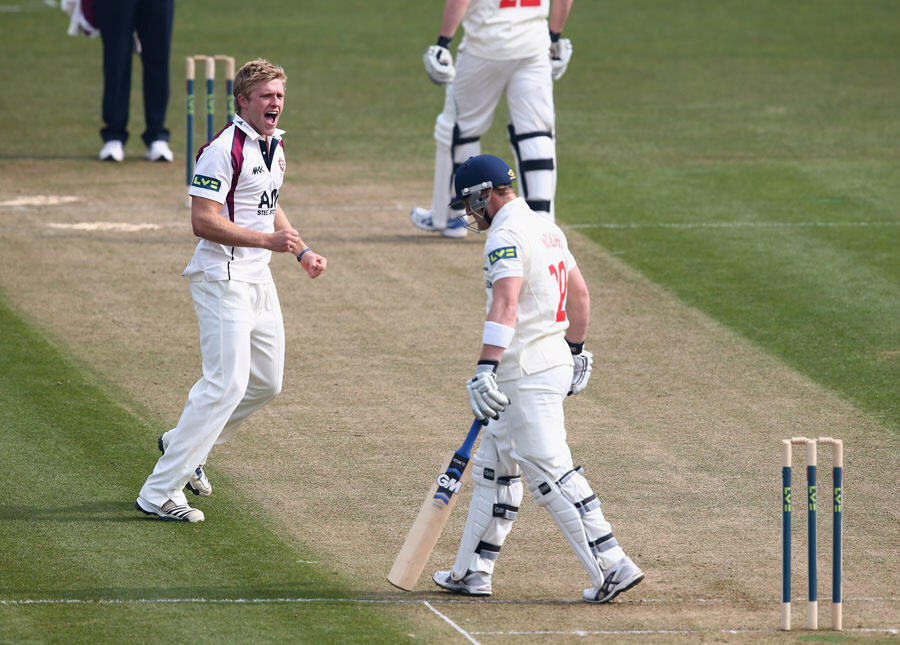
Northampton-born David Willey is leading the way for his home county.
This season, Crook’s form has been a revelation for all to see in Northampton, not only has he taken the wickets many knew he was capable of (24 wickets at 19.54) – he has also excelled with the bat – regularly digging his side out of a hole with late order hitting of the highest class. 249 runs across five innings at 62.25 suggest more than just a lower order slogger.
The case of Willey is a much simpler and local story. The 23-year-old is the son of former Northants and England allrounder David and has progressed through the counties’ youth programmes; making his debut in 2009 he led the club’s bowling charts last year with 43 first-class victims.
The left-armer has lived up to last season’s hype with 24 wickets at 24.33 as well scoring 193 runs at 27.57 with the bat and he is now a vital clog in the Northants wheel of success.
Experienced former South African allrounder Hall, 37, has been vital to the balance of the side with both runs from number five and important wickets as a second change bowler. Since relinquishing the captaincy after the side’s poor 2012 campaign (where they finished second bottom) Hall has topped the batting charts with 362 runs at 60.33 along with claiming 15 victims at 23.20.
As well as improving the form of Hall, the change of captaincy as done wonders for Northants as Stephen Peters has taken over the role like a duck to water. The veteran opener has not only been astute with his on field skipper duties but he has also contributed 311 runs at 51.83 before a broken thumb ruled him out for six weeks.
Whether Northants can keep up the pace at the top of the table is a different matter all together. Copeland will return back to Australia when his time as overseas player comes to an end at the conclusion of this week’s fixture against Worcestershire and his presence will be highly missed not just on the field but in the dressing room too.
A lack of a quality spin bowler could also affect the side later in the summer as the pitches will likely change from the seamer-friendly surfaces Northants’ attack are geared towards to more dryer spin-orientated affairs.
A lack of such slower bowlers has yet to affect Northants as off-spinner James Middlebrook has be only been required to bowl a handful of overs – largely to keep the quicker men fresh.
Although Middlebrook is an experienced campaigner, he is unlikely to run through sides the way former Steelbacks’ Graeme Swann and Monty Panesar once did.
Elsewhere across the spinning cupboard, Con de Lange has disappointed since arriving on English shores last season. He managed just three first-class wickets in 2012 and will find himself further down the pecking order upon the arrival of former left-arm spinner Graeme White – who will rejoin the side next week on a one month loan deal from Nottinghamshire.
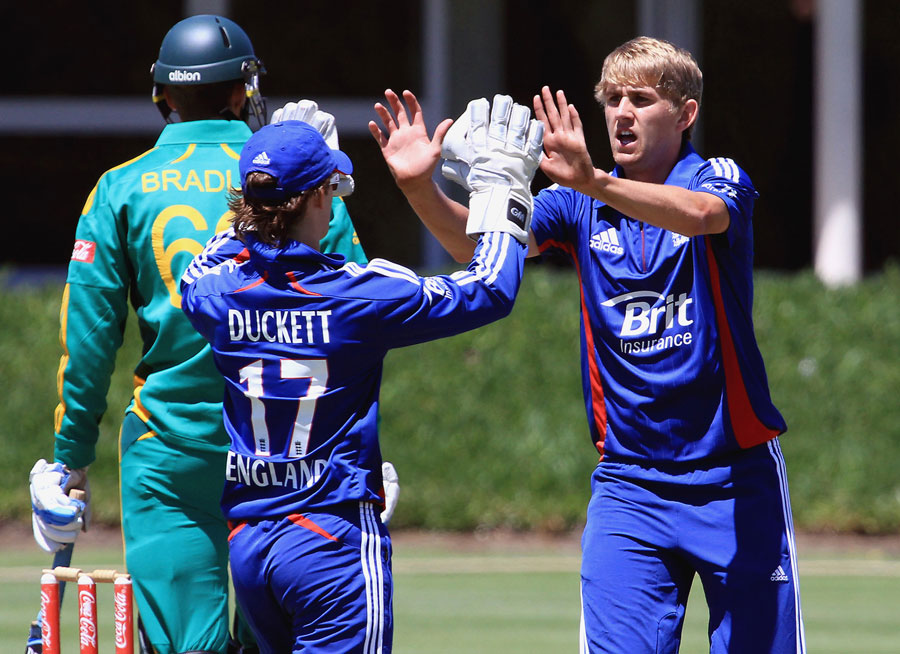
Waiting in the wings…England U19 players Ben Duckett and Olly Stone are pushing for more first team opportunities.
Despite a relative lack of quality spin options, the club do have depth elsewhere. The recent draw with Leicestershire brought up the potential of England U19 wicketkeeper Ben Duckett – who scored a maiden fifty on his first-class debut covering for regular keeper David Murphy – who was away with the Scotland set-up.
Another England U19 player, Olly Stone, has also been gifted limited opportunities in the side this season due to the form of the incumbent seamers and with Copeland soon to depart – chances are the 19-year-old will be given a chance to stake his place as a regular in the coming weeks.
Other options in the bowling department include Pakistani Azharullah, who recently took 3-59 against Hampshire as well as Lee Daggett – who has impressed in recent second XI fixtures.
To have such options in the bowling department despite the departure of Jack Brooks to Yorkshire over the winter, is decrement to the system Northants have. They have in recent years been criticised for fielding too many Kolpak players, but the county are now moving themselves away from that avenue towards a more home grown approach.
The top order batting remains a concern. Despite runs from Peters at the top of the order and the quartet mentioned above, only Rob Newton with 251 runs at 41.83 can say he has done justice to his talent with the bat so far this season.
Keeper Murphy along with Alex Wakely, David Sales and Kyle Coetzer have all averaged between 17-21 and the report card would read – must do better!
The questions remain for Northants and with matches against Worcestershire, Leicestershire and Lancashire to come in the next month – many of answers could arrive before June is out – will it be the ecstasy of 2003 or the agony of 2011?










 CaughtOutCricket